JLR EV Recall 2026: What Indian Owners Need to Know About the Battery Fire Risk
Jaguar Land Rover (JLR) has announced a recall of around 2,200 electric SUVs globally over concerns related to potential battery fire risks. The move has raised safety questions among electric vehicle (EV) owners, including customers in India who drive Jaguar’s premium electric models.
The recall highlights growing global scrutiny around EV battery safety, especially as electric vehicles become more common on Indian roads. For Indian buyers who have invested in high-end electric SUVs, the development is significant and demands immediate attention.
Here is a clear breakdown of what happened, which models are affected, and what Indian owners should do next.
Why Jaguar Land Rover Issued the Recall
Jaguar Land Rover confirmed that it is recalling certain electric SUVs due to a possible issue linked to the high-voltage battery system. The concern is that under specific conditions, the battery may overheat, increasing the risk of fire.
The company stated that the recall is precautionary and aimed at ensuring customer safety. No manufacturer takes battery-related risks lightly, as even a small defect can lead to serious consequences.
Battery safety has become a key focus globally after several EV fire incidents in different markets over the past few years. Automakers are now responding quickly to even minor safety risks to protect customers and brand trust.
Which Jaguar Electric SUVs Are Affected?
While Jaguar Land Rover has not publicly released detailed VIN-level data in all markets, the recall is reported to involve certain units of its electric SUV lineup.
The recall affects around 2,200 vehicles worldwide. Owners are being contacted directly by the company in affected markets.
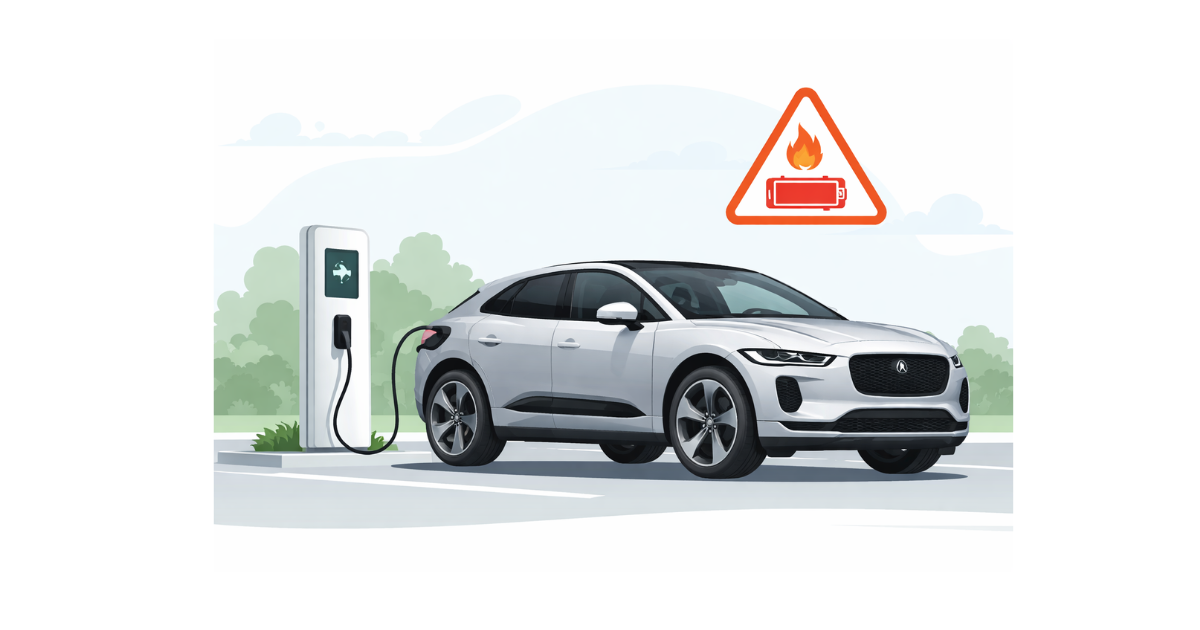
Indian customers who own Jaguar’s electric SUV models, particularly the Jaguar I-PACE, are advised to check with authorized dealerships to confirm whether their vehicle falls under the recall.
At present, there is no confirmation of large-scale incidents in India. However, owners should verify their vehicle status as a precaution.
What Is the Exact Battery Risk?
The issue reportedly relates to the battery management system or high-voltage battery module. In rare cases, a fault in these systems could lead to overheating.
Overheating in lithium-ion batteries can increase the risk of thermal events, including fire. This is why EV manufacturers treat such risks with high priority.
It is important to note that recalls are preventive actions. They do not always mean that fires have already occurred. In many cases, manufacturers act before any serious incident happens.
How Jaguar Land Rover Is Fixing the Problem
Jaguar Land Rover has said that affected vehicles will receive a software update or hardware inspection, depending on the identified issue.
The fix may include:
- A battery system software update
- Inspection of battery modules
- Replacement of affected components if required
The company has assured customers that repairs will be carried out free of cost at authorized service centers.
Owners will receive official communication with instructions on booking service appointments.
Impact on Indian EV Market
India’s premium EV segment is still growing. Jaguar’s I-PACE was one of the early luxury electric SUVs launched in the country.
Though the recall number is relatively small at 2,200 vehicles globally, any battery-related recall affects consumer confidence.
However, industry experts note that recalls are a normal part of the automotive industry. Even top global brands conduct recalls to fix technical issues.
The key factor is how quickly and transparently the company responds. In this case, JLR has taken proactive steps.
Safety Guidelines for Indian Jaguar EV Owners
If you own a Jaguar electric SUV in India, follow these steps immediately:
1. Check Your Vehicle Identification Number (VIN)
Contact your nearest Jaguar authorized dealership or visit the official JLR website to check whether your vehicle is part of the recall.
Keep your VIN number ready for quick verification.
2. Watch for Official Communication
Jaguar Land Rover typically sends recall notifications via:
- SMS
- Registered mail
- Dealer calls
Do not ignore any service alerts related to battery systems.
3. Avoid Ignoring Warning Signs
If you notice any of the following, contact your dealer immediately:
- Battery warning light on the dashboard
- Unusual smell
- Smoke or overheating signs
- Reduced driving range suddenly
Park the vehicle safely and avoid charging it until inspected.
4. Follow Safe Charging Practices
While waiting for inspection:
- Avoid overcharging
- Do not use unauthorized charging equipment
- Charge in well-ventilated areas
- Avoid charging overnight unattended if concerned
These are general EV safety measures recommended for all electric vehicle owners.
5. Schedule the Repair Quickly
Even if your car seems normal, do not delay recall repairs. The service will likely take a few hours depending on inspection needs.
Repairs under recall are free of cost and should not affect warranty coverage.
Are EV Battery Fires Common?
EV battery fires are rare compared to the total number of electric vehicles on the road worldwide. However, when they occur, they attract major attention.
Lithium-ion batteries are complex systems. A small defect in a module, cooling system, or battery management software can cause overheating.
Automakers invest heavily in testing and safety layers to reduce such risks. Still, recalls happen as part of quality control.
In India, EV safety standards are also becoming stricter after earlier incidents involving two-wheeler battery fires. Government agencies have increased monitoring and testing norms.
Jaguar’s Response and Customer Support in India
Jaguar Land Rover India has an established dealership and service network in major cities, including:
- Delhi NCR
- Mumbai
- Bengaluru
- Hyderabad
- Chennai
Customers are encouraged to contact official service centers rather than relying on third-party workshops.
Using unauthorized service providers for high-voltage battery systems can be dangerous and may void warranties.
What This Means for Future EV Buyers
This recall serves as a reminder that EV ownership comes with new technical aspects, especially related to battery systems.
However, it does not mean electric vehicles are unsafe. In fact, global data shows that EVs are subject to strict safety standards.
For potential buyers in India:
- Always check recall history before purchasing
- Stay updated with manufacturer advisories
- Use authorized charging and service centers
- Keep software updated
Battery technology is improving rapidly. Most issues are addressed through software patches and module-level fixes.
Key Highlights at a Glance
- Jaguar Land Rover recalls around 2,200 electric SUVs globally
- Recall linked to potential battery overheating risk
- Affected vehicles will receive free inspection and software updates
- Indian owners should verify VIN and contact authorized dealers
- No widespread incidents reported in India so far
Final Word
Jaguar Land Rover’s recall of 2,200 electric SUVs over battery fire concerns is a precautionary move focused on customer safety. While the number may seem small compared to global EV volumes, battery-related recalls are taken seriously in the automotive industry.
Indian Jaguar EV owners should not panic but must act responsibly. Verify your vehicle status, follow safety guidelines, and complete recall repairs promptly.
As India moves toward greater electric mobility, safety transparency and quick manufacturer response will remain key factors in building trust in the EV ecosystem.
Stay updated with official announcements from Jaguar Land Rover and authorized dealerships for the latest developments on this recall.
Disclaimer: The information presented in this article is intended for general informational purposes only. While every effort is made to ensure accuracy, completeness, and timeliness, data such as prices, market figures, government notifications, weather updates, holiday announcements, and public advisories are subject to change and may vary based on location and official revisions. Readers are strongly encouraged to verify details from relevant official sources before making financial, investment, career, travel, or personal decisions. This publication does not provide financial, investment, legal, or professional advice and shall not be held liable for any losses, damages, or actions taken in reliance on the information provided.
About The Author