
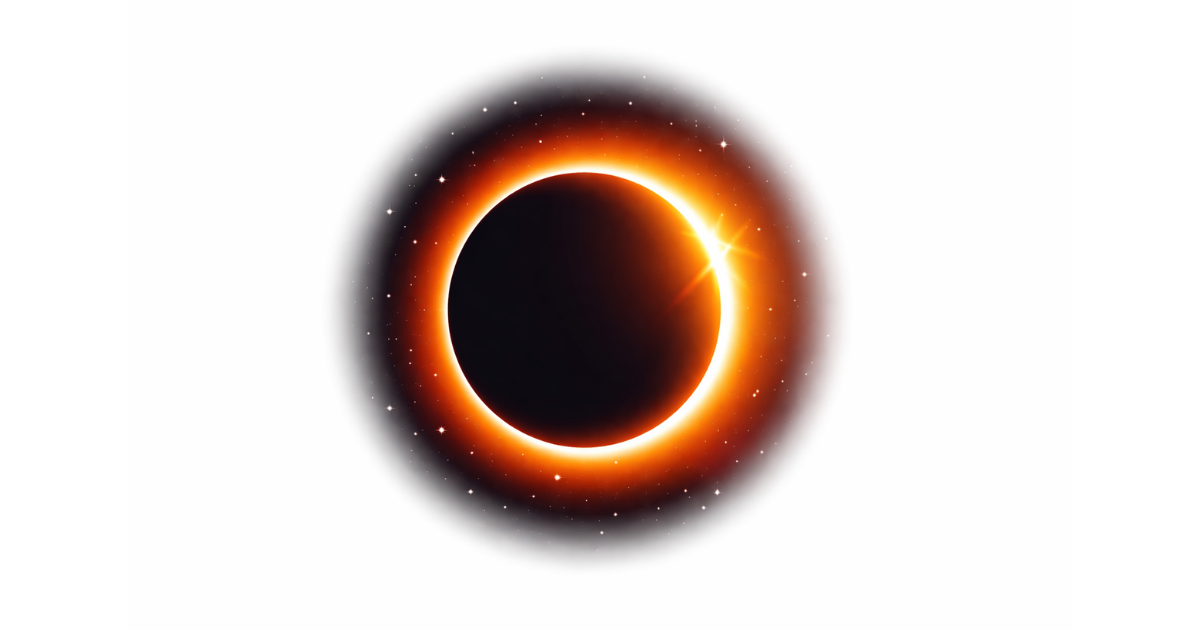
Skywatchers around the world are preparing for the first solar eclipse of 2026. The event is being widely described as a “Ring of Fire” solar eclipse, a rare and dramatic celestial event.
Many Indian users are searching for answers about the date, time, visibility, and safety guidelines. A common question is simple: Will the Solar Eclipse 2026 be visible in India this February?
Here is everything you need to know, in clear and verified terms.
What Is the ‘Ring of Fire’ Solar Eclipse?
A “Ring of Fire” occurs during an annular solar eclipse.
In this type of eclipse:
- The Moon passes between the Earth and the Sun
- The Moon is slightly farther from Earth than usual
- It does not fully cover the Sun
- A bright ring of sunlight remains visible around the Moon
This glowing circle is why it is called the Ring of Fire.
Unlike a total solar eclipse, the sky does not become completely dark. However, the visual effect is still dramatic and scientifically important.
Solar Eclipse 2026 Date and Global Timing
According to astronomical calendars, the annular solar eclipse will take place on February 17, 2026.
Key Details
- Date: February 17, 2026
- Type: Annular Solar Eclipse
- Popular Name: Ring of Fire
- Visibility: Not visible in India
The exact timing of the eclipse will vary depending on location. In regions where it is visible, the event will unfold over several hours, with the ring phase lasting only a few minutes.
Indian Standard Time conversions show that while the eclipse is happening globally, it will not be visible from Indian skies.
Why Is the Solar Eclipse Not Visible in India?
This is the most important update for Indian readers.
The February 17, 2026 annular solar eclipse will occur over parts of:
- South America
- The South Atlantic Ocean
- Some regions of Antarctica
India is outside the path of visibility.
For a solar eclipse to be visible, your location must fall within:
- The path of annularity (where the ring effect is seen), or
- The partial visibility zone
In February 2026, India lies completely outside both these zones. That is why no part of the eclipse will be visible anywhere in India.
There will be no partial phase, no dimming of sunlight, and no need for viewing precautions in India on that date.
Regions Where the Ring of Fire Will Be Visible
4
The best views of the Ring of Fire Solar Eclipse 2026 will be available in selected parts of:
- Southern South America
- Remote ocean regions
- Parts of Antarctica
These areas fall within the narrow path where the Moon perfectly aligns to create the ring effect.
Observers outside this narrow belt may see only a partial eclipse, depending on their geographic position.
How Long Will the Ring Phase Last?
During an annular eclipse, the full ring effect typically lasts between:
- 30 seconds to 5 minutes
The entire eclipse event, including partial phases, can last for several hours.
However, the exact duration depends on the observer’s location within the path.
Is This the Only Solar Eclipse in 2026?
No.
Astronomical calendars confirm that multiple solar eclipses occur each year. Some are partial, some are annular, and some are total.
Indian skywatchers should note that not every global eclipse is visible from India.
Visibility depends entirely on:
- The Moon’s shadow path
- Earth’s rotation
- Geographic alignment
For Indian viewers, it is important to check official astronomy sources before planning eclipse viewing.
Do Eclipse Rules or Precautions Apply in India?
Since the February 17, 2026 eclipse is not visible in India, the following apply:
- No need for eclipse glasses
- No restrictions on outdoor movement
- No scientific viewing events
- No sunlight dimming
Some traditional beliefs often circulate during eclipses. However, those concerns apply only when the eclipse is actually visible in a region.
In February 2026, India will experience a normal day with no eclipse activity in the sky.
How to Watch the Solar Eclipse Online from India
Although it is not visible locally, Indian viewers can still watch the event through:
- International space agency live streams
- Astronomy YouTube channels
- Online observatory broadcasts
These streams often provide high-quality telescope visuals and expert commentary.
Watching online is the safest way for Indian audiences to experience the event.
What Makes Annular Eclipses Scientifically Important?
Annular solar eclipses help scientists study:
- The Sun’s outer layers
- Solar radiation
- Atmospheric light changes
Unlike total eclipses, annular eclipses do not allow a clear view of the solar corona. However, they still offer valuable research opportunities.
For astronomy enthusiasts, every eclipse contributes to long-term solar observation data.
Difference Between Total and Annular Solar Eclipse
4
Here is a simple comparison:
Total Solar Eclipse
- Sun completely covered
- Sky turns dark
- Corona becomes visible
- Rare and location-specific
Annular Solar Eclipse
- Sun not fully covered
- Bright ring remains visible
- Sky does not turn fully dark
- Also location-specific
The February 2026 event falls under the annular category.
Why Eclipse Searches Spike in India Even When Not Visible
There are three main reasons:
- Curiosity about celestial events
- Religious and traditional interest
- Social media trends and viral posts
Many viral messages do not clearly mention whether the eclipse is visible in India. This often creates confusion.
For February 17, 2026, the clear and verified answer is:
The Solar Eclipse 2026 will not be visible anywhere in India.
Key Takeaways for Indian Readers
- Date: February 17, 2026
- Type: Annular Solar Eclipse (Ring of Fire)
- Visibility in India: Not visible
- Safety Precautions in India: Not required
- Best Viewing Regions: South America and nearby ocean regions
There will be no observable changes in Indian skies on that day.
What to Expect Next
Astronomy enthusiasts should keep track of upcoming eclipses that are visible from India. Solar and lunar eclipses occur several times each year, but visibility changes with geography.
Reliable updates can be tracked through official astronomy bodies and observatories.
Final Word
The Solar Eclipse 2026 Ring of Fire is an important global astronomical event. However, Indian readers should note clearly that it will not be visible from India on February 17, 2026.
While the world watches the glowing ring in select regions, India will see a regular February sky.
For those interested, live online streams will offer the best way to witness this rare celestial alignment safely and clearly.
Stay tuned for verified updates and upcoming sky events that will be visible across India.
Disclaimer: The information presented in this article is intended for general informational purposes only. While every effort is made to ensure accuracy, completeness, and timeliness, data such as prices, market figures, government notifications, weather updates, holiday announcements, and public advisories are subject to change and may vary based on location and official revisions. Readers are strongly encouraged to verify details from relevant official sources before making financial, investment, career, travel, or personal decisions. This publication does not provide financial, investment, legal, or professional advice and shall not be held liable for any losses, damages, or actions taken in reliance on the information provided.
About The Author