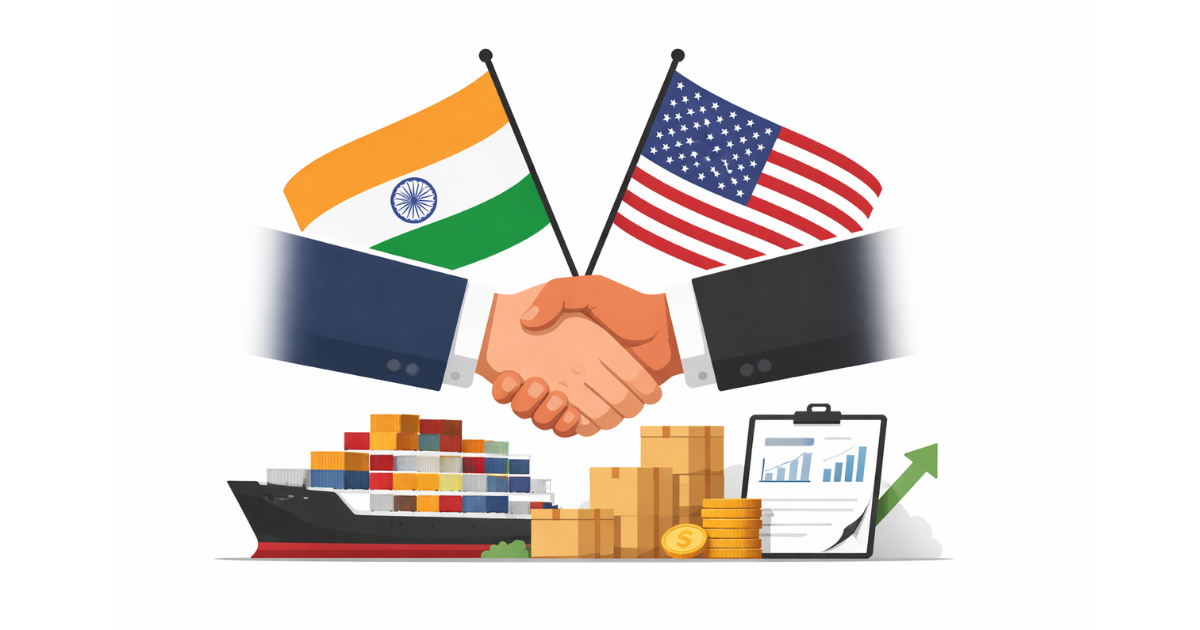
New Delhi: India is set to take a major step in strengthening its economic ties with the United States as a high-level government delegation prepares to visit Washington to finalize the first tranche of a long-awaited bilateral trade agreement.
The upcoming visit is being closely watched by businesses, exporters, and policymakers in both countries. The outcome could shape trade flows worth billions of dollars and influence key sectors such as technology, pharmaceuticals, agriculture, and manufacturing.
With global supply chains shifting and geopolitical tensions reshaping trade routes, the India-US trade deal is seen as a strategic move that could redefine economic cooperation between the world’s two largest democracies.
Why the India-US Trade Deal Matters Now
The India-US trade deal has been under discussion for several years. Talks have gained pace amid efforts by both sides to reduce trade barriers, resolve tariff disputes, and boost market access.
The first tranche of the agreement is expected to focus on practical and achievable areas. These may include tariff reductions on select goods, easing of regulatory norms, and enhanced cooperation in digital trade.
For India, the United States remains one of its largest trading partners. Bilateral trade between the two countries has crossed $190 billion in recent years, making the US a critical market for Indian exports.
For the US, India represents a fast-growing consumer base and a key strategic partner in the Indo-Pacific region.
High-Level Delegation to Washington
According to official sources, the Indian delegation will include senior officials from the Ministry of Commerce and other key departments. The visit to Washington is aimed at resolving pending issues and finalizing the contours of the first phase of the agreement.
The focus will be on areas where both sides have found common ground during previous rounds of negotiations.
Trade talks between India and the US have seen ups and downs in the past. However, recent diplomatic engagements at the highest levels have revived momentum. The upcoming visit signals that both sides are ready to move from dialogue to delivery.
What Could Be Included in the First Tranche
While full details are yet to be announced, the first tranche is expected to cover specific sectors rather than a comprehensive free trade agreement.
Key areas likely to be discussed include:
Market access for agricultural products
Tariff relief on certain industrial goods
Greater cooperation in digital trade and services
Simplification of customs procedures
Regulatory alignment in select sectors
India has been pushing for better access for its goods and services in the US market. This includes sectors like textiles, engineering goods, pharmaceuticals, and information technology services.
On the other hand, the US has been seeking improved access to the Indian market for agricultural products, medical devices, and certain manufactured goods.
The first tranche is expected to balance these interests without creating major disruptions in domestic industries.
Impact on Indian Exporters and Businesses
If finalized, the agreement could provide a strong boost to Indian exporters. Lower tariffs and smoother compliance rules can improve competitiveness in the US market.
For small and medium enterprises in India, better access to the US could mean higher orders and improved margins.
Sectors such as pharmaceuticals and information technology may benefit from clearer regulatory frameworks. India is already a major supplier of generic medicines to the US. A smoother trade environment could further strengthen this position.
The deal may also support India’s broader manufacturing push under initiatives aimed at boosting domestic production and exports.
Strategic and Geopolitical Significance
The India-US trade deal is not just about economics. It also carries strong strategic value.
In recent years, both countries have deepened cooperation in defense, technology, and supply chain resilience. Strengthening trade ties adds another layer to this partnership.
As global supply chains diversify away from overdependence on single markets, India has positioned itself as an alternative manufacturing hub. Closer trade ties with the US can support this shift.
For the US, deeper engagement with India aligns with its broader Indo-Pacific strategy. A stable and predictable trade relationship helps both sides build long-term trust.
Challenges That Remain
Despite progress, several challenges remain.
Agricultural market access has traditionally been a sensitive issue. India is cautious about opening its farm sector too widely, given the impact on small farmers.
Similarly, tariff disputes in the past have created friction. Both sides will need to ensure that the first tranche avoids triggering new disagreements.
Intellectual property rights, data localization rules, and digital trade norms are other areas where negotiations require careful handling.
The goal of the Washington visit is to narrow these gaps and finalize practical solutions.
How This Differs from a Full Free Trade Agreement
It is important to note that the current talks focus on a limited trade deal rather than a full-fledged free trade agreement.
A comprehensive FTA typically covers almost all goods and services and requires deep structural changes. That process can take years.
In contrast, the first tranche of the India-US trade deal is expected to be targeted and phased. This approach allows both sides to build trust gradually and expand the agreement over time.
If successful, future phases could widen the scope and include more sectors.
Economic Outlook and Growth Implications
India is aiming to become a $5 trillion economy in the coming years. Expanding exports and attracting investment are key pillars of this goal.
A stronger trade partnership with the US can contribute to higher export growth and improved foreign investment flows.
For American companies, India offers opportunities in infrastructure, renewable energy, technology, and consumer markets.
The first tranche could send a positive signal to global investors that India and the US are committed to stable and predictable trade policies.
In a global environment marked by uncertainty, such signals matter.
Timeline and Next Steps
The upcoming Washington visit is expected to play a decisive role in finalizing the first tranche.
After technical discussions and ministerial-level meetings, both sides may issue a joint statement outlining agreed terms.
Once finalized, implementation details will follow. Businesses will be watching closely for clarity on timelines, tariff schedules, and compliance norms.
Any announcement is likely to have immediate implications for exporters, investors, and currency markets.
What Indian Consumers Should Know
For consumers in India, the direct impact may not be immediate. However, over time, trade deals can influence prices and product availability.
If tariffs are reduced on certain goods, imports may become more affordable. At the same time, stronger exports can support job creation in manufacturing and services.
The broader benefit lies in economic stability and growth, which ultimately supports incomes and employment.
A Defining Moment in India-US Economic Ties
The planned visit of the Indian delegation to Washington marks an important moment in bilateral relations.
The first tranche of the India-US trade deal represents a pragmatic step forward. It aims to resolve key trade irritants while laying the foundation for deeper engagement.
If negotiations succeed, the agreement could unlock new opportunities for businesses on both sides and strengthen a partnership that extends beyond trade.
As global economic dynamics evolve, closer India-US cooperation may prove crucial for long-term stability and growth.
All eyes are now on Washington, where the next phase of this historic economic engagement is set to unfold.
Disclaimer: The information presented in this article is intended for general informational purposes only. While every effort is made to ensure accuracy, completeness, and timeliness, data such as prices, market figures, government notifications, weather updates, holiday announcements, and public advisories are subject to change and may vary based on location and official revisions. Readers are strongly encouraged to verify details from relevant official sources before making financial, investment, career, travel, or personal decisions. This publication does not provide financial, investment, legal, or professional advice and shall not be held liable for any losses, damages, or actions taken in reliance on the information provided.
About The Author