The Election Commission of India has announced the schedule for the 2026 Rajya Sabha elections, setting in motion the biennial process to fill seats that are due to fall vacant in April this year. Polling for 37 seats across 10 states will be held on March 16, 2026, according to the official notification issued by the Commission. The outcome of these elections will play a key role in shaping the political balance in the Upper House of Parliament at a time when major legislative decisions are expected in the coming sessions.
The Rajya Sabha, formally known as the Council of States, is the Upper House of India’s Parliament. It currently has a sanctioned strength of 245 members, of which 233 are elected representatives of states and Union Territories, while 12 are nominated by the President of India for their contribution to fields such as literature, science, art and social service. Members serve six-year terms, and one-third of the House retires every two years, leading to biennial elections such as the one scheduled this March.
According to the Election Commission’s calendar, the notification for the polls has been issued in late February. The last date for filing nominations is set for early March, followed by scrutiny of nomination papers and a window for withdrawal of candidatures. Voting will take place on March 16 between 9 am and 4 pm, and counting will begin the same evening. The entire election process is expected to be completed before the end of March, well ahead of the expiry of the current members’ terms in April.
The 37 seats going to polls are spread across Maharashtra, Tamil Nadu, West Bengal, Bihar, Odisha, Assam, Telangana, Chhattisgarh, Haryana and Himachal Pradesh. Maharashtra has the highest number of vacancies in this cycle, followed by Tamil Nadu and West Bengal. The distribution of seats reflects the staggered retirement pattern of members elected in previous cycles.
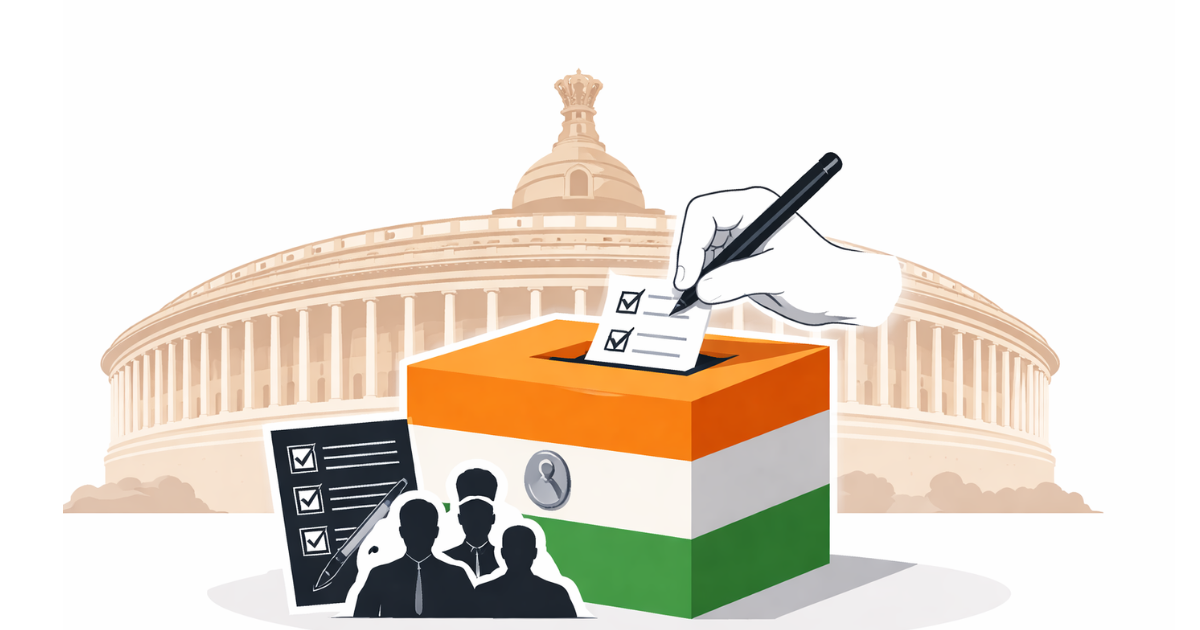
Rajya Sabha elections are not conducted through direct voting by the public. Instead, elected members of state legislative assemblies vote to elect members to the Upper House. The system used is proportional representation by means of the single transferable vote. This method ensures that representation in the Rajya Sabha broadly reflects the strength of political parties in each state assembly. Candidates require a specific quota of votes, calculated on the basis of the number of MLAs and seats available, to secure election.
Given the composition of several state assemblies, the 2026 round is expected to see closely watched contests in key states. In Maharashtra, where multiple seats are at stake, the outcome will depend on the current alignment of political alliances within the state assembly. Tamil Nadu is also expected to see nominations reflecting the strength of the ruling party and its allies in the state legislature. In West Bengal and Bihar, party arithmetic in the assemblies will determine how many seats the ruling parties and opposition formations can secure.
Political observers note that Rajya Sabha elections often test the cohesion of alliances and party discipline, as voting is conducted through an open ballot system that allows party leadership to verify how legislators cast their votes. Cross-voting has occasionally altered expected outcomes in past elections, particularly in states with narrow margins between rival parties.
The results of the March 16 polls will influence the numerical strength of major national parties in the Upper House. While the government’s ability to pass legislation also depends on broader alliances and issue-based support, changes in seat share can ease or complicate the legislative process. The Rajya Sabha plays a critical role in scrutinising bills, debating national issues and approving constitutional amendments, making its composition politically significant.
Several prominent members are set to retire at the end of their terms in April, and parties are in the process of finalising their nominees for the upcoming elections. The candidate lists are expected to reflect both political strategy and internal party considerations, including representation of regions and communities.
With the schedule now formally announced, the focus shifts to nominations and alliance negotiations within the states concerned. As the March 16 polling date approaches, attention will remain on how legislative arithmetic in each state translates into seats in the Council of States, and what that means for the balance of power in Parliament in the months ahead.
Disclaimer: The information presented in this article is intended for general informational purposes only. While every effort is made to ensure accuracy, completeness, and timeliness, data such as prices, market figures, government notifications, weather updates, holiday announcements, and public advisories are subject to change and may vary based on location and official revisions. Readers are strongly encouraged to verify details from relevant official sources before making financial, investment, career, travel, or personal decisions. This publication does not provide financial, investment, legal, or professional advice and shall not be held liable for any losses, damages, or actions taken in reliance on the information provided.
About The Author