
Srinagar/Jammu, February 20, 2026 — Security forces in Jammu and Kashmir have initiated a system of high-level weekly review meetings to respond to an emerging shift in militant activity toward remote mountainous and forested regions, marking a significant evolution in the security landscape of the Union Territory.
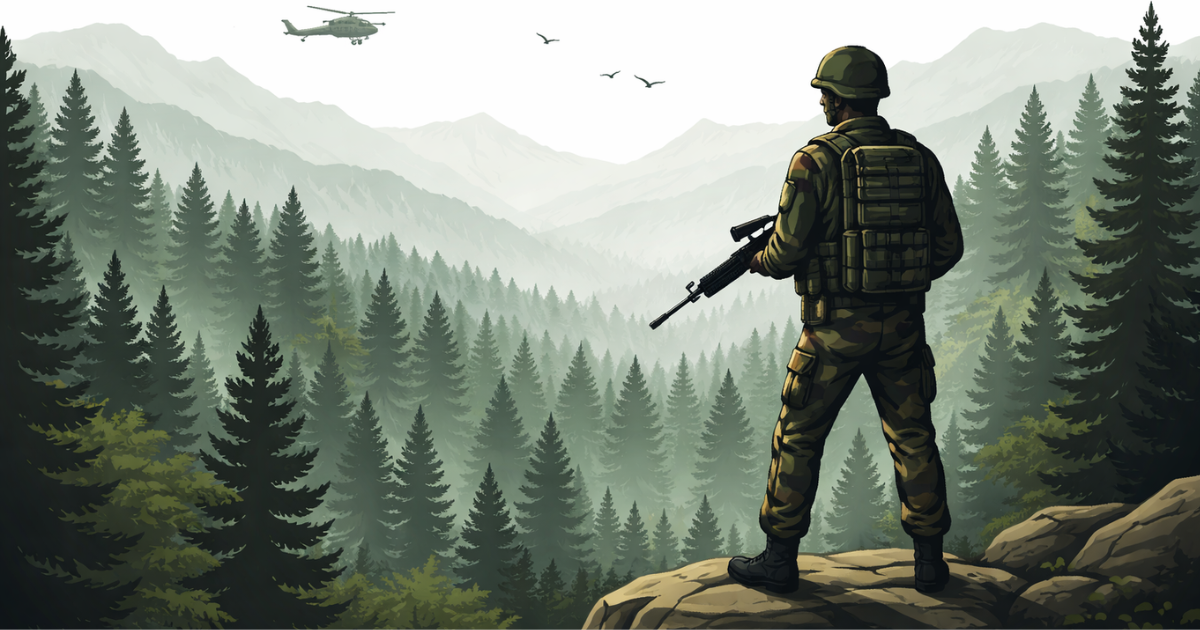
The move comes after senior officials observed that militant groups are increasingly avoiding traditional urban and semi-urban strongholds in the Kashmir Valley and are instead relocating to densely forested belts and high-altitude terrain, particularly across the Pir Panjal range and adjoining areas connecting south Kashmir with parts of Jammu.
Officials familiar with the development said the new review mechanism is aimed at strengthening coordination between the multiple forces operating in the region. These include the Indian Army, Jammu and Kashmir Police, Central Reserve Police Force, Border Security Force, and intelligence agencies. The meetings are being conducted regularly at a senior level and are designed to ensure seamless information sharing and unified operational planning.
Security agencies believe the shift to mountainous terrain provides militants with tactical advantages. Thick forests, rugged topography, and difficult accessibility make surveillance and tracking operations more complex. In many cases, these regions fall across overlapping jurisdictions, which can slow down coordinated responses if not managed through a unified command structure.
The weekly review meetings are intended to address these challenges by creating a real-time platform for assessing threats, reviewing recent operations, and aligning future strategies. Officials said the focus is on improving intelligence flow, reducing response time, and ensuring that different forces are operating with a common operational picture.
This development reflects a broader adaptation by security forces to changing patterns of militancy in Jammu and Kashmir. Over the past few years, while the overall number of incidents has seen fluctuations, there has been a noticeable trend of militants attempting to exploit geographical vulnerabilities, particularly in forested corridors that connect multiple districts and regions.
Security experts note that such terrain allows militants to move discreetly between areas, evade detection, and establish temporary hideouts. These zones can also serve as transit routes, complicating efforts to isolate and neutralize threats quickly.
The renewed focus on inter-agency coordination also aligns with ongoing efforts by the central government to strengthen the counter-insurgency grid in the region. High-level security reviews at the national level have repeatedly emphasized the importance of intelligence-led operations, stronger border management, and enhanced coordination among all deployed forces.
Officials said that the weekly meetings are not just procedural but are expected to play a key role in operational outcomes on the ground. By bringing together leadership from across forces, the initiative aims to eliminate gaps that militants may exploit, particularly in areas where terrain and jurisdictional boundaries intersect.
At the same time, authorities maintain that security operations will continue to be calibrated and targeted, with an emphasis on maintaining stability and minimizing disruption to civilian life. The evolving strategy reflects a balance between sustained vigilance and adaptive response to emerging threats.
As Jammu and Kashmir navigates this changing phase of militancy, the introduction of structured, frequent, and high-level reviews signals a shift toward a more integrated and proactive security framework. Officials believe that such measures will be critical in addressing the challenges posed by militants operating in difficult terrain and in maintaining long-term stability in the region.
Disclaimer: The information presented in this article is intended for general informational purposes only. While every effort is made to ensure accuracy, completeness, and timeliness, data such as prices, market figures, government notifications, weather updates, holiday announcements, and public advisories are subject to change and may vary based on location and official revisions. Readers are strongly encouraged to verify details from relevant official sources before making financial, investment, career, travel, or personal decisions. This publication does not provide financial, investment, legal, or professional advice and shall not be held liable for any losses, damages, or actions taken in reliance on the information provided.
About The Author