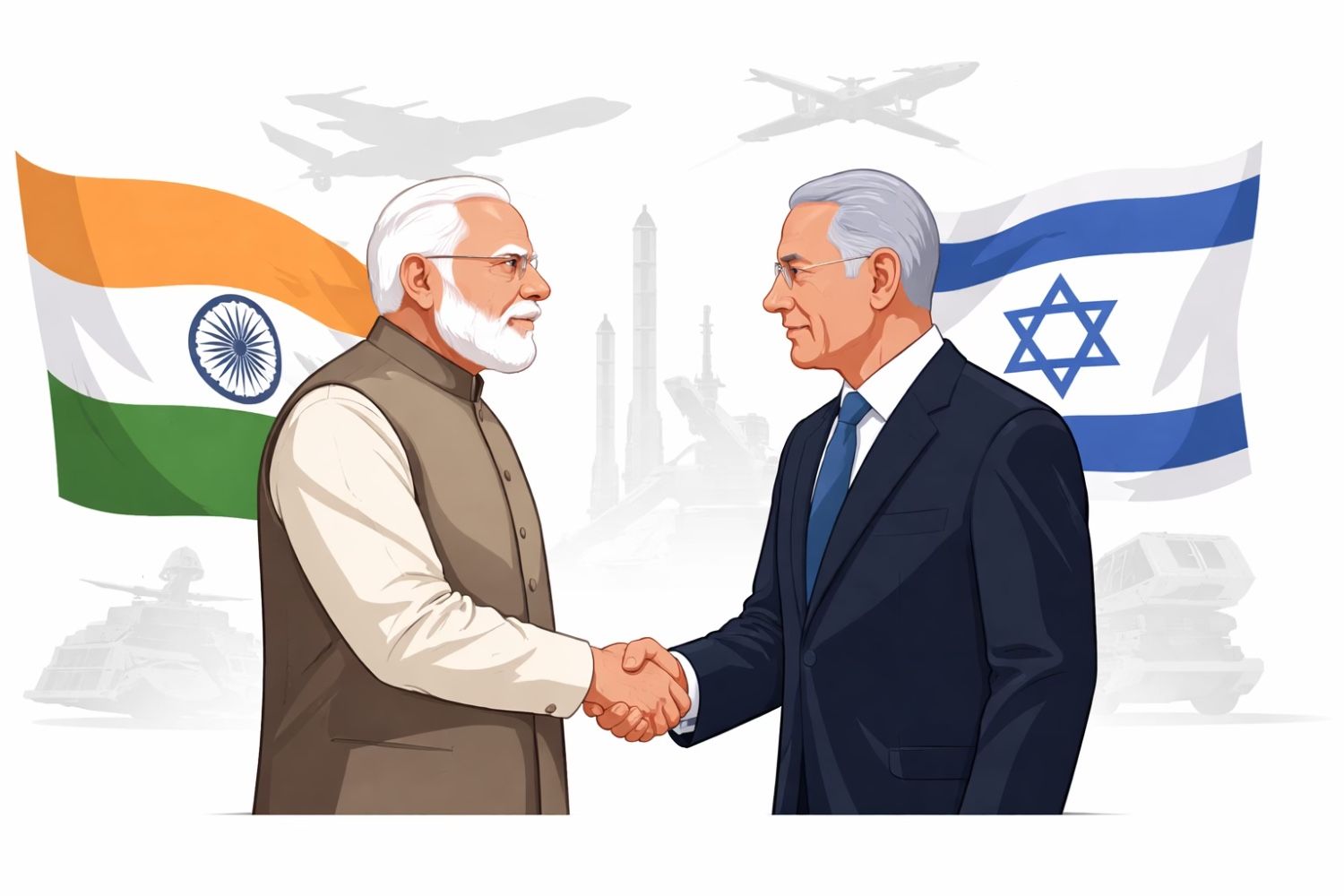
Prime Minister Narendra Modi’s Israel visit in 2026 is being closely watched as both nations prepare to expand cooperation in defence, technology, agriculture and regional security. The visit comes at a time when West Asia remains tense and global supply chains are under pressure. For India, the trip carries strong strategic and economic importance.
India and Israel established full diplomatic relations in 1992. Since then, ties have steadily grown. Defence and technology have become key pillars of the partnership. Over the years, cooperation has also expanded into water management, agriculture, cybersecurity and innovation.
The 2026 visit is expected to focus on strengthening these core areas while addressing new global challenges.
Why PM Modi’s Israel Visit Matters in 2026
India–Israel relations have evolved into a strategic partnership. Israel is among India’s top defence suppliers. At the same time, India is one of Israel’s largest trading partners in Asia.
The visit gains importance for three main reasons.
Regional security concerns in West Asia.
Growing defence collaboration.
Emerging technology and innovation partnerships.
India has maintained balanced relations in West Asia. It has strong ties with Israel as well as Arab nations. The visit reflects India’s multi-aligned foreign policy approach.
A Look Back: From 1992 to a Strategic Partnership
Prime Minister Narendra Modi made history in July 2017 when he became the first Indian Prime Minister to visit Israel. That visit marked a major shift in diplomatic engagement. It signalled that India was ready to publicly strengthen ties with Israel.
Israel’s Prime Minister at the time, Benjamin Netanyahu, later visited India in 2018, further deepening cooperation.
Since then, the partnership has grown in sectors such as defence and missile systems, agriculture and water technology, innovation and start-up ecosystems, and homeland security and cybersecurity.
The 2026 visit builds on this foundation.
Key Agenda Items During the 2026 Visit
Defence and Security Cooperation
Defence remains the backbone of India–Israel relations.
Israel has supplied India with advanced systems including air defence systems, surveillance drones, missile technology and radar systems.
India has also collaborated with Israeli defence firms for joint production and technology transfer.
With evolving security challenges in the region, talks are expected to focus on expanding joint defence production, technology sharing and strengthening counter-terror cooperation.
India has consistently worked to modernise its armed forces. Israeli defence technology has played a role in that effort.
Technology, Innovation and Start-up Collaboration
Israel is known for its strong start-up ecosystem. It has expertise in artificial intelligence, cybersecurity, fintech and defence technology.
India, with its fast-growing digital economy, sees Israel as a valuable technology partner.
Discussions during the visit are expected to include joint innovation funds, collaboration between Indian and Israeli start-ups, AI and cyber security partnerships and research cooperation in advanced technologies.
India’s focus on digital public infrastructure and semiconductor growth makes technology talks especially relevant in 2026.
Agriculture and Water Management
Water technology and drip irrigation have been key success areas in bilateral ties.
Israel has helped India set up Centres of Excellence in agriculture across several states. These centres focus on precision farming, advanced irrigation methods and high-yield crop techniques.
Given India’s climate challenges and water stress in many regions, further cooperation in water recycling and smart irrigation is expected to be discussed.
Trade and Economic Cooperation
Bilateral trade between India and Israel has grown significantly since 1992.
Trade includes diamonds, chemicals, defence equipment, electronics and agricultural products.
There have also been discussions in the past about a possible Free Trade Agreement. While negotiations have moved slowly, economic cooperation remains a priority.
The 2026 visit may help revive trade discussions and encourage more investments.
Geopolitical Context: West Asia and India’s Balanced Approach
The visit comes amid ongoing instability in parts of West Asia. India has strong energy and diaspora ties with Gulf countries. It also maintains defence cooperation with Israel.
India has consistently supported dialogue and stability in the region. It has called for restraint and peaceful solutions to conflicts.
By engaging both Israel and Arab nations, India follows a strategic balance. This approach protects India’s energy interests, trade routes and diaspora welfare.
The 2026 visit reflects this carefully managed diplomacy.
Impact on India’s Defence Modernisation
India has been working to strengthen domestic defence manufacturing under the “Make in India” initiative.
Israel’s experience in defence technology and innovation can support India’s push for indigenous production, joint ventures and research partnerships.
Joint projects also help India reduce dependency on multiple suppliers and improve technological capacity.
For Israel, India represents a large and reliable defence market.
Strengthening Counter-Terror and Homeland Security Cooperation
India and Israel share concerns about terrorism and regional security threats.
Cooperation in this area has included intelligence sharing, border security technologies and counter-terror training.
With global security threats evolving, discussions during the visit are expected to reinforce coordination.
Diplomatic Significance and Symbolism
Prime Minister Modi’s 2017 visit broke new ground by delinking India’s Israel policy from earlier hesitation.
The 2026 visit carries symbolic value as well. It shows that India–Israel ties have matured beyond defence into broader strategic engagement.
High-level political engagement also reassures investors and strategic partners.
Economic Opportunities for Indian Businesses
Indian companies in sectors such as IT services, agri-tech, water technology and cybersecurity may benefit from stronger bilateral ties.
Israel’s innovation ecosystem offers opportunities for Indian start-ups seeking global collaboration.
Likewise, Israeli companies may look to India’s large market and manufacturing base.
How the Visit Could Shape Future India–Israel Relations
The 2026 visit is expected to reinforce defence cooperation, expand technology partnerships, strengthen agricultural collaboration and boost strategic dialogue.
It also signals continuity in India’s foreign policy approach.
India has maintained steady engagement with Israel across political changes in both countries. This consistency has helped build trust.
What Indian Citizens Should Watch
For Indian readers, key outcomes to monitor include new defence agreements, announcements on technology collaboration, investment commitments and statements on regional security.
Any progress on trade negotiations could also have long-term economic impact.
Conclusion: A Strategic Partnership Moving into a New Phase
PM Modi’s Israel visit in 2026 comes at a crucial global moment. West Asia is facing uncertainty. Technology competition is rising. Defence modernisation remains a priority for India.
Over three decades after establishing diplomatic ties in 1992, India and Israel have built a strong strategic partnership.
The 2026 visit is not just a diplomatic event. It is part of a broader effort to deepen cooperation in defence, innovation, agriculture and regional stability.
For India, the engagement supports national security and economic growth. For Israel, it strengthens ties with one of the world’s fastest-growing major economies.
As both nations navigate global challenges, the visit may mark another important chapter in the India–Israel relationship.
Disclaimer: The information presented in this article is intended for general informational purposes only. While every effort is made to ensure accuracy, completeness, and timeliness, data such as prices, market figures, government notifications, weather updates, holiday announcements, and public advisories are subject to change and may vary based on location and official revisions. Readers are strongly encouraged to verify details from relevant official sources before making financial, investment, career, travel, or personal decisions. This publication does not provide financial, investment, legal, or professional advice and shall not be held liable for any losses, damages, or actions taken in reliance on the information provided.
Edited by D. Rishidhar Reddy
About The Author