
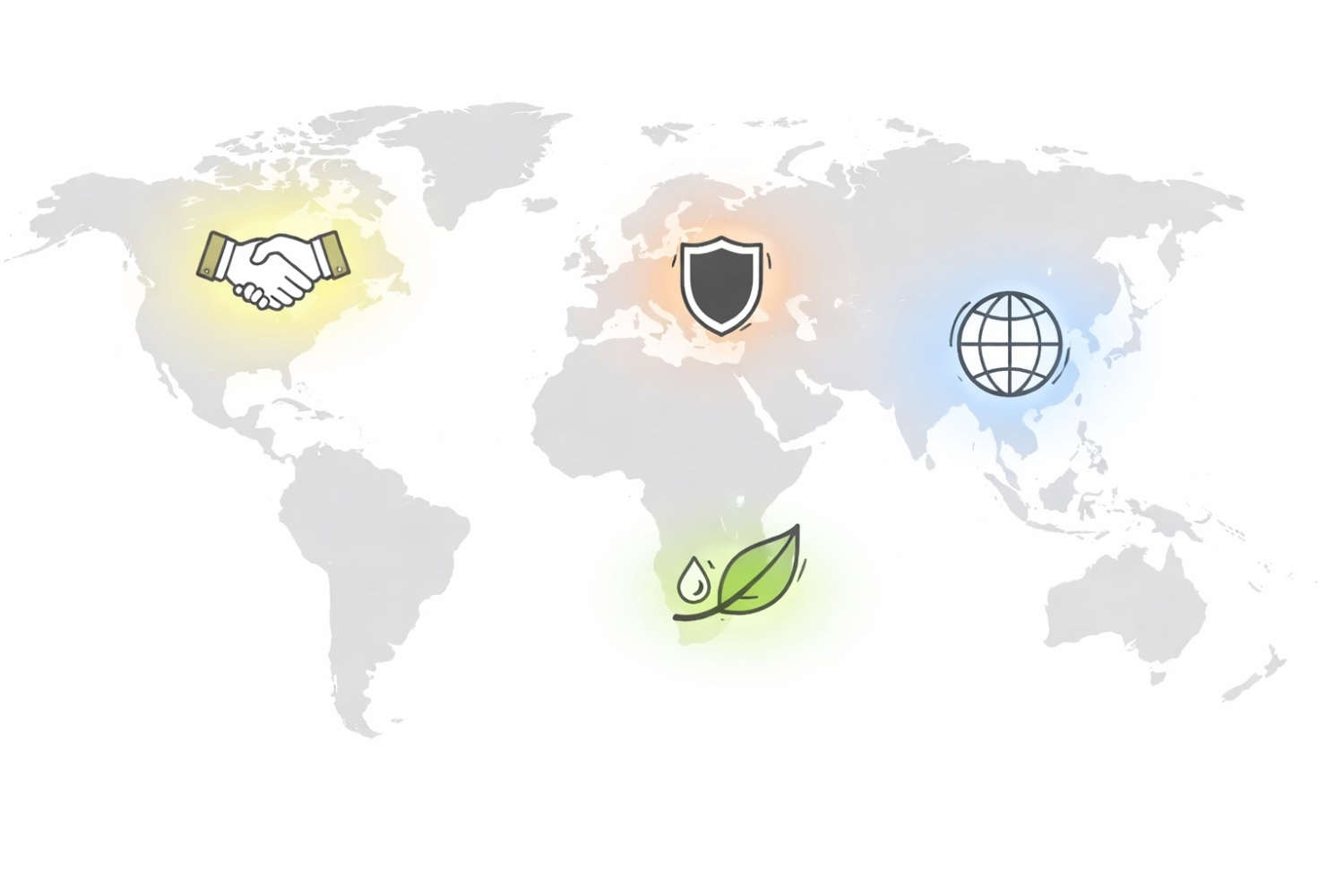
The global news cycle is moving fast. From diplomatic talks between major powers to ongoing conflicts, economic pressure and major cultural moments, today’s international headlines are shaping political debates and public opinion across continents.
For Indian readers, global developments matter more than ever. India is closely linked to world trade, energy supply, technology partnerships and security cooperation. Decisions taken in Washington, Beijing, Moscow, Brussels or West Asia can directly impact markets, oil prices, jobs and foreign policy choices in New Delhi.
Here is a detailed look at the key diplomatic, security and cultural moments shaping world discourse today.
Diplomatic Engagements Redefine Global Power Balance
Diplomacy remains at the centre of global attention. The continuing war in Ukraine has kept dialogue open between Western nations and Russia, even as sanctions remain in place. The United States and European allies have maintained economic restrictions on Moscow since 2022, while diplomatic channels are used to prevent escalation.
The conflict between Israel and Hamas has also reshaped global diplomacy. After the October 7, 2023 attacks in Israel and the subsequent military response in Gaza, regional powers such as Egypt and Qatar have played active roles in mediation efforts. The humanitarian situation has been a major concern for the United Nations and global aid agencies.
Tensions between the United States and China continue to influence global discussions. Trade, technology access, semiconductor supply chains and security in the Indo-Pacific region remain sensitive issues. Both countries have held high-level talks over the past year to stabilise relations, even as competition continues.
For India, these diplomatic shifts are significant. New Delhi maintains strategic partnerships with the US, strong trade ties with the European Union and longstanding defence cooperation with Russia. Managing these relationships requires careful balancing as global alignments evolve.
Security Concerns and Ongoing Conflicts Dominate Headlines
Security remains a top global concern. The Russia-Ukraine war continues to impact energy markets and food supply chains. Grain exports from the Black Sea region have faced disruptions at different points since 2022, affecting prices worldwide.
In West Asia, the conflict in Gaza has triggered wider regional tensions. Cross-border strikes and military exchanges involving regional actors have raised fears of a broader confrontation. Global leaders have repeatedly called for restraint to prevent escalation.
In Asia, security discussions are also focused on the South China Sea and Taiwan Strait. China’s military activity in the region and US naval presence have kept tensions high. Several Southeast Asian nations have expressed concern about maritime security and freedom of navigation.
Meanwhile, global terrorism threats remain under watch. Security agencies in Europe and North America have increased surveillance following warnings about extremist attacks. Governments are balancing counterterrorism efforts with civil liberty concerns.
For India, global security trends have direct implications. Energy imports, overseas Indian communities and trade routes are all influenced by stability in these regions.
Global Economic Signals: Inflation, Energy and Trade
Economic news is closely linked to geopolitical developments. Inflation pressures in many advanced economies have eased compared to 2022 and 2023 highs, but central banks remain cautious.
The United States Federal Reserve and the European Central Bank have kept interest rates elevated in recent years to control inflation. Investors around the world, including in India, track these policy decisions closely as they affect capital flows and currency markets.
Oil prices remain sensitive to developments in West Asia and production decisions by OPEC+. India, as one of the world’s largest oil importers, watches these trends carefully. Even small price changes can affect fuel costs and inflation at home.
Global trade patterns are also shifting. Supply chain disruptions during the COVID-19 pandemic led many countries to rethink manufacturing dependence. There is growing emphasis on “friend-shoring” and diversifying supply chains. India has positioned itself as an alternative manufacturing hub through policy initiatives aimed at boosting domestic production.
Technology trade is another key issue. Restrictions on advanced semiconductor exports to China by the US and its allies have influenced global tech supply chains. Countries are investing heavily in domestic chip production to reduce reliance on a few suppliers.
Climate Action and Environmental Challenges
Climate change remains a major topic in global discourse. Extreme weather events, including heatwaves, floods and wildfires, have been reported across different regions in recent years. Scientific reports continue to warn about rising global temperatures and the need to limit emissions.
Countries reaffirmed climate commitments during recent global climate summits, focusing on renewable energy expansion and reducing fossil fuel dependence. The transition to green energy is now seen not only as an environmental issue but also as a strategic and economic priority.
India plays a key role in climate discussions. As one of the world’s largest energy consumers, it has set targets to increase renewable energy capacity and reduce emissions intensity. Global cooperation on climate finance and technology transfer remains an important demand from developing countries.
The climate debate is no longer limited to activists and scientists. It influences investment decisions, energy policy and diplomatic negotiations.
Cultural Moments and Global Soft Power
Beyond politics and security, cultural developments are shaping global narratives. International film festivals, sporting events and global entertainment releases continue to connect audiences across borders.
Streaming platforms have made regional content global. Korean dramas, Spanish thrillers and Indian films are watched worldwide. Cultural exchange is now faster and more visible than ever before.
Major sporting events also influence global attention. International cricket tournaments, football championships and Olympic preparations bring countries together while also boosting national pride. Sport has often acted as a bridge even during political tensions.
Global migration trends have also influenced cultural identity debates in Europe and North America. Immigration policies remain a political issue in several countries, with governments balancing labour needs and border control.
For India, the global cultural conversation matters. The Indian diaspora, one of the largest in the world, plays a role in shaping international perception. Indian cinema, yoga, cuisine and technology leadership have strengthened the country’s soft power.
Technology and Artificial Intelligence in Focus
Artificial intelligence continues to dominate technology discussions worldwide. Governments are debating regulations to ensure safety while encouraging innovation. The rapid development of generative AI tools has raised concerns about misinformation, job disruption and data privacy.
The European Union has moved forward with comprehensive AI regulation frameworks, while the United States is focusing on executive guidelines and industry cooperation. China has also introduced rules governing AI services.
India is positioning itself as a major AI and digital innovation hub. Global technology competition influences investment flows, research collaboration and digital infrastructure development.
Cybersecurity threats have also increased in recent years. Governments and corporations are investing more in digital defence systems as cyberattacks become more frequent and sophisticated.
Why These Global Headlines Matter for India
Global diplomacy, security, economic shifts and cultural trends are deeply connected to India’s growth story. Energy prices affect inflation. Global interest rates influence foreign investment. Security tensions impact strategic decisions.
India’s foreign policy has focused on multi-alignment, maintaining relations with diverse global partners. This approach requires careful observation of global headlines and emerging risks.
For businesses, global trends determine export demand, supply chain decisions and investment planning. For students and professionals, changes in visa rules, global job markets and international cooperation matter directly.
For policymakers, global shifts shape defence strategy, trade negotiations and climate commitments.
The Bigger Picture: A World in Transition
The world is in a period of transition. Power equations are shifting. Technology is evolving rapidly. Economic alliances are changing. Cultural exchanges are expanding through digital platforms.
At the same time, unresolved conflicts and security risks continue to challenge global stability.
For Indian readers, staying informed about global headlines is not just about international curiosity. It is about understanding how world events affect everyday life, from fuel prices and stock markets to education opportunities and foreign policy choices.
As diplomatic efforts continue, conflicts unfold and cultural moments capture attention, the global discourse remains dynamic. The coming months will likely see further negotiations, policy shifts and strategic recalculations.
In a connected world, global headlines are no longer distant events. They are part of India’s daily conversation, shaping decisions at home and abroad.
Disclaimer: The information presented in this article is intended for general informational purposes only. While every effort is made to ensure accuracy, completeness, and timeliness, data such as prices, market figures, government notifications, weather updates, holiday announcements, and public advisories are subject to change and may vary based on location and official revisions. Readers are strongly encouraged to verify details from relevant official sources before making financial, investment, career, travel, or personal decisions. This publication does not provide financial, investment, legal, or professional advice and shall not be held liable for any losses, damages, or actions taken in reliance on the information provided.
Edited by D Rishidhar Reddy
About The Author