
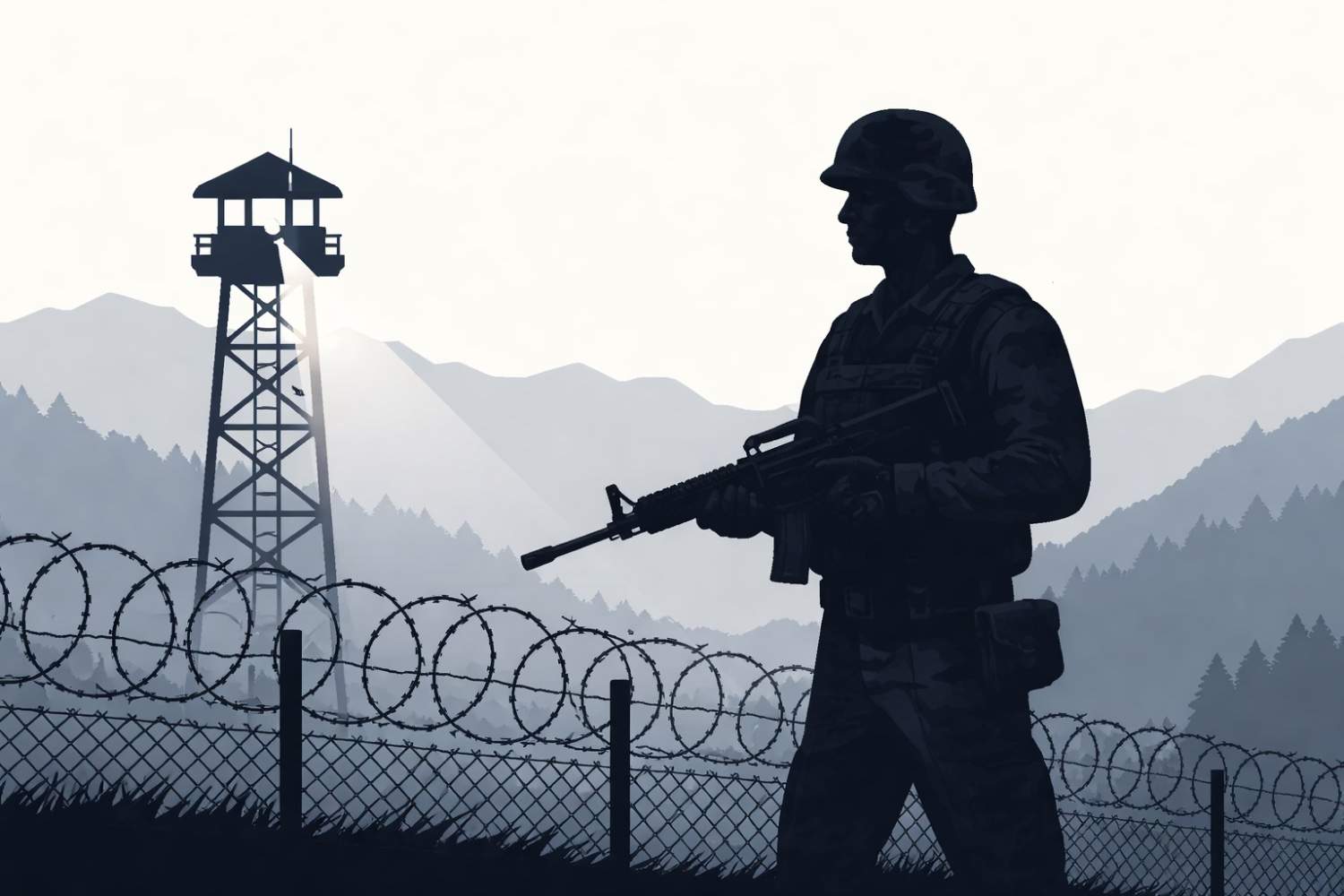
ndia’s security forces have successfully foiled a major infiltration attempt along the Line of Control (LoC) in Jammu and Kashmir, according to officials familiar with the operation. The development comes at a time when cross-border infiltration attempts typically rise ahead of the summer months, when snow melts in high-altitude areas and infiltration routes become more accessible.
Security agencies say alert troops detected suspicious movement near the LoC and launched a coordinated operation that prevented armed militants from entering Indian territory. The interception highlights the continued vigilance of the Indian Army and border surveillance systems deployed along sensitive sectors of the border.
The operation also underlines ongoing concerns about cross-border terror infiltration attempts and the importance of intelligence coordination between security agencies.
Security Forces Detect Suspicious Movement Along the LoC
Officials said the infiltration attempt was detected during routine surveillance operations in a forward area along the Line of Control in Jammu and Kashmir.
Troops monitoring the region noticed suspicious movement during night-time patrol and immediately alerted nearby units. According to security sources, surveillance equipment and ground observation played a crucial role in identifying the infiltration group before they could cross deeper into Indian territory.
Security forces quickly launched a search and interception operation in the area. Reinforcement units were deployed to seal possible escape routes while surveillance continued to track the suspected infiltrators.
The swift response ensured that the infiltration attempt was stopped before militants could establish a foothold inside the Indian side of the border.
Operation Conducted With Multi-Layered Border Security
Security officials said the successful operation was the result of India’s multi-layered border security system along the Line of Control.
Over the years, the Indian Army has strengthened border monitoring through a combination of:
• Forward troop deployment
• Electronic surveillance systems
• Night-vision monitoring equipment
• Ground sensors and patrol units
These systems help detect infiltration attempts even in difficult terrain and low visibility conditions.
Military officials say infiltration attempts are often made at night and through forested or mountainous routes where militants hope to avoid detection. However, improved surveillance and better coordination among security agencies have made it increasingly difficult for infiltrators to cross the border undetected.
Heightened Vigilance in Jammu and Kashmir Border Areas
Security forces maintain constant vigilance along the LoC due to continued attempts by militant groups to infiltrate into Jammu and Kashmir.
The Line of Control stretches over 700 kilometres and passes through challenging terrain including mountains, forests, and snow-covered regions. Monitoring such a long and complex border requires continuous patrols and advanced monitoring systems.
Officials say infiltration attempts often increase during certain seasons when weather conditions make movement easier across the border.
As a result, troops remain on high alert throughout the year, with additional monitoring during periods when infiltration activity is expected to rise.
Importance of Intelligence and Surveillance
Security experts say intelligence gathering plays a key role in preventing infiltration attempts.
Information from various intelligence agencies helps security forces identify possible infiltration routes and suspicious movements near the border. This intelligence is often combined with surveillance technology and ground patrols to detect threats early.
In many cases, local intelligence inputs and monitoring of cross-border communication also help authorities identify potential infiltration plans.
The recent operation demonstrates how intelligence coordination and rapid response by security forces can prevent potential threats before they escalate.
Counter-Infiltration Grid Strengthened Over the Years
India has significantly strengthened its counter-infiltration grid along the Line of Control over the past decade.
This grid includes multiple layers of defense designed to detect and stop infiltrators at different stages.
The system typically includes:
• Surveillance and observation posts along the border
• Patrol units monitoring infiltration routes
• Rapid-response teams ready to intercept suspects
• Coordination between army units and local security agencies
These measures are aimed at preventing militants from entering populated areas and carrying out attacks.
Security analysts say the success of such operations reflects the effectiveness of the current counter-infiltration strategy.
Why Infiltration Attempts Continue
Despite strong border security, infiltration attempts continue due to the strategic importance of the region and ongoing militant activities.
Experts say infiltration attempts are often linked to efforts by militant groups to maintain their presence in Jammu and Kashmir.
Militants typically attempt to cross the LoC in small groups and use difficult terrain to avoid detection. They may also rely on guides familiar with mountain routes.
However, security forces say that many infiltration attempts are intercepted due to improved monitoring and quick operational response.
Impact on Regional Security
Preventing infiltration attempts is a key part of maintaining security and stability in Jammu and Kashmir.
Security officials say stopping militants at the border reduces the risk of attacks in populated areas and helps maintain peace in the region.
Operations along the Line of Control are therefore considered an essential part of India’s counter-terrorism strategy.
The recent operation also demonstrates the readiness of Indian security forces to respond quickly to potential threats.
Coordination Between Security Agencies
Operations along the LoC often involve coordination between multiple security agencies.
The Indian Army plays the primary role in border defense, while intelligence agencies and local security forces provide support through information sharing and operational assistance.
Such coordination helps ensure that infiltration attempts are detected early and handled effectively.
Security officials say this coordinated approach has significantly improved the ability to prevent cross-border infiltration.
Challenges of Border Operations
Monitoring the Line of Control remains a complex task due to difficult terrain and harsh weather conditions.
The border passes through mountainous regions where visibility can be limited and weather conditions change rapidly. Snowfall during winter months often blocks routes, while melting snow in spring can reopen infiltration paths.
Despite these challenges, troops stationed along the border maintain round-the-clock surveillance to prevent infiltration attempts.
The recent operation highlights the constant vigilance required to protect the border.
Security Forces Continue Monitoring Border Activity
Following the interception of the infiltration attempt, security forces have intensified monitoring in the area to ensure that no additional threats remain.
Search operations are often conducted after such incidents to verify that no militants managed to cross the border during the attempt.
Officials say surveillance and patrol activities continue as part of standard security procedures along the LoC.
The Indian Army has not released detailed operational information due to security considerations, but officials confirmed that the situation remains under control.
Conclusion
The successful interception of a major infiltration attempt along the Line of Control demonstrates the effectiveness of India’s border security system and the readiness of security forces to respond to potential threats.
With constant surveillance, intelligence coordination, and rapid operational response, security agencies continue to play a critical role in preventing cross-border infiltration and maintaining stability in Jammu and Kashmir.
As border monitoring continues, authorities remain vigilant to ensure that infiltration attempts are detected early and neutralised before they can pose a threat to civilian areas.
Security forces say maintaining such vigilance is essential for protecting national security and ensuring peace along one of the most sensitive borders in the region.
Disclaimer: The information presented in this article is intended for general informational purposes only. While every effort is made to ensure accuracy, completeness, and timeliness, data such as prices, market figures, government notifications, weather updates, holiday announcements, and public advisories are subject to change and may vary based on location and official revisions. Readers are strongly encouraged to verify details from relevant official sources before making financial, investment, career, travel, or personal decisions. This publication does not provide financial, investment, legal, or professional advice and shall not be held liable for any losses, damages, or actions taken in reliance on the information provided.
edited by D Rishidhar
About The Author