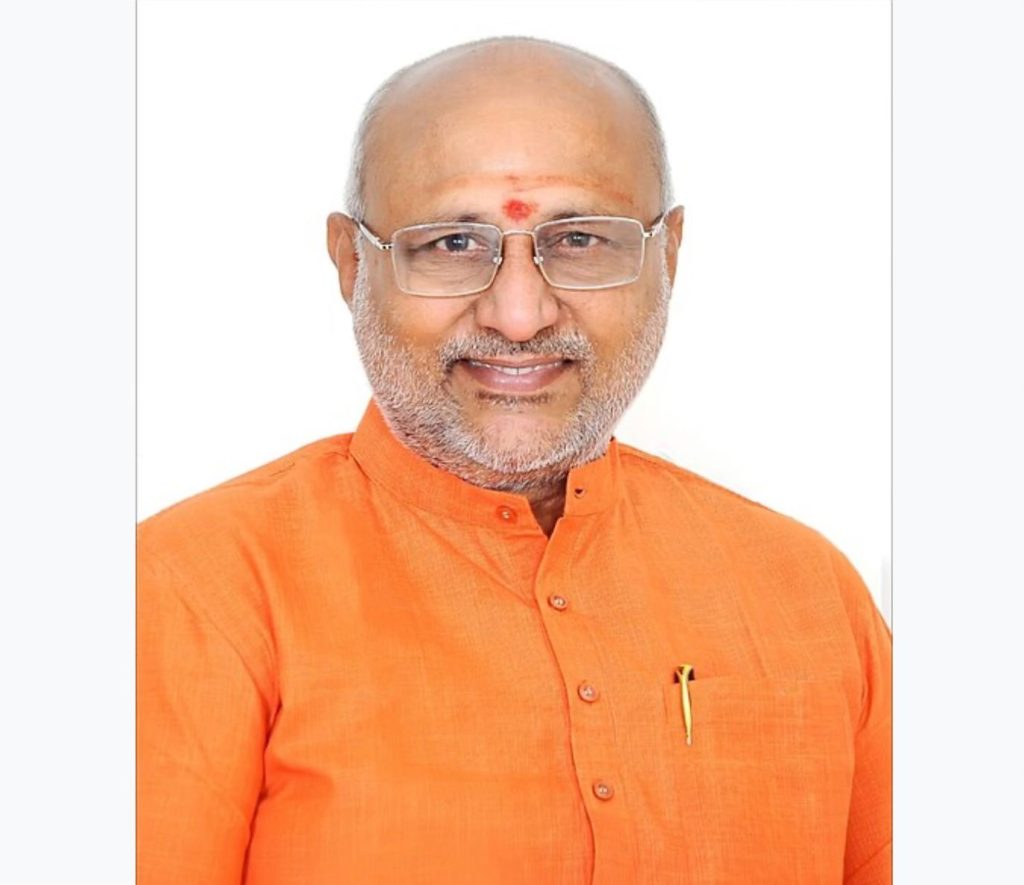
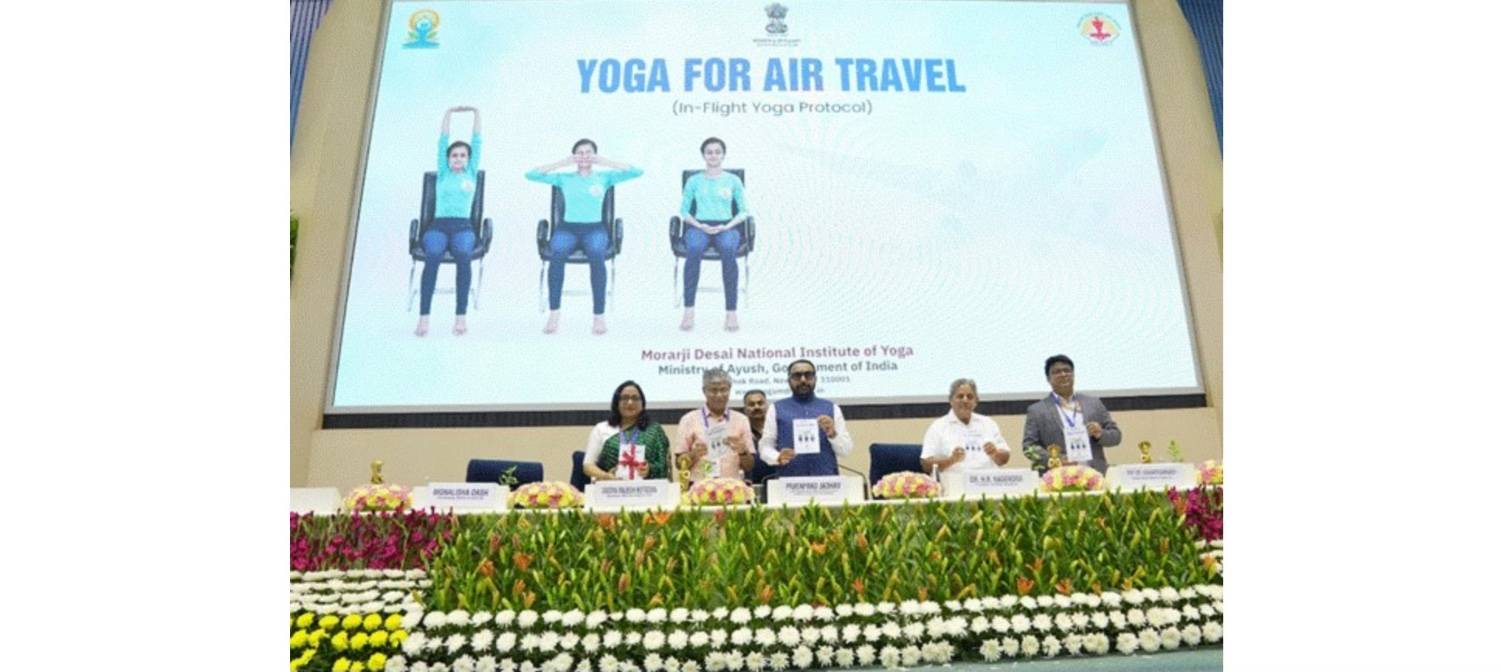
In a move that blends preventive healthcare with the realities of modern travel, the Ministry of Ayush on Friday introduced a five-minute “Yoga for Air Travel” routine aimed at helping passengers reduce stiffness, fatigue and stress during flights. The protocol was launched during Yoga Mahotsav 2026 by Union Minister of State (Independent Charge) for Ayush, Shri Prataprao Jadhav, and has been developed by the Morarji Desai National Institute of Yoga.
The initiative, titled “Stay Fit While You Fly”, reflects a growing policy emphasis on making wellness practices practical, accessible and compatible with everyday life. According to the official release issued by the Press Information Bureau, the routine is designed specifically for air travellers who spend extended periods seated in confined cabin spaces, a condition that often leads to discomfort and reduced mobility during or after flights.
The Ministry said the protocol is intended to serve as a simple in-seat wellness intervention for frequent flyers as well as occasional passengers. Rather than requiring mats, dedicated space or special equipment, it can be performed while seated and combines gentle movement, breath regulation and brief mental relaxation. That design is central to the programme’s appeal: it seeks to take yoga out of formal settings and adapt it to one of the most common but physically restrictive experiences in modern life—air travel.
Speaking at the launch, Shri Prataprao Jadhav said yoga remains a powerful tool for preventive health and well-being, adding that the new protocol reflects the government’s effort to make yoga available “in every setting—even at 35,000 feet.” His remarks placed the initiative within the wider Ayush approach of integrating traditional wellness practices into daily routines rather than confining them to specialised environments.
The official release also underlined the health rationale behind the move. Long-duration flights often involve prolonged immobility, which may contribute to muscle stiffness, poor circulation, fatigue and jet lag. The Ministry noted that in some cases, extended inactivity during travel can also be associated with more serious concerns such as deep vein thrombosis, or DVT. In that context, the new protocol is being presented not as an intensive workout, but as a short and manageable preventive routine that can support comfort and mobility in flight.
Vaidya Rajesh Kotecha, Secretary, Ministry of Ayush, said integrating yoga into everyday routines, including in constrained settings such as aircraft cabins, can help improve circulation, reduce stress and support overall well-being. His comments highlighted the Ministry’s effort to position yoga as part of a broader preventive health strategy—one that is low-cost, non-invasive and easily adoptable by the public.
As outlined in the release, the five-minute sequence begins with a short centring practice of about 15 seconds, allowing travellers to settle themselves and become aware of their posture and breath. This is followed by around 45 seconds of gentle joint movements, including shoulder rotations and ankle stretches, intended to improve circulation and reduce stiffness that often builds up during long periods of sitting.
The protocol then progresses into seated yoga postures. These include modified movements such as Tadasana, or Palm Tree Pose, along with seated Cat-Cow stretches, spinal twists and gentle leg movements. Because the routine is designed for use inside an aircraft seat, the movements have been adapted to suit limited space while still promoting better posture and easing physical tension.
Breathing practices, or pranayama, form another major component of the routine. The Ministry listed deep breathing, Anulom Vilom, Bhramari and Sheetali among the recommended practices. These are intended to calm the nervous system and support oxygen flow, while also helping passengers manage the mental strain that can accompany air travel, especially on long-haul or high-stress journeys. A brief meditation segment of about 30 seconds completes the protocol, offering what the Ministry describes as a quick reset for the mind.
The government’s messaging around the programme goes beyond physical comfort. Ms Monalisa Dash, Joint Secretary, Ministry of Ayush, said the initiative demonstrates how yoga can be integrated into everyday situations and supports the Ministry’s larger effort to build a “culture of wellness” that accompanies people wherever they go. That framing suggests the programme is as much about behavioural change as it is about in-flight comfort, encouraging people to use small pockets of time for preventive care.
According to the official release, the Ministry expects the routine to help improve blood circulation, reduce muscle stiffness and fatigue, ease stress and anxiety, support digestion and hydration awareness, and help travellers better manage jet lag. These claimed benefits are presented in the release as practical outcomes of a short, regular intervention rather than as dramatic medical claims.
That distinction matters. The protocol is being promoted as a wellness-support tool for general passenger comfort and preventive care, not as a substitute for medical advice or treatment. In positioning the routine this way, the Ministry appears to be aligning the initiative with responsible public-health communication: offering a simple, low-risk practice while avoiding exaggerated promises. The official material stresses ease, safety and accessibility, especially in the context of routine travel discomfort.
The timing of the launch during Yoga Mahotsav 2026 is also significant. The Ayush Ministry has increasingly used public campaigns and thematic observances to broaden yoga’s reach beyond formal sessions and flagship annual events. By taking the concept into the context of air travel, the Ministry is attempting to connect yoga to a specific lifestyle need faced by a large and growing segment of passengers in India and abroad.
For the aviation traveller, the message is direct: wellness need not wait until landing. A few mindful minutes during a journey, the Ministry suggests, may help passengers arrive feeling less fatigued, more mobile and mentally calmer. The official release describes the initiative as a reminder that yoga does not require extra time or dedicated space—only intention and a willingness to pause.
With this launch, the Ministry of Ayush is not merely introducing another awareness campaign. It is testing a practical model of situational wellness—one that adapts a traditional practice to a highly specific modern environment. Whether the routine sees widespread adoption among airlines, frequent flyers and wellness-conscious passengers remains to be seen. But as a public-health communication effort, it marks a clear attempt to make preventive care more immediate, portable and relevant to the rhythms of contemporary travel.
Source : PIB
edited by D.Rishidhar Reddy
About The Author