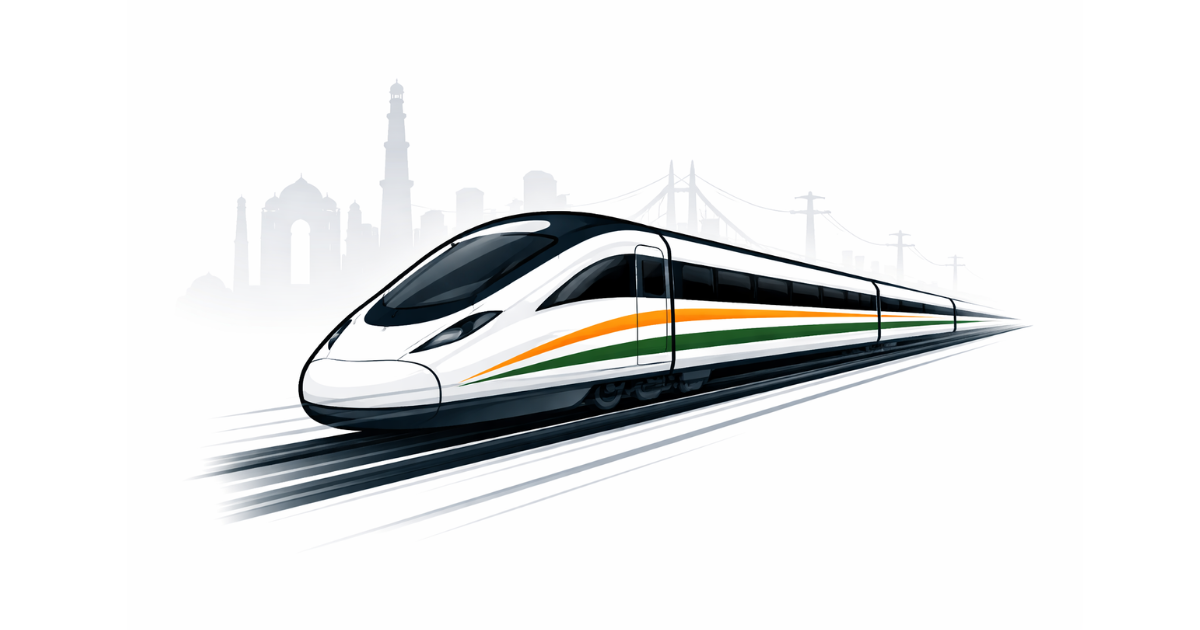
India is preparing for the next big leap in rail travel. After the success of Vande Bharat trains, the government is now working on locally designed high-speed trains capable of running at 280 kmph.
This move signals a shift from importing technology to developing advanced train systems within the country.
The plan comes at a time when India is investing heavily in rail infrastructure, dedicated freight corridors, and high-speed rail networks. If executed on schedule, the new trains could redefine intercity travel and strengthen the country’s manufacturing ecosystem.
Here is everything you need to know about the proposed 280 kmph trains, expected routes, and the launch timeline.
Why This Development Matters Now
India’s fastest operational train services today include the Vande Bharat Express, which has a design speed of 180 kmphbut runs at a maximum operational speed of around 160 kmph on select routes.
The upcoming high-speed trains aim to go much faster — up to 280 kmph — placing India closer to global high-speed rail standards.
The timing is significant for three reasons:
• India is building its first bullet train corridor between Mumbai and Ahmedabad
• Railway electrification is nearly complete across major routes
• The government is pushing ‘Make in India’ for high-end rail technology
Moving to 280 kmph trains designed locally would reduce dependence on foreign technology and lower long-term costs.
From Vande Bharat to 280 kmph: What Will Change
How Vande Bharat Paved the Way
The Vande Bharat trains were designed and manufactured by the Integral Coach Factory (ICF), Chennai.
They marked India’s entry into semi-high-speed, modern train systems with features like automatic doors, improved safety systems, and better passenger comfort.
Now, the next target is a fully indigenous high-speed platform.
Key Differences Between Vande Bharat and the Proposed 280 kmph Trains
• Top Speed: 280 kmph (design speed)
• Technology Level: Advanced aerodynamics and high-speed bogies
• Track Requirements: Dedicated or upgraded high-speed corridors
• Safety Systems: Advanced train control and signalling
These trains will not simply be upgraded Vande Bharat sets. They are expected to be built on a new platform designed for high-speed operations.
Which Routes Could Get the 280 kmph Trains?
High-speed trains require special infrastructure. They cannot run at full speed on regular tracks.
Here are the routes that are most likely to benefit:
Mumbai–Ahmedabad Corridor
India’s first high-speed rail corridor, currently under construction, is designed for speeds up to 320 kmph.
While the corridor uses Japanese Shinkansen technology, future locally developed trains could operate on similar standards.
Delhi–Varanasi
This proposed corridor aims to cut travel time significantly between the national capital and Uttar Pradesh’s spiritual hub.
At 280 kmph, the travel time could drop to nearly 3–4 hours, depending on final alignment and stops.
Delhi–Ahmedabad
A high-speed link between Delhi and Ahmedabad has been under consideration for several years. This route could become a major business corridor.
Chennai–Bengaluru–Mysuru
South India is also part of the long-term high-speed rail vision. A corridor linking Tamil Nadu and Karnataka could see advanced train deployment once infrastructure is ready.
It is important to note that final route allocation will depend on infrastructure readiness and funding approvals.
Launch Timeline: When Will These Trains Run?
At this stage, India is focusing on design and development.
Based on current infrastructure timelines:
• Prototype development could begin in the next few years
• Testing may take 2–3 years after prototype rollout
• Commercial launch may happen toward the end of this decade
A realistic operational window could be around 2030, subject to approvals and construction progress.
High-speed rail projects involve land acquisition, track laying, signalling upgrades, and station redesign. These factors often influence timelines.
How India Plans to Build These Trains Locally
Strengthening Domestic Manufacturing
India has been expanding rail production capacity across several facilities.
The Integral Coach Factory (ICF), Rail Coach Factory (RCF) Kapurthala, and Modern Coach Factory (MCF) Rae Bareli already produce advanced coaches.
To build 280 kmph trains, the country may:
• Upgrade manufacturing lines
• Collaborate with global technology partners
• Develop indigenous high-speed components
• Invest in research and testing facilities
This approach aligns with the government’s push for self-reliance in critical sectors.
Boost to ‘Make in India’ and Jobs
High-speed train manufacturing can create:
• Engineering jobs
• Supply chain opportunities
• Research and development roles
• Export potential in the long term
If India successfully designs a 280 kmph train platform, it could become a supplier to other developing countries.
Infrastructure Challenges Ahead
Running trains at 280 kmph is not just about the train.
It requires:
• Dedicated tracks
• Fully fenced corridors
• Advanced signalling systems
• High-speed stations
• Strict safety standards
India’s current railway network is one of the busiest in the world. Mixing high-speed and conventional traffic is complex.
That is why most 280 kmph operations will likely be limited to new or specially upgraded corridors.
How This Compares Globally
Countries like Japan, France, and China operate high-speed trains at 300 kmph and above.
India’s move to develop 280 kmph trains locally shows ambition to enter the high-speed league with home-grown technology.
It also reduces long-term dependence on imported systems.
What Passengers Can Expect
If the project moves forward as planned, passengers may see:
• Faster intercity travel
• Reduced travel time between metro cities
• Airline-like comfort
• Better onboard technology
• Improved punctuality
High-speed rail could also reduce pressure on airports and highways.
For example, a 280 kmph service between Delhi and Ahmedabad could significantly cut journey time compared to current rail options.
Economic and Strategic Impact
High-speed rail is not just about speed.
It influences:
• Regional development
• Real estate growth near stations
• Business connectivity
• Tourism growth
• Carbon reduction compared to air travel
A strong domestic high-speed train platform can also strengthen India’s strategic position in global rail markets.
Is This Different from the Mumbai-Ahmedabad Bullet Train?
Yes.
The Mumbai-Ahmedabad project uses Japanese technology and is designed for speeds up to 320 kmph.
The new 280 kmph trains aim to be:
• Designed in India
• Manufactured in India
• Potentially export-ready
This marks a shift from technology import to technology creation.
Funding and Policy Support
High-speed rail requires major capital investment.
The government is likely to use a mix of:
• Central funding
• State participation
• Public-private partnerships
• Technology collaborations
Clear policy support and stable funding will be crucial for timely execution.
What Happens Next
The immediate focus areas include:
• Finalising the design framework
• Identifying manufacturing partners
• Aligning infrastructure readiness
• Securing financial approvals
Experts say that early planning and strong project management will be key to meeting the target launch timeline.
The Bigger Picture
India’s railway transformation has moved rapidly in recent years. From electrification to Vande Bharat expansion, the pace has accelerated.
Now, the 280 kmph train plan represents the next step.
If successful, it will:
• Redefine intercity travel
• Strengthen domestic engineering capabilities
• Enhance India’s global rail standing
While challenges remain, the direction is clear.
India is looking beyond Vande Bharat — and toward a future where high-speed trains are designed and built at home.
For millions of passengers, that future could mean faster, safer, and more modern rail journeys in the coming decade.
Disclaimer: The information presented in this article is intended for general informational purposes only. While every effort is made to ensure accuracy, completeness, and timeliness, data such as prices, market figures, government notifications, weather updates, holiday announcements, and public advisories are subject to change and may vary based on location and official revisions. Readers are strongly encouraged to verify details from relevant official sources before making financial, investment, career, travel, or personal decisions. This publication does not provide financial, investment, legal, or professional advice and shall not be held liable for any losses, damages, or actions taken in reliance on the information provided.
About The Author