In the fast-moving world of internet trends, even a few seconds of animation can dominate feeds across platforms. Over the past week, the phrase “Punch the Monkey” has seen a sharp spike in Google searches and social media mentions in India and other countries. Users are sharing short clips, remixing the animation, and reacting to it in large numbers.
The trend has become especially visible on short-video platforms, where looping content spreads quickly through algorithmic recommendations. For many users, the first encounter has come without context. A short clip appears in their feed, often with dramatic music or humorous captions, and the phrase “Punch the Monkey” attached as a hashtag.
This sudden visibility has led to one key question: what exactly is the “Punch the Monkey” animation, and why is it everywhere online?
What Is the ‘Punch the Monkey’ Animation?
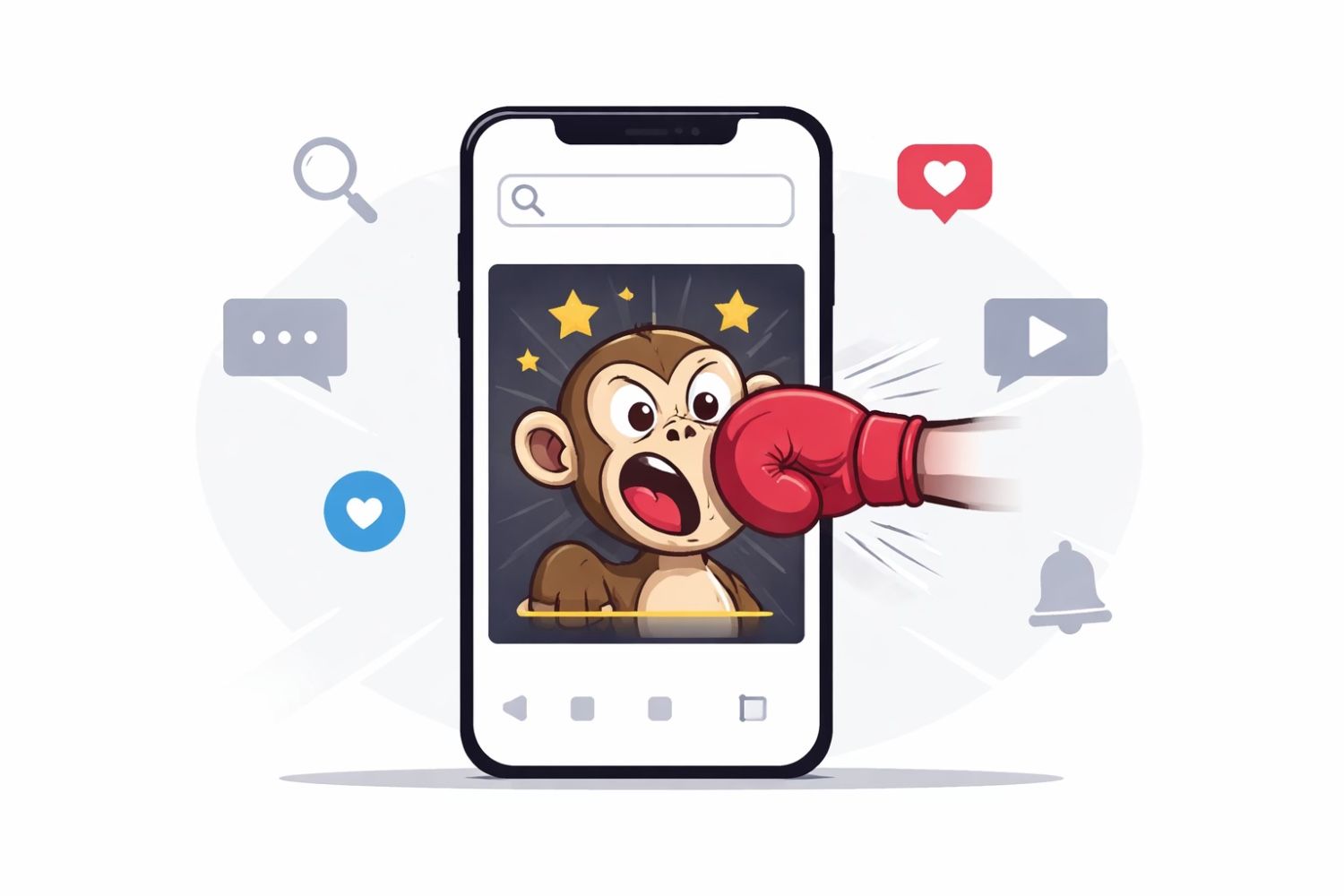
The “Punch the Monkey” trend refers to a short, stylised animation that shows a cartoon monkey character being struck in a humorous, exaggerated way. The animation is usually looped and paired with sound effects or music.
It is important to clarify that this is not a new official feature, product or campaign launched by Google. The phrase “Google’s Punch the Monkey trend” has been used widely in posts and captions, but there is no official Google product or interactive feature called “Punch the Monkey” currently promoted on Google Search.
Instead, the connection to Google appears to come from search behaviour. As more users typed the phrase into Google Search to understand the clip, the search term began trending. Screenshots of Google search results, autocomplete suggestions and trending charts were then shared online, further pushing the narrative that the trend was “on Google.”
This cycle is common in viral moments. A meme spreads. People search for it. The search spike becomes part of the story. The result is a feedback loop between social media and search engines.
How the Trend Spread So Fast
The rapid spread of the animation highlights how short-form platforms amplify visual content.
On apps such as Instagram Reels and YouTube Shorts, short videos are shown to users who may not follow the original creator. If the clip receives strong engagement within the first few hours, including likes, comments and replays, it is pushed to a wider audience.
The “Punch the Monkey” animation fits the format perfectly. It is short, visually striking and easy to remix. Many creators have added their own captions, jokes or reaction videos. Some have used it to represent frustration or comic exaggeration in everyday situations.
In India, meme pages and regional content creators quickly adopted the clip. Within days, the hashtag began appearing across languages, including Hindi and other Indian languages. This multi-language adoption helped the trend cross audiences.
Search interest increased as viewers who did not understand the context looked for explanations. Queries such as “Punch the Monkey meaning,” “Punch the Monkey Google trend,” and “Punch the Monkey animation explained” began appearing more frequently.
Why Is It Being Linked to Google?
One reason the trend is associated with Google is the way search engines highlight trending queries. When a phrase experiences a sudden surge, it may appear in autocomplete suggestions or trending sections.
Users often interpret this visibility as an official endorsement or feature, even when it is simply a reflection of search behaviour.
There is currently no official interactive Google Doodle or hidden game called “Punch the Monkey” tied to this trend. Google frequently launches creative Doodles and interactive experiences, but as of now, this viral animation is user-generated and platform-driven.
The link to Google is therefore based on search activity, not on a formal Google product release.
Is the Animation Safe for Viewers?
Another reason the trend has gained attention is concern around its theme. Some users have questioned whether the content promotes violence, even in a cartoon form.
The animation is stylised and exaggerated in a way common in slapstick cartoons. However, digital safety experts often advise caution when engaging with viral trends that involve physical harm, even if fictional.
Platforms have community guidelines that restrict content that promotes real-world violence. Cartoon-style animations generally fall under different categories, but context matters. If a trend is used in a harmful or abusive way, it can be reported and reviewed under platform rules.
For parents and younger viewers, it is useful to discuss how viral content works and how humour online can sometimes rely on exaggerated actions that are not meant to be imitated in real life.
The Role of Meme Culture in 2026
The “Punch the Monkey” moment also reflects a larger shift in how internet culture works in 2026. Trends now move faster than ever.
In earlier years, viral content might last for weeks. Today, some trends peak within 48 to 72 hours. They are replaced quickly by new sounds, clips or formats.
India, with one of the world’s largest social media user bases, plays a major role in amplifying global trends. Short-video adoption remains high, and meme accounts often react within hours of a new clip appearing online.
The current trend follows a familiar pattern. A short animation appears. A few high-engagement posts push it into algorithmic circulation. Search interest rises. News websites publish explainers. The trend gains a second wave of visibility.
Why Explainer Articles Are Trending Too
The sharp rise in searches around “Punch the Monkey explained” shows a growing demand for context-driven journalism.
Readers do not just want to watch a viral clip. They want to know where it started, whether it is official, and whether it is safe. This demand has increased in India as digital literacy grows.
Explainer pieces often rank well in search results during viral moments because they answer clear intent-based queries. When users type a phrase followed by “meaning” or “what is,” they are looking for a straightforward explanation.
This shift has encouraged newsrooms to monitor search trends closely and respond quickly with accurate information.
How Long Will the Trend Last?
Based on past viral cycles, it is likely that the “Punch the Monkey” trend will fade within days or weeks unless it evolves into a broader meme format.
Some trends survive because they are adaptable. If creators continue to remix the animation into new situations, it may stay visible longer. If engagement drops, algorithms will move on to the next viral format.
Search data typically shows a spike followed by a gradual decline. The first 72 hours are usually the most intense period for visibility.
What Users Should Keep in Mind
When a trend suddenly appears across platforms, it is useful to pause before assuming it is official or endorsed by a major company.
In this case, there is no confirmed link between Google and the creation of the animation. The association comes from search behaviour and online discussion.
Users should also avoid clicking on suspicious links that promise hidden features or secret games tied to viral phrases. Cybersecurity experts regularly warn that trending keywords are sometimes used in misleading ads or scam pages.
Sticking to verified platforms and avoiding unofficial downloads is a safe practice during any viral moment.
The Bigger Picture: How Search and Social Feed Each Other
The “Punch the Monkey” episode shows how search engines and social platforms now influence each other in real time.
A viral clip drives search interest. Search spikes create more discussion. News coverage adds another layer of visibility. The result is a rapid amplification cycle.
For Indian readers, this also highlights the importance of digital awareness. Not every trending phrase represents a product launch or official campaign. Often, it is simply a reflection of collective curiosity.
As of now, “Punch the Monkey” remains a user-driven animation trend that gained momentum through short-video platforms and search behaviour. There is no official Google feature behind it.
In a digital world where trends can rise and fall within days, clear information matters more than ever.
Disclaimer: The information presented in this article is intended for general informational purposes only. While every effort is made to ensure accuracy, completeness, and timeliness, data such as prices, market figures, government notifications, weather updates, holiday announcements, and public advisories are subject to change and may vary based on location and official revisions. Readers are strongly encouraged to verify details from relevant official sources before making financial, investment, career, travel, or personal decisions. This publication does not provide financial, investment, legal, or professional advice and shall not be held liable for any losses, damages, or actions taken in reliance on the information provided.
edited by D Rishidhar Reddy
About The Author