
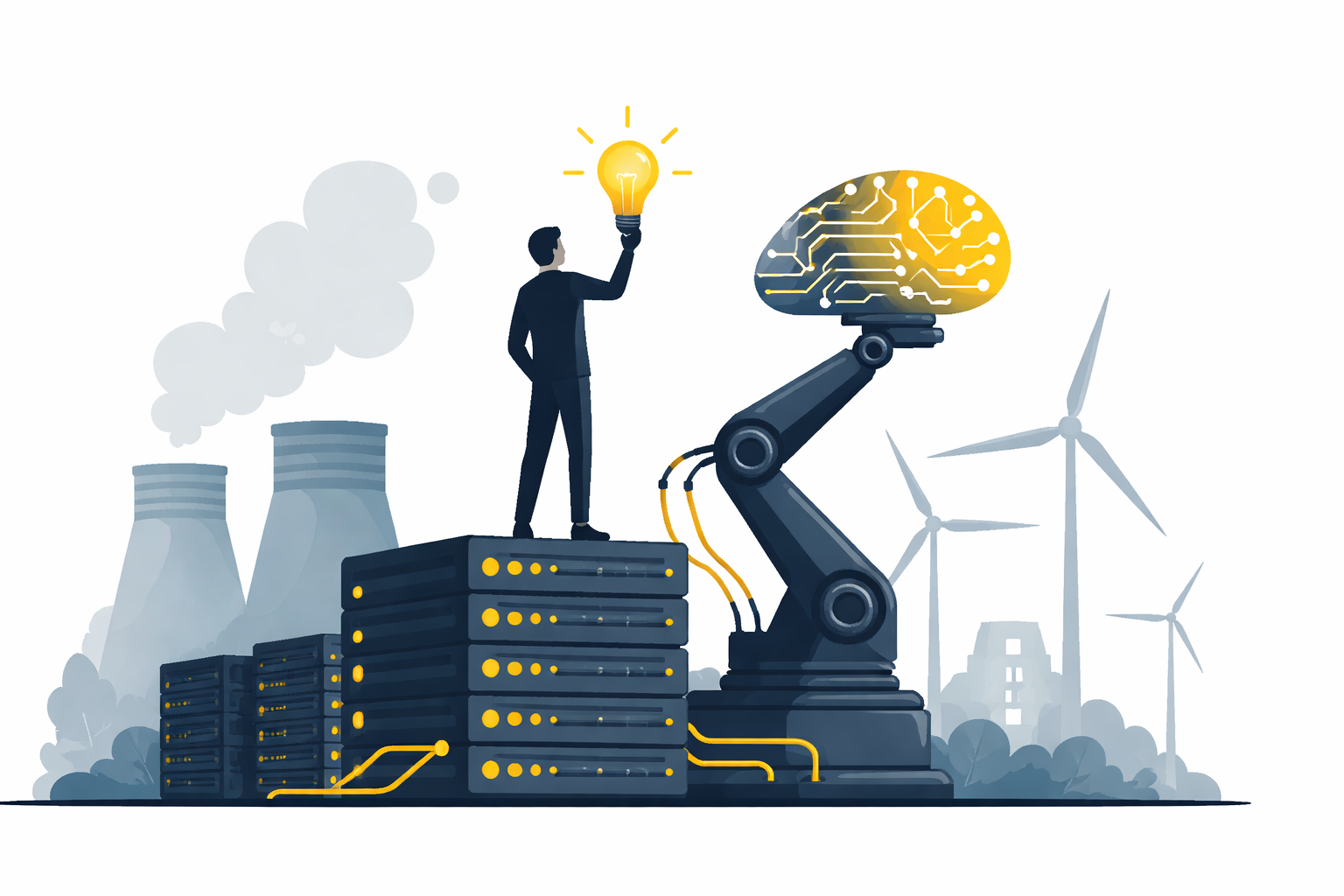
The environmental cost of artificial intelligence is now a global debate. As AI systems become more powerful and widely used, concerns over their energy consumption are rising. Addressing these concerns, OpenAI CEO Sam Altman recently defended the technology sector, saying that “humans use energy too,” and that AI should be viewed in the broader context of economic and social value.
Altman’s remarks come at a time when countries, including India, are investing heavily in AI infrastructure. His comments have sparked fresh discussion about sustainability, data centre expansion, renewable power, and the future of digital growth.
For India, which is pushing forward with large AI projects and digital infrastructure expansion, the debate carries major economic and policy implications.
What Did Sam Altman Say About AI and Energy?
Speaking about AI’s environmental impact, Sam Altman argued that energy consumption should not be discussed in isolation. He stressed that all human activities, from transportation to manufacturing, consume power. AI, he said, is no different.
Altman noted that powerful AI models require large computing infrastructure. Training and running advanced models involve thousands of high-performance chips housed in massive data centres. These facilities require electricity not only for computing but also for cooling.
However, he emphasized that AI also drives efficiency across sectors. According to him, the technology can help optimize logistics, reduce waste, improve energy systems, and accelerate scientific research.
The broader message was clear: AI consumes energy, but it also creates value and can help reduce energy use in other areas.
Why AI’s Energy Use Is Under Scrutiny
Artificial intelligence systems rely on high-performance computing clusters. These clusters are built using specialized processors such as GPUs and advanced networking equipment.
Data centres already account for a growing share of global electricity demand. As AI adoption increases, energy use is expected to rise further. Several international reports have warned that rapid AI expansion could increase pressure on power grids if not managed carefully.
The main concerns include rising electricity demand from AI training and inference, increased water use for cooling in some data centres, and carbon emissions if facilities rely on fossil fuels.
These concerns are not limited to the United States or Europe. Emerging markets like India, which are rapidly expanding digital infrastructure, are also part of this conversation.
India’s Growing AI Ambitions
India is positioning itself as a global AI hub. The government has announced support for AI research, semiconductor manufacturing, and high-performance computing infrastructure. Private companies are also investing in large data centres across cities such as Mumbai, Hyderabad, Chennai, and Noida.
India’s digital economy is expanding fast. The country has more than 800 million internet users and one of the world’s largest developer communities. AI tools are being used in sectors such as healthcare, agriculture, fintech, logistics, and governance.
With initiatives under the broader Digital India mission, AI is now seen as a driver of economic growth. However, this growth also means rising electricity demand from data infrastructure.
For India, the challenge is balancing digital expansion with climate commitments.
India’s Energy Mix and Sustainability Challenge
India has pledged to increase the share of renewable energy in its power mix. The country has set ambitious targets for solar and wind power expansion. At the same time, coal still plays a significant role in electricity generation.
As AI-driven data centres grow, experts say that clean energy sourcing will be critical. Many global technology companies are already committing to renewable power purchase agreements to offset their electricity use.
In India, several large data centre operators are moving toward solar and wind energy integration. Some are building facilities near renewable energy hubs to reduce carbon footprints.
Altman’s broader argument aligns with this approach. Instead of slowing AI development, the focus may shift toward cleaner energy solutions and more efficient hardware.
Can AI Help Reduce Environmental Impact?
Supporters of AI argue that the technology itself can contribute to climate solutions.
AI is being used to improve grid efficiency and energy forecasting, optimize traffic management to reduce fuel use, monitor deforestation and environmental change, and improve crop yields while reducing resource waste.
In India, AI-driven systems are already being tested in agriculture advisory platforms and renewable energy forecasting tools.
If deployed responsibly, AI could reduce inefficiencies in energy systems and supply chains. This potential benefit is central to the argument that AI’s net environmental impact may be more complex than raw electricity numbers suggest.
The Data Centre Boom in India
India’s data centre capacity has been growing steadily. According to industry estimates, capacity is expected to more than double in the coming years as cloud computing and AI adoption increase.
Major global cloud companies have expanded their presence in India. Domestic firms are also entering the market. The rise of generative AI applications is accelerating demand for computing infrastructure.
This expansion brings economic benefits such as job creation in engineering and infrastructure, foreign direct investment, and improved digital services for businesses and citizens.
However, it also means higher power demand. Experts say future data centre projects in India will need to integrate energy efficiency standards and renewable sourcing from the beginning.
Global Regulation and Transparency
The AI energy debate is also influencing policy discussions worldwide. Governments are considering reporting standards for data centre energy use, carbon disclosure requirements, and incentives for renewable-powered infrastructure.
Transparency is becoming key. Investors and regulators are asking technology companies to share clearer data about electricity consumption and carbon emissions.
For India, adopting transparent frameworks could help attract global investment while meeting sustainability goals.
Economic Trade-Off: Growth vs Emissions
The central question raised by Altman’s remarks is whether AI’s economic value outweighs its environmental cost.
AI is projected to add trillions of dollars to the global economy over the next decade. In India, AI is expected to contribute significantly to GDP growth by improving productivity and enabling new industries.
At the same time, India remains vulnerable to climate change. Rising temperatures, extreme weather, and water stress are already affecting parts of the country.
This creates a policy balancing act: encourage AI-driven innovation, ensure energy-efficient infrastructure, accelerate renewable power adoption, and avoid uncontrolled emissions growth.
The conversation is not about stopping AI development. It is about managing it responsibly.
What This Means for Indian Businesses
Indian companies adopting AI tools may face new scrutiny around sustainability.
Enterprises may need to choose cloud providers powered by renewable energy, track digital carbon footprints, and invest in energy-efficient IT systems.
Green technology is becoming a competitive advantage. Businesses that integrate sustainability into AI adoption may gain investor confidence and regulatory support.
The Road Ahead
Sam Altman’s defense of AI’s energy use highlights a growing global debate. AI consumes power, but so does every major human activity. The key issue is how that energy is generated and used.
For India, the AI revolution presents both opportunity and responsibility.
The country has a chance to build AI infrastructure in a cleaner and more sustainable way than older industrial systems. By combining renewable expansion with efficient data centre design, India could turn the AI boom into a climate-smart growth story.
As AI adoption accelerates in 2026 and beyond, the focus will likely shift from whether AI uses energy to how that energy is sourced and optimized.
The discussion sparked by Sam Altman is not just about technology. It is about shaping the future of digital development in a climate-conscious world.
Disclaimer: The information presented in this article is intended for general informational purposes only. While every effort is made to ensure accuracy, completeness, and timeliness, data such as prices, market figures, government notifications, weather updates, holiday announcements, and public advisories are subject to change and may vary based on location and official revisions. Readers are strongly encouraged to verify details from relevant official sources before making financial, investment, career, travel, or personal decisions. This publication does not provide financial, investment, legal, or professional advice and shall not be held liable for any losses, damages, or actions taken in reliance on the information provided.
About The Author