
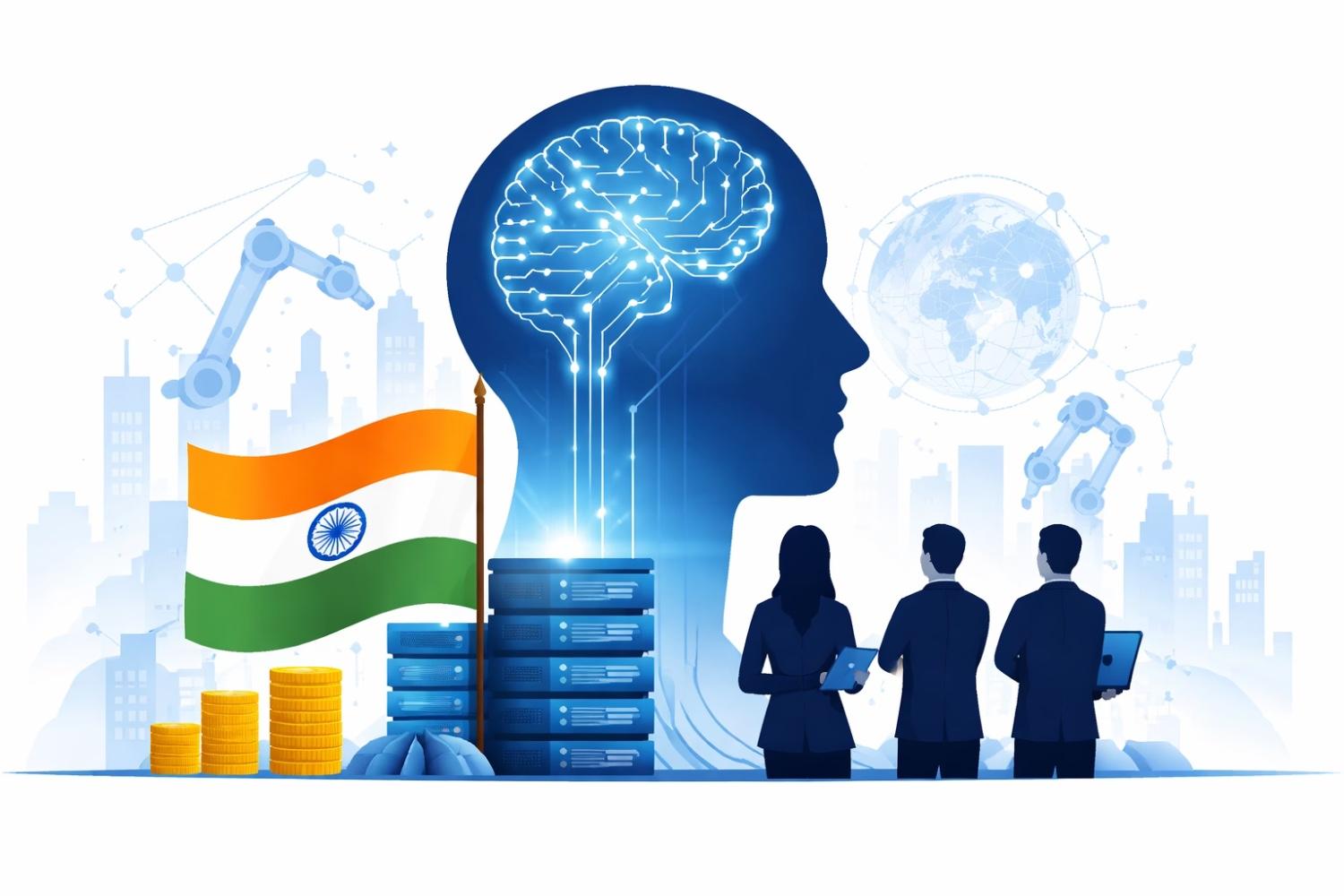
New Delhi: The India AI Impact Summit 2026 has placed the country at the centre of global conversations around artificial intelligence. With strong participation from policymakers, technology companies, startups and global investors, the summit highlighted how India plans to scale AI responsibly while boosting innovation, jobs and economic growth.
The discussions come at a time when artificial intelligence is rapidly transforming sectors such as healthcare, education, agriculture, finance and manufacturing. For India, which has one of the world’s largest digital user bases and a growing startup ecosystem, the stakes are high.
Here is a detailed look at the key developments, government strategy, technology announcements and investment signals that emerged from the summit.
India’s AI Moment: Why 2026 Is a Turning Point
Artificial intelligence is no longer limited to research labs. It is now part of everyday life, from digital payments to voice assistants and crop advisory systems.
India’s focus on digital public infrastructure over the past decade — including Aadhaar, UPI and DigiLocker — has created a strong base for AI adoption. Policymakers at the summit stressed that the next step is to combine this digital infrastructure with AI to deliver large-scale public services.
The summit reflected three clear priorities:
- Scaling AI for public good
- Supporting startups and domestic innovation
- Attracting global capital and partnerships
Industry experts noted that India’s large talent pool and cost advantage give it a strong position in the global AI race.
Government Strategy: Balancing Innovation and Regulation
A major focus of the summit was India’s evolving policy framework around artificial intelligence.
The government has already outlined its broader digital ambitions under programmes like Digital India. At the summit, officials reiterated that India’s AI strategy will aim to:
- Promote innovation without slowing startups
- Ensure responsible and ethical AI use
- Strengthen data protection and privacy safeguards
- Build AI capacity in smaller cities and rural areas
Discussions also covered skill development. With AI adoption rising, demand for trained professionals in machine learning, data science and AI engineering is increasing. Policymakers highlighted the need for large-scale training initiatives to prepare students and working professionals for AI-driven jobs.
The emphasis remained on “AI for all,” ensuring that benefits reach small businesses, farmers and public institutions — not just large corporations.
Top Tech Unveils: Focus on Practical AI Applications
Unlike earlier events that focused heavily on futuristic concepts, the 2026 summit saw strong emphasis on practical, deployable AI solutions.
Companies showcased AI tools designed for:
- Healthcare diagnostics and early disease detection
- Crop yield prediction and smart agriculture advisory
- AI-powered fraud detection in financial services
- Language translation tools for Indian languages
- Smart manufacturing and automation systems
One of the key trends was the push toward Indian-language AI models. With hundreds of millions of users accessing the internet in regional languages, multilingual AI is emerging as a priority.
There was also discussion around responsible AI systems that can explain decisions, reduce bias and maintain transparency.
Industry leaders underlined that India’s AI growth will depend not only on building models but also on ensuring reliable computing infrastructure and access to quality datasets.
Startup Ecosystem Takes Centre Stage
India’s startup ecosystem was a strong highlight of the summit.
AI-focused startups presented solutions across sectors such as fintech, healthtech, agritech and edtech. Investors at the event said that Indian startups are increasingly building products for global markets, not just domestic users.
The presence of venture capital firms and international technology investors signalled continued global interest in India’s AI ecosystem.
Experts at the summit observed that funding is becoming more selective, with investors focusing on:
- Clear revenue models
- Real-world use cases
- Scalable infrastructure
- Regulatory compliance
The focus has shifted from experimentation to execution. Startups that demonstrate measurable impact are more likely to attract funding.
Global Investment Signals: India as an AI Hub
One of the most closely watched aspects of the summit was international participation.
Global technology companies and investors used the platform to explore partnerships with Indian firms and research institutions. Industry observers noted that India’s large engineering workforce and growing cloud infrastructure make it attractive for AI development.
Foreign investors are looking at India for:
- AI research partnerships
- Data centre expansion
- Cloud computing services
- AI-enabled enterprise solutions
India’s strategic position in global supply chains and its growing domestic market also add to its appeal.
While exact investment figures were not disclosed at the event, the strong presence of global stakeholders indicated rising confidence in India’s AI growth story.
AI in Public Services: Real-World Use Cases
Another important theme was the use of AI in governance.
Speakers discussed how artificial intelligence can improve:
- Public health monitoring
- Disaster response systems
- Traffic and urban planning
- Fraud detection in welfare schemes
AI-driven analytics can help authorities make faster and more accurate decisions. However, experts stressed the importance of transparency and accountability.
There were also conversations around responsible data usage and ensuring that AI systems do not discriminate or amplify bias.
Infrastructure Push: Data Centres and Computing Power
Artificial intelligence depends heavily on computing capacity. The summit highlighted the need to strengthen India’s data centre network and semiconductor ecosystem.
India has seen rising investments in data centres in recent years, driven by cloud adoption and digital growth. AI demand is expected to increase the need for high-performance computing infrastructure.
Industry voices called for:
- Faster regulatory clearances for data centres
- Renewable energy integration
- Stronger domestic chip capabilities
- Secure data storage frameworks
Infrastructure readiness will play a critical role in determining how quickly India can scale AI applications.
Skills and Employment: Preparing the Workforce
The summit also focused on employment implications.
While AI may automate some tasks, experts argued that it will also create new roles in areas such as:
- AI system design
- Data annotation
- Model training
- AI governance
- Cybersecurity
Educational institutions and training platforms were encouraged to update curricula to reflect AI-driven demands.
The need for continuous learning was a recurring message. As AI tools evolve rapidly, professionals will need to upgrade skills regularly.
Ethical AI and Global Cooperation
With global discussions around AI safety intensifying, India’s position on responsible AI gained attention.
Speakers stressed that innovation must be balanced with safeguards. This includes:
- Preventing misuse
- Protecting user data
- Ensuring algorithm transparency
- Building trust in AI systems
International cooperation was also highlighted as essential. AI development crosses borders, and collaboration on standards, research and regulation can help avoid fragmentation.
India aims to contribute actively to global AI governance discussions while safeguarding its domestic interests.
What This Means for Indian Businesses and Consumers
For Indian businesses, the summit signalled that AI adoption is no longer optional. Companies across sectors will need to integrate AI tools to remain competitive.
For consumers, AI-powered services may lead to:
- Faster banking services
- Smarter healthcare support
- Better digital experiences
- Improved public services
However, awareness around data privacy and digital literacy will remain critical.
The Road Ahead for India’s AI Ambitions
The India AI Impact Summit 2026 showed that the country is moving from vision to implementation.
India’s AI roadmap now rests on three pillars:
- Strong digital infrastructure
- Supportive policy framework
- Global investment and collaboration
The coming years will test how effectively these elements come together.
If executed carefully, AI could become a major growth driver for India’s economy. At the same time, responsible governance will be essential to ensure that technology benefits society at large.
As global competition in artificial intelligence intensifies, India’s ability to combine scale, talent and policy clarity will determine its position in the evolving AI landscape.
For now, the 2026 summit has made one thing clear: India intends to be an active and influential player in the global AI era.
Disclaimer: The information presented in this article is intended for general informational purposes only. While every effort is made to ensure accuracy, completeness, and timeliness, data such as prices, market figures, government notifications, weather updates, holiday announcements, and public advisories are subject to change and may vary based on location and official revisions. Readers are strongly encouraged to verify details from relevant official sources before making financial, investment, career, travel, or personal decisions. This publication does not provide financial, investment, legal, or professional advice and shall not be held liable for any losses, damages, or actions taken in reliance on the information provided.
edited by D RishidharReddy
About The Author