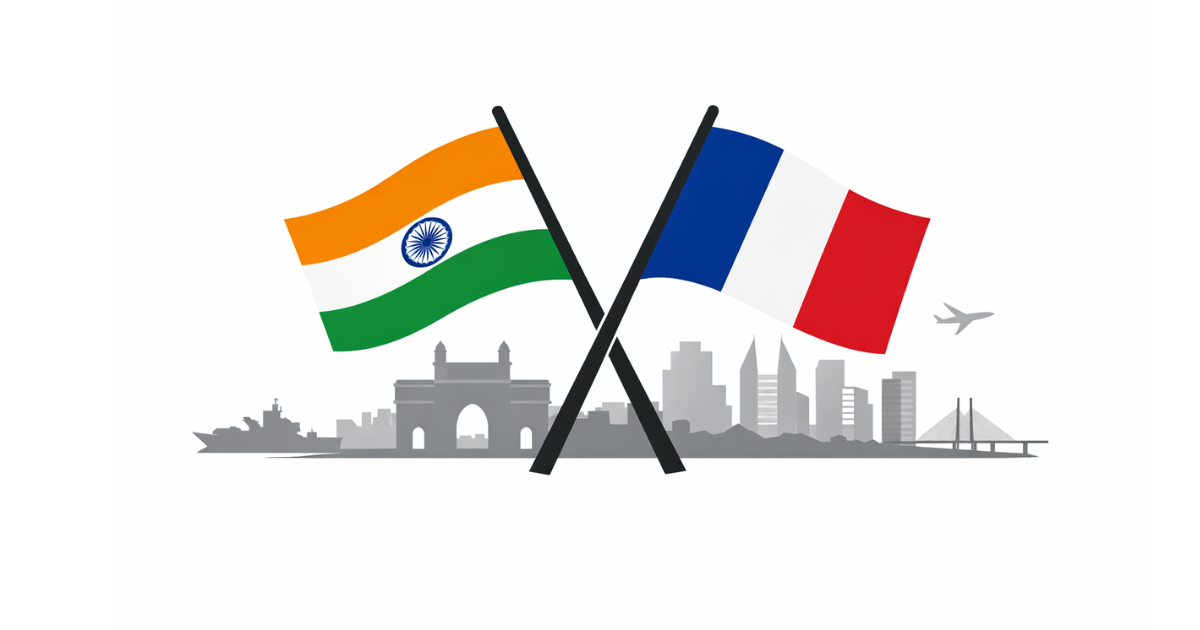
Mumbai: India and France have elevated their long-standing partnership to a “Special Global Strategic Partnership”following high-level talks between Prime Minister Narendra Modi and French President Emmanuel Macron in Mumbai.
The move signals a deeper alignment between the two countries at a time of rising global tensions, economic shifts, and rapid technological change.
The decision is significant for India’s defence modernisation, clean energy push, and Indo-Pacific strategy. For France, it reinforces its role as a key European power in Asia and strengthens its ties with one of the world’s fastest-growing major economies.
Here are the key takeaways from the Modi-Macron Mumbai Summit and what it means for India.
A Major Upgrade in India-France Ties
India and France have enjoyed a strategic partnership since 1998. Over the years, ties have expanded across defence, space, civil nuclear energy, and counter-terrorism.
The new Special Global Strategic Partnership framework reflects the growing scope of cooperation beyond traditional sectors.
Both leaders underlined that the relationship is based on trust, shared democratic values, and a common vision for a stable and multipolar world.
The elevation of ties also comes amid global uncertainty, including conflicts in Europe and West Asia, supply chain disruptions, and intensifying competition in the Indo-Pacific.
Defence Cooperation at the Core
Defence remains the backbone of India-France relations.
India has been a long-time buyer of French military equipment. The Indian Air Force operates the Dassault Rafale fighter jets, which were inducted starting in 2020 under a government-to-government deal.
France is also involved in submarine cooperation and advanced defence technology discussions.
During the summit, both sides reaffirmed their commitment to:
• Strengthening joint military exercises
• Expanding defence manufacturing partnerships
• Promoting co-development and co-production under India’s “Make in India” initiative
India has been working to reduce dependence on imports and build domestic defence capabilities. French firms have shown interest in investing and partnering with Indian companies for local production.
For India, this partnership ensures access to high-end technology without political conditions that often complicate other defence deals.
Indo-Pacific Strategy Gains Momentum
The Indo-Pacific was a central theme in the Mumbai talks.
France is one of the few European countries with a strong military presence in the Indo-Pacific region due to its overseas territories. India sees France as a reliable partner in maintaining maritime security and freedom of navigation.
Both leaders reaffirmed their commitment to a free, open, and rules-based Indo-Pacific.
Naval cooperation, joint patrols, and maritime domain awareness are expected to expand further.
The two sides also emphasised cooperation with like-minded countries to ensure stability in the Indian Ocean region.
For India, which has been increasing its maritime presence, France offers both strategic depth and technological strength.
Civil Nuclear and Clean Energy Push
Energy security was another major focus of the summit.
India and France have been in talks for years over cooperation in civil nuclear energy, especially the proposed Jaitapur Nuclear Power Project in Maharashtra.
While technical and financial discussions continue, both sides reiterated their commitment to moving the project forward.
Beyond nuclear energy, the leaders discussed cooperation in:
• Renewable energy
• Green hydrogen
• Solar power expansion
• Climate financing
France has supported India’s climate goals under the Paris Agreement. Both countries are founding members of the International Solar Alliance, which aims to promote solar energy globally.
The energy partnership is expected to grow as India pushes toward its net-zero target by 2070.
Technology, Space and Innovation
Technology cooperation is emerging as a strong pillar of India-France ties.
The summit highlighted collaboration in artificial intelligence, cybersecurity, digital public infrastructure, and space research.
India’s space agency, Indian Space Research Organisation, has a long-standing relationship with Centre National d’Études Spatiales.
The two agencies have worked together on satellite missions and climate monitoring.
During the summit, leaders discussed expanding cooperation in:
• Satellite launches
• Earth observation
• Space situational awareness
• Commercial space ventures
Technology partnerships are expected to support India’s growing digital economy, which is among the fastest expanding in the world.
Trade and Investment Expansion
Bilateral trade between India and France has grown steadily over the past decade, though both sides believe there is significant untapped potential.
France is among the top investors in India within the European Union. French companies operate in sectors such as:
• Infrastructure
• Urban transport
• Defence manufacturing
• Aerospace
• Luxury goods
• Renewable energy
The Mumbai summit included business leaders from both countries, highlighting the economic focus of the visit.
Both governments expressed commitment to boosting two-way investment, easing regulatory hurdles, and supporting small and medium enterprises.
For India, attracting high-quality foreign investment remains crucial for sustaining economic growth above 6 percentannually.
Global Issues and Multilateral Cooperation
The leaders also discussed global conflicts, terrorism, and reform of international institutions.
France has consistently supported India’s bid for permanent membership in a reformed United Nations Security Council.
The two countries reaffirmed their commitment to fighting terrorism in all forms and called for stronger global cooperation to counter extremist threats.
They also discussed climate change, supply chain resilience, and food security.
The partnership aims to strengthen coordination in global forums, including the G20 and other multilateral platforms.
Mumbai Symbolism and Strategic Messaging
Holding the summit in Mumbai carried economic and symbolic value.
As India’s financial capital, Mumbai represents trade, investment, and global connectivity.
The visit underlined that India-France relations are not limited to political dialogue but extend deeply into economic and people-to-people ties.
Cultural exchanges, education partnerships, and student mobility were also discussed, reflecting a growing human connection between the two nations.
Why This Matters for India
The elevation to a Special Global Strategic Partnership signals that India is diversifying its global relationships while maintaining strategic autonomy.
France stands out as a consistent partner that supports India’s defence needs, Indo-Pacific strategy, and global ambitions.
At a time when global alliances are shifting, India’s approach is to build strong ties with multiple major powers without aligning exclusively with any bloc.
This summit reinforces that strategy.
For Indian businesses and startups, closer ties with France may open doors to European markets.
For India’s defence and space sectors, the partnership promises deeper technology sharing.
For policymakers, it strengthens India’s global standing as a key power in the emerging world order.
What Comes Next
The announcement sets the stage for follow-up agreements, ministerial-level meetings, and sector-specific cooperation plans in the coming months.
Observers will watch progress on defence manufacturing, nuclear energy negotiations, and technology partnerships closely.
The Modi-Macron Mumbai Summit marks not just a diplomatic milestone but a strategic shift toward a broader global role for India-France cooperation.
As both countries navigate a complex international environment, their upgraded partnership signals stability, trust, and long-term commitment.
For India, the message is clear. Strategic partnerships are no longer limited to defence alone. They now span energy, technology, trade, and global governance.
And in that evolving landscape, France has emerged as one of India’s most reliable global partners.
Disclaimer: The information presented in this article is intended for general informational purposes only. While every effort is made to ensure accuracy, completeness, and timeliness, data such as prices, market figures, government notifications, weather updates, holiday announcements, and public advisories are subject to change and may vary based on location and official revisions. Readers are strongly encouraged to verify details from relevant official sources before making financial, investment, career, travel, or personal decisions. This publication does not provide financial, investment, legal, or professional advice and shall not be held liable for any losses, damages, or actions taken in reliance on the information provided.
About The Author