
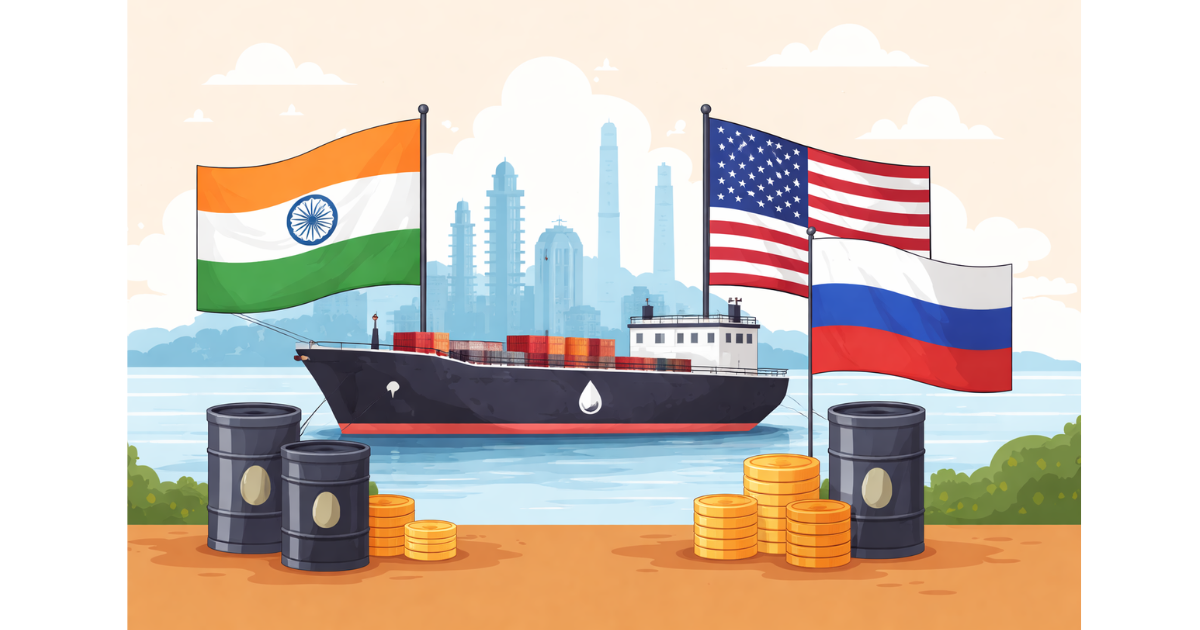
India’s oil choices are back in focus as talks around an India-US trade deal gain momentum. One key question is drawing public and market attention: Will India stop buying Russian oil?
Energy decisions affect fuel prices, inflation, foreign policy, and economic growth. For India, which imports most of its crude oil, even small changes in supply sources can have a wide impact. This is why the issue matters today for households, businesses, and investors.
This article explains India’s current oil supply position, the role of Russian crude, and how US trade talks could influence future decisions.
India’s Oil Dependence: The Ground Reality
India is the world’s third-largest oil consumer. Domestic production meets only a small share of demand.
Key facts that shape policy decisions
India imports more than 80 percent of its crude oil.
Oil is critical for transport, industry, and power backup.
Stable supply and affordable prices are top government priorities.
Because of this heavy dependence, India follows a diversified sourcing strategy. No single country supplies all of India’s oil needs.
Why Russian Oil Became Important for India
Russian crude gained importance after global energy markets changed following the Ukraine conflict.
Main reasons India increased Russian oil imports
Russian oil was available at lower prices than global benchmarks.
Supply remained steady during market volatility.
Payment and shipping terms were flexible under changing global rules.
These discounts helped India control fuel costs and limit inflation pressure when global oil prices were high.
Indian officials have stated that oil purchases are made strictly in the national interest.
Current Status: Is India Still Buying Russian Oil?
Yes, India continues to buy Russian oil, though volumes change regularly.
Key points to note
There is no official announcement about stopping Russian oil imports.
Purchases depend on commercial terms and price advantage.
Indian refiners adjust sourcing based on market conditions.
If Russian oil stops being cost-effective, refiners can shift to other suppliers.
India-US Trade Deal: What Is Being Discussed
India and the United States are working to strengthen trade ties across sectors.
Key focus areas
Trade in goods and services.
Technology and manufacturing cooperation.
Energy trade, including oil, gas, and clean energy.
The US has become a major energy exporter. American crude and LNG are already part of India’s energy mix.
Does the US Want India to Stop Buying Russian Oil?
The US has encouraged countries to reduce dependence on Russian energy. However, there is no public evidence of a formal demand asking India to stop buying Russian oil.
What matters in reality
India makes independent energy decisions.
The US recognises India’s development needs.
Any change would be driven by economics, not sudden pressure.
Indian officials have consistently said energy policy is not influenced by political demands.
Can India Replace Russian Oil Easily?
India has alternatives, but replacement is not immediate.
Existing alternative suppliers
Middle East countries such as Saudi Arabia, Iraq, and the UAE.
African oil exporters.
The United States.
However, switching suppliers depends on price, freight costs, refinery compatibility, and supply reliability.
Russian crude suits several Indian refineries. A large shift would require careful planning.
Impact on Fuel Prices in India
Fuel prices directly affect households.
Why oil sourcing matters
Crude oil is the main input for petrol and diesel.
Higher import costs can push up transport and food prices.
Stable oil prices help control inflation.
Discounted oil imports have helped limit price pressure. Losing that advantage could raise costs unless global prices fall or new deals emerge.
What the Government Has Said
The government’s stance has remained consistent.
Official position
India buys oil from the most affordable and reliable sources.
Energy purchases are not political decisions.
Consumer interest and economic stability come first.
This reflects India’s policy of strategic autonomy.
Could US Energy Exports to India Increase?
Yes. This trend is already visible.
Why US energy matters
The US is a major exporter of crude oil and LNG.
Supplies are considered reliable.
Long-term contracts can improve energy security.
An India-US trade deal could make US energy more competitive, adding to India’s supply mix rather than replacing existing sources immediately.
Geopolitics vs Economics: What Will Decide the Outcome
India’s final decision will depend more on costs than geopolitics.
Key deciding factors
Final landed cost of crude oil.
Shipping and insurance availability.
Refinery margins.
Global demand and supply trends.
If Russian oil remains affordable and accessible, imports may continue.
What to Watch Going Forward
Readers should focus on clear indicators.
Key signals
Global crude price movements.
Shipping and insurance changes.
Official statements after trade talks.
Monthly oil import data.
Any major change will be gradual and clearly communicated.
Bottom Line: Will India Stop Buying Russian Oil?
There is no indication that India will suddenly stop buying Russian oil.
What is more likely
India will continue diversifying its oil sources.
Russian oil will remain part of the mix if it stays economical.
The India-US trade deal may expand energy cooperation, not force exits.
For India, energy security is about affordability, flexibility, and stability. That approach remains unchanged.
Why This Matters for Indian Readers
Oil policy affects fuel prices, inflation, and economic stability. Understanding the facts helps cut through speculation.
As trade talks continue, India’s message is clear: national interest comes first, with balanced global partnerships.
Disclaimer: The information presented in this article is intended for general informational purposes only. While every effort is made to ensure accuracy, completeness, and timeliness, data such as prices, market figures, government notifications, weather updates, holiday announcements, and public advisories are subject to change and may vary based on location and official revisions. Readers are strongly encouraged to verify details from relevant official sources before making financial, investment, career, travel, or personal decisions. This publication does not provide financial, investment, legal, or professional advice and shall not be held liable for any losses, damages, or actions taken in reliance on the information provided.
About The Author