
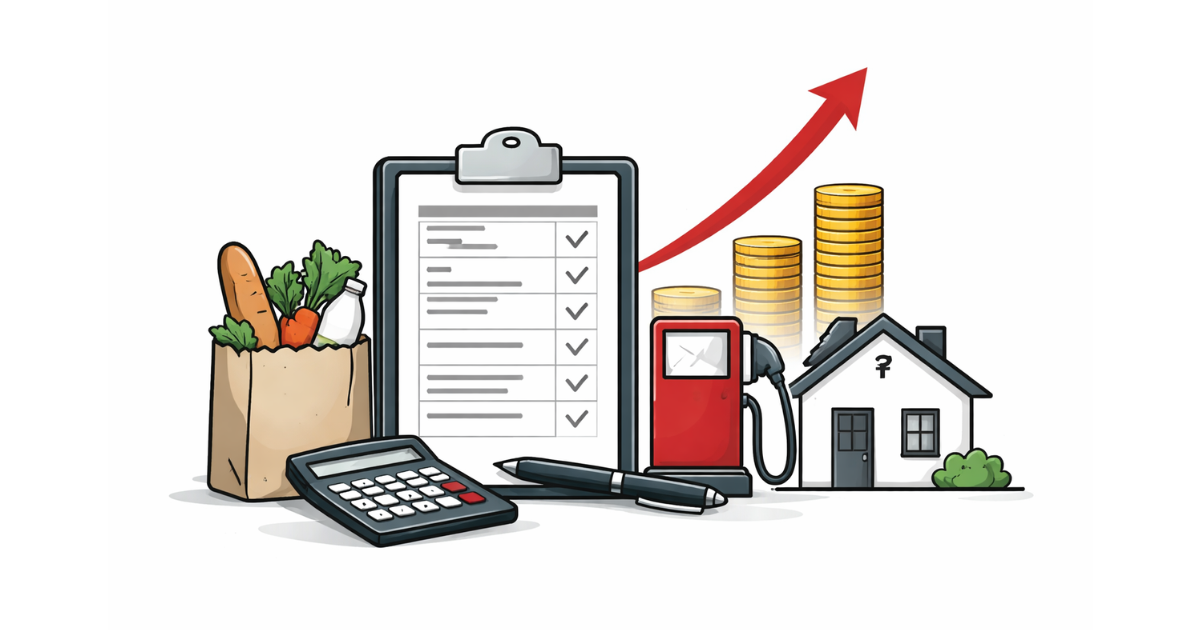
India is preparing to update the way it measures inflation. The government plans to revise the Consumer Price Index (CPI) weightage, which decides how much importance is given to different items like food, rent, fuel, and services while calculating inflation.
This change matters because CPI inflation directly affects interest rates, EMIs, savings returns, salaries, and government schemes. When the formula changes, the inflation number may also shift. And that can impact your monthly budget.
Here is a clear breakdown of what is changing, why it matters now, and how it could affect you.
What Is CPI and Why It Matters
The Consumer Price Index (CPI) measures the average rise in prices of goods and services that households use daily.
In India, CPI is used by:
- The Reserve Bank of India (RBI) to decide interest rates
- The government to adjust Dearness Allowance (DA) for employees and pensioners
- Policymakers to plan welfare schemes
- Businesses to revise prices
The RBI’s inflation target is 4%, with a tolerance band of 2% to 6%.
If inflation rises above this range, borrowing becomes expensive. If it falls too much, economic growth may slow.
Why Is India Changing the CPI Formula?
India updates its CPI base year and weightage from time to time. This is done to reflect changes in how people spend money.
The current CPI series is based on 2012 as the base year. Since then:
- Spending on food items has reduced in percentage terms
- Spending on healthcare, education, transport, and digital services has increased
- Urban and rural consumption patterns have changed
People today spend more on mobile data, online services, healthcare, and transport compared to a decade ago. The inflation basket must reflect these realities.
That is why a revision is being prepared.
What Does CPI Weightage Mean?
CPI weightage shows how much importance each category gets in the inflation calculation.
For example:
- If food has high weightage, rising vegetable prices push inflation up sharply.
- If services have higher weightage, fuel and school fee hikes may have greater impact.
At present, food and beverages carry the highest weight in CPI, especially in rural India.
A change in weightage means some items will influence inflation more, and some less.
Expected Changes in CPI Weightage
While the final numbers will be notified officially, experts expect these trends in the new CPI structure:
Lower Weight for Food Items
Food currently has a large share in CPI.
But over the years, the share of income spent on food has gradually fallen, especially in urban areas.
If food weightage is reduced:
- Short-term spikes in vegetable prices may not push inflation up sharply.
- Inflation may become less volatile during monsoon disruptions.
Higher Weight for Services
Spending on services has increased.
This includes:
- Healthcare
- Education
- Transport
- Communication
- House rent
Higher service weightage could mean:
- School fee hikes may have a stronger effect on inflation.
- Rent increases may push inflation more than before.
Inclusion of New Consumption Patterns
Digital services, packaged foods, and lifestyle expenses are now part of daily life.
The revised CPI basket may better reflect:
- Online subscriptions
- App-based transport
- Branded goods
This will make inflation data more realistic for today’s households.
How Will This Affect Your Monthly Budget?
The impact will not be direct overnight. But over time, it can influence several key areas.
Impact on EMIs and Loan Interest Rates
The RBI uses CPI inflation to set policy rates.
If the revised formula shows lower average inflation:
- The RBI may find more room to reduce interest rates.
- Home loan EMIs could become cheaper.
If inflation appears higher:
- Rate cuts may get delayed.
- Borrowing may stay costly.
Effect on Dearness Allowance (DA)
Central and state government employees receive DA linked to inflation.
If CPI calculations change:
- Future DA revisions may shift slightly.
- Pension payouts may also adjust differently.
Impact on Salary Negotiations
Private companies often consider inflation while revising salaries.
A different inflation number could:
- Influence wage growth discussions.
- Affect annual increments in some sectors.
Prices You Pay Every Month
Even if inflation calculation changes, market prices depend on supply and demand.
However:
- If inflation volatility reduces, price expectations may stabilize.
- Businesses may plan price hikes more steadily.
Will Inflation Numbers Fall After the Revision?
Not necessarily.
A new CPI series does not mean inflation will automatically decline.
It simply reflects updated spending patterns.
In some months:
- Inflation may look slightly lower if food volatility reduces.
- In other months, services inflation may push numbers higher.
Over time, the goal is more accurate measurement, not lower inflation.
Urban vs Rural Impact
India’s consumption patterns differ between cities and villages.
Urban Households
- Higher spending on rent, transport, services
- Lower share of food in total spending
If services weightage increases, urban inflation may reflect reality better.
Rural Households
- Larger share of spending still goes to food
- Agriculture-linked income is sensitive to food prices
If food weightage reduces too much, rural inflation concerns must still be monitored carefully.
Policymakers are expected to balance both segments.
Why This Update Is Important in 2026
India’s economy is changing fast.
Key developments include:
- Growing middle-class consumption
- Rapid urbanisation
- Expansion of digital services
- Rising healthcare and education costs
An outdated inflation basket may not capture these changes.
For investors, businesses, and households, accurate inflation data helps in:
- Financial planning
- Investment decisions
- Government policy response
A revised CPI will aim to improve policy decisions in the coming years.
What Experts Say About CPI Revisions
Historically, CPI revisions are normal.
Most major economies update their inflation baskets regularly to reflect changing lifestyles.
The key benefits include:
- Better representation of real spending
- Reduced distortion from outdated items
- Improved credibility of inflation data
However, economists also stress:
- Transparency in methodology is crucial
- Clear communication is needed to avoid confusion
Public understanding is important because inflation data affects expectations in the market.
What Should Households Do Now?
There is no immediate action required.
But smart financial planning always helps.
Here are practical steps:
- Track your actual monthly expenses
- Plan EMIs with some buffer
- Avoid high-interest debt
- Diversify savings and investments
- Keep emergency funds ready
Inflation measurement may change. But managing your personal budget remains in your control.
Key Takeaways at a Glance
- India is revising the CPI weightage to reflect modern spending habits.
- The current base year is 2012.
- Food weightage may reduce, while services weightage may rise.
- Inflation numbers may behave differently after revision.
- RBI interest rate decisions could be indirectly affected.
- EMIs, DA, salaries, and borrowing costs may see long-term impact.
Conclusion
India’s new inflation formula is not just a technical update. It is a structural change that aims to reflect how Indians live and spend today.
For households, the immediate impact may be limited. But over time, the revised CPI could influence interest rates, salary revisions, and government policy decisions.
Inflation affects everyone. A more accurate measure helps the country make better economic choices.
As India’s consumption patterns evolve, so must the way inflation is calculated.
Disclaimer: The information presented in this article is intended for general informational purposes only. While every effort is made to ensure accuracy, completeness, and timeliness, data such as prices, market figures, government notifications, weather updates, holiday announcements, and public advisories are subject to change and may vary based on location and official revisions. Readers are strongly encouraged to verify details from relevant official sources before making financial, investment, career, travel, or personal decisions. This publication does not provide financial, investment, legal, or professional advice and shall not be held liable for any losses, damages, or actions taken in reliance on the information provided.
About The Author