
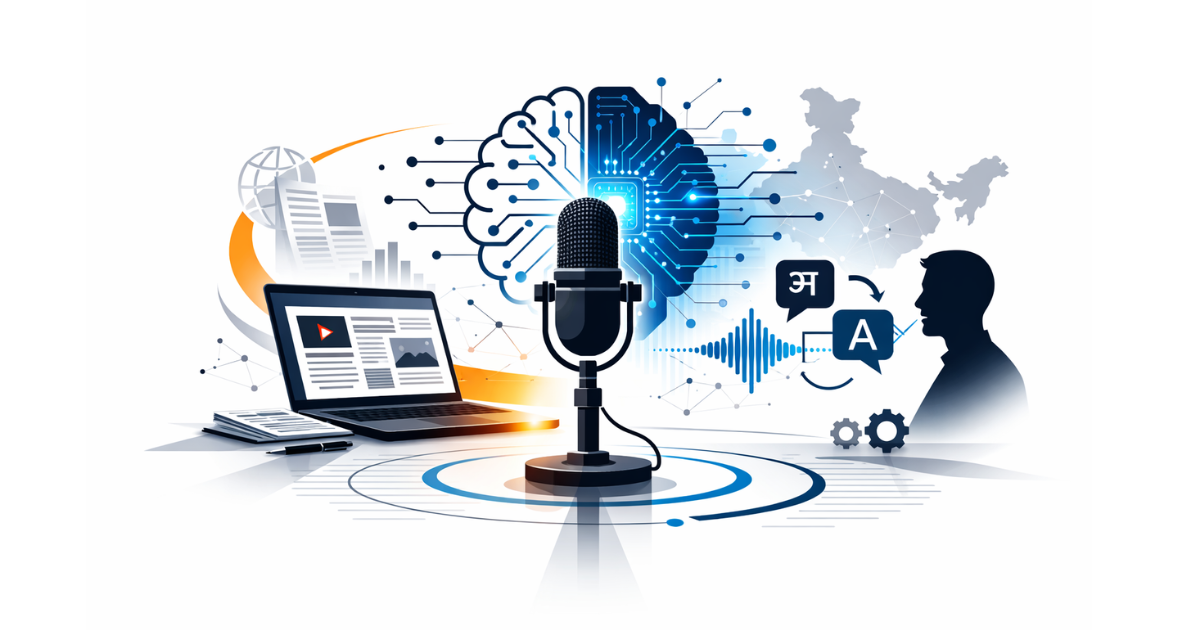
New Delhi: The India AI Impact Summit 2026, held at Bharat Mandapam in the national capital, has emerged as one of the most important technology events of the year. The spotlight this time was firmly on how artificial intelligence is reshaping media, governance, and communication at scale.
From zero-touch newsrooms to real-time dubbing technology, the summit showcased how AI is moving beyond experiments and into daily operations. For India’s fast-growing digital ecosystem, this shift could redefine how news is produced, how languages are bridged, and how citizens access information.
The event, attended by policymakers, technology leaders, startups, and media professionals, focused on practical applications rather than theory. The discussions were centered on how AI tools are already transforming workflows in 2026 and what lies ahead.
Why the India AI Impact Summit 2026 Matters
The India AI Impact Summit 2026 comes at a time when artificial intelligence adoption in India is accelerating. Government departments, private companies, and media houses are increasingly integrating AI systems to improve efficiency and reach.
This year’s summit placed special emphasis on real-world deployments. Organisers highlighted how AI is now being used in newsrooms, customer support systems, regional language platforms, and digital governance projects.
For India, where more than 700 million people consume content on smartphones, AI-driven automation and translation tools can dramatically expand access to information. The focus on Indian languages and scalable infrastructure made the summit highly relevant for domestic audiences.
Zero-Touch Newsrooms: The Future of Media Production
One of the biggest attractions at Bharat Mandapam was the concept of the “zero-touch newsroom.” This model uses AI systems to automate large parts of the news production cycle.
In such setups, AI tools can scan data feeds, detect trends, generate first drafts, create headlines, suggest visuals, and even optimise content for search engines. Human editors still oversee the final output, but routine and repetitive tasks are handled by intelligent systems.
The goal is speed and accuracy. With breaking news cycles becoming shorter, media houses are under pressure to publish verified updates within minutes. Zero-touch systems can reduce turnaround time while maintaining structured workflows.
Industry experts at the summit stressed that AI in newsrooms should assist journalists, not replace them. The emphasis was on productivity, multilingual publishing, and better audience targeting.
For regional media in India, this model could be especially important. Automated translation and summarisation tools allow the same report to be published across multiple Indian languages in real time. This can help bridge information gaps between metro cities and smaller towns.
Real-Time Dubbing Technology Draws Major Attention
Another standout innovation at the summit was real-time AI-powered dubbing technology. Demonstrations showed how a speaker’s voice could be translated and dubbed into another language almost instantly.
This technology can transform digital communication in a country like India, where more than 20 major languages are spoken widely. Real-time dubbing can enable live events, government announcements, educational content, and news broadcasts to reach diverse audiences without delay.
The system works by combining speech recognition, machine translation, and voice synthesis. The result is a translated audio output that matches the original tone and pace of the speaker.
Experts said this technology could reduce language barriers in media, online education, and public services. It also opens new opportunities for content creators who want to reach audiences beyond their primary language base.
For news platforms, real-time dubbing could make live press conferences and major events accessible in multiple Indian languages at the same time. This can significantly expand reach and engagement.
AI and Digital Governance: A Growing Focus
While media technology dominated the headlines, digital governance was another key theme at the India AI Impact Summit 2026.
Government representatives discussed how AI systems are being used to streamline public services, detect fraud, manage large datasets, and improve citizen response systems.
Automated chat systems and AI-based grievance redressal tools are already being tested in several states. The aim is to reduce waiting time and improve transparency.
Experts also highlighted the importance of responsible AI deployment. Data privacy, algorithm transparency, and ethical safeguards were discussed as core priorities for 2026 and beyond.
India’s approach, according to speakers at the summit, is focused on scale and inclusion. With a population of over 1.4 billion, AI systems must be designed for diversity in language, connectivity, and digital literacy.
Indian Startups Step Into the Spotlight
The summit also provided a platform for Indian startups working in artificial intelligence, machine learning, and language technology.
Several early-stage companies showcased tools designed specifically for Indian use cases. These included AI-driven regional content engines, voice-based interfaces for rural users, and low-cost automation systems for small media houses.
Investors attending the event signalled strong interest in AI startups that focus on Indian language markets. With regional digital consumption growing rapidly, there is significant commercial potential in vernacular technology solutions.
The startup presence reinforced a larger message from the summit: India is not only adopting AI but also building AI solutions for its own needs.
Impact on Jobs and Skills in 2026
A major question at the India AI Impact Summit 2026 was how automation will affect jobs. In the media sector, zero-touch systems can handle repetitive tasks, but they also require skilled professionals to manage, verify, and improve outputs.
Experts said that the demand for AI editors, data journalists, language specialists, and automation engineers is likely to grow. Traditional roles may evolve rather than disappear.
For students and professionals, upskilling in AI tools, data literacy, and digital production will become increasingly important. Media education institutions are expected to update curricula to reflect this shift.
The overall tone of the summit was not about job loss but about transformation. Technology leaders stressed that human judgment, creativity, and ethical oversight remain critical.
Why Bharat Mandapam Became the Perfect Showcase Venue
Hosting the India AI Impact Summit 2026 at Bharat Mandapam added symbolic value. The venue has become a hub for large-scale national and international events.
The infrastructure supported live technology demonstrations, multilingual presentations, and real-time digital displays. For a summit focused on advanced communication tools, the setting reinforced India’s ambition to position itself as a global technology hub.
The event also drew significant attention from national media, social platforms, and industry observers, increasing its digital visibility.
What This Means for India’s Digital Future
The key takeaway from the India AI Impact Summit 2026 is clear: AI is no longer experimental. It is operational.
Zero-touch newsrooms and real-time dubbing systems show that automation in media is moving from concept to implementation. For Indian audiences, this could mean faster updates, wider language coverage, and more personalised digital experiences.
For businesses and government agencies, AI offers cost savings, scalability, and improved service delivery. However, responsible use remains critical to maintain trust and credibility.
As India continues its digital expansion in 2026, events like the India AI Impact Summit serve as a reminder that technology adoption must be inclusive, transparent, and locally relevant.
With AI becoming a central part of media and governance, the conversations started at Bharat Mandapam are likely to shape policy decisions and industry strategies in the coming months.
For Indian readers, the message is simple: the future of communication is being built now, and it speaks in many languages at once.
Disclaimer: The information presented in this article is intended for general informational purposes only. While every effort is made to ensure accuracy, completeness, and timeliness, data such as prices, market figures, government notifications, weather updates, holiday announcements, and public advisories are subject to change and may vary based on location and official revisions. Readers are strongly encouraged to verify details from relevant official sources before making financial, investment, career, travel, or personal decisions. This publication does not provide financial, investment, legal, or professional advice and shall not be held liable for any losses, damages, or actions taken in reliance on the information provided.
About The Author