
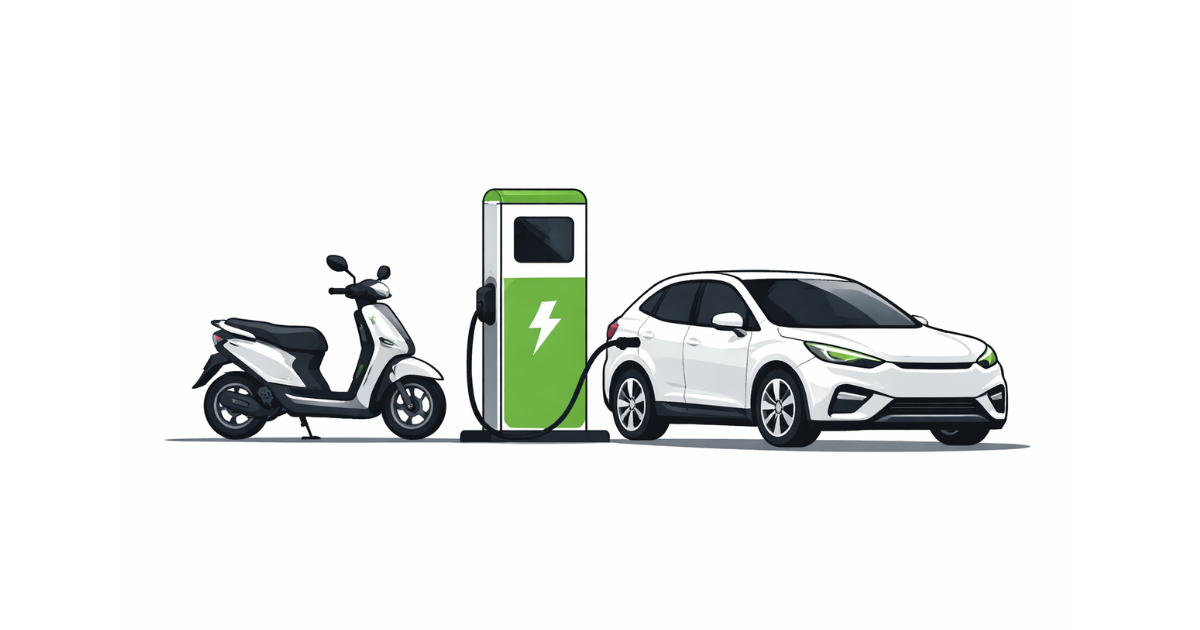
Electric vehicle buyers, manufacturers, and dealers across India have been asking one key question: Is the EV subsidy ending after FAME-II?
With the financial year 2026-27 approaching, reports and social media discussions created confusion about the future of government support for electric vehicles. Many potential buyers delayed purchases, worried that subsidies may stop. Industry players also sought clarity on policy direction.
Now, the government has clarified its position on the implementation of FAME-III, the next phase of India’s electric mobility push.
Here is what the latest clarification means for buyers, automakers, and the EV market.
What Is FAME and Why It Is Important
The Faster Adoption and Manufacturing of Electric Vehicles (FAME) scheme is the Centre’s flagship program to promote electric mobility in India.
It was launched to reduce vehicle emissions, cut fuel imports, boost domestic EV manufacturing, and make electric vehicles affordable for common buyers.
Under FAME-II, which began in 2019, the government provided incentives on electric two-wheelers, electric three-wheelers, electric cars for commercial use, and electric buses.
The scheme played a major role in increasing EV sales in India, especially electric scooters and commercial three-wheelers.
Is the EV Subsidy Ending in 2026? Government’s Clear Stand
The government has clarified that EV subsidies are not being abruptly stopped.
However, the structure and focus under FAME-III for 2026-27 will not be identical to previous phases.
Officials have indicated that the next phase will focus more on targeted incentives, encourage local manufacturing and value addition, support segments that still need assistance, and gradually reduce blanket subsidies where the market has matured.
This means the EV subsidy model is evolving, not disappearing.
Why the Government Is Rethinking Subsidies
Over the past few years, India’s EV market has grown rapidly.
There has been sharp growth in electric two-wheeler adoption, increased private investment in EV startups, expansion of charging infrastructure, and falling battery costs compared to earlier years.
As the market becomes more stable, the government is shifting from heavy upfront subsidies to a more balanced approach.
The goal is to avoid long-term dependence on financial support while still encouraging growth.
What Could Change Under FAME-III in 2026-27
Targeted Support Instead of Broad Subsidy
Earlier schemes offered fixed incentives per kilowatt-hour for eligible vehicles. Under FAME-III, support may be more selective.
Segments that may continue receiving stronger support include electric buses, commercial three-wheelers, fleet vehicles, and public transport systems.
These segments directly impact pollution and fuel savings.
Greater Focus on ‘Make in India’
The next phase is expected to link incentives more strictly to domestic battery manufacturing, local sourcing of components, and compliance with production-linked norms.
This aligns with the government’s larger manufacturing and supply chain goals.
Gradual Rationalisation of Two-Wheeler Subsidy
Electric two-wheelers have seen massive adoption in recent years. As production volumes increase, prices are becoming more competitive.
Subsidies may continue but at reduced levels. Performance-linked conditions may become stricter. Only compliant manufacturers may qualify.
This is to ensure quality and safety standards.
Impact on EV Buyers in 2026-27
For individual buyers planning to purchase an electric scooter or car, the key takeaway is clear.
Subsidies are not vanishing overnight.
However, buyers may see slight changes in incentive amounts, new eligibility conditions, and stronger compliance requirements for manufacturers.
If you are planning to buy an EV in 2026, it is advisable to check state-level subsidies, confirm central scheme eligibility, and track official announcements from the Ministry of Heavy Industries.
State governments may continue offering separate incentives even if central support changes.
What This Means for EV Prices
One major concern among consumers is whether EV prices will rise if subsidies are reduced.
Several factors will influence pricing in 2026-27, including battery cost trends, domestic manufacturing scale, competition among brands, and import dependency.
Even if subsidies are rationalised, large-scale production and improved supply chains may help control price increases.
In some cases, manufacturers may absorb part of the impact to remain competitive.
Industry Reaction to FAME-III Direction
Automakers and industry bodies have largely welcomed the clarity.
Many manufacturers had sought policy stability, clear timelines, and a long-term roadmap.
Uncertainty affects production planning and investment decisions.
The confirmation that EV support will continue in some form has brought relief to the industry.
However, companies are also preparing for a more competitive environment with reduced direct financial support.
How FAME-III Fits Into India’s Larger EV Vision
India has set ambitious goals for electric mobility, including higher EV penetration in two-wheelers and three-wheelers, electrification of public transport, reduced carbon emissions, and lower oil imports.
The government sees EV adoption as part of a broader clean energy transition.
FAME-III is expected to work alongside Production Linked Incentive schemes, battery manufacturing initiatives, and charging infrastructure expansion programs.
This integrated approach aims to build a self-reliant EV ecosystem rather than depend only on purchase subsidies.
Are State EV Subsidies Also Ending?
There is no uniform rule across India.
Different states have their own EV policies.
Some states may continue purchase incentives, offer road tax exemptions, provide registration fee waivers, and support charging infrastructure.
Buyers should monitor announcements from their respective state governments.
Even if central subsidies change under FAME-III, state-level benefits may continue in certain regions.
What Buyers Should Watch in the Coming Months
As the financial year 2026-27 approaches, the following updates will be important: official notification on FAME-III structure, incentive rates per vehicle category, eligibility criteria for manufacturers, and budget allocation details.
These details will determine the real impact on EV prices and demand.
Until then, speculation about a complete end to EV subsidies appears unfounded.
Will EV Adoption Slow Down Without High Subsidies?
Market analysts believe that EV adoption in India has reached a stage where growth will continue even with lower subsidies.
Reasons include rising fuel prices, improved battery performance, growing consumer awareness, and better charging infrastructure.
Urban buyers, delivery companies, and fleet operators are increasingly choosing EVs for cost savings over time.
The total cost of ownership remains a strong advantage for electric vehicles.
The Bottom Line: EV Subsidy Is Evolving, Not Ending
The government’s clarification makes one thing clear.
EV subsidies are not being abruptly discontinued in 2026-27.
Instead, the approach under FAME-III is expected to be more focused, performance-based, and linked to domestic manufacturing.
For consumers, this means continued support, though possibly at revised levels.
For manufacturers, it signals a shift toward efficiency, compliance, and long-term sustainability.
For India’s clean mobility mission, it marks the next stage of growth.
As official details of FAME-III are announced, buyers and industry stakeholders will get a clearer picture of incentive structures.
Disclaimer: The information presented in this article is intended for general informational purposes only. While every effort is made to ensure accuracy, completeness, and timeliness, data such as prices, market figures, government notifications, weather updates, holiday announcements, and public advisories are subject to change and may vary based on location and official revisions. Readers are strongly encouraged to verify details from relevant official sources before making financial, investment, career, travel, or personal decisions. This publication does not provide financial, investment, legal, or professional advice and shall not be held liable for any losses, damages, or actions taken in reliance on the information provided.
About The Author