
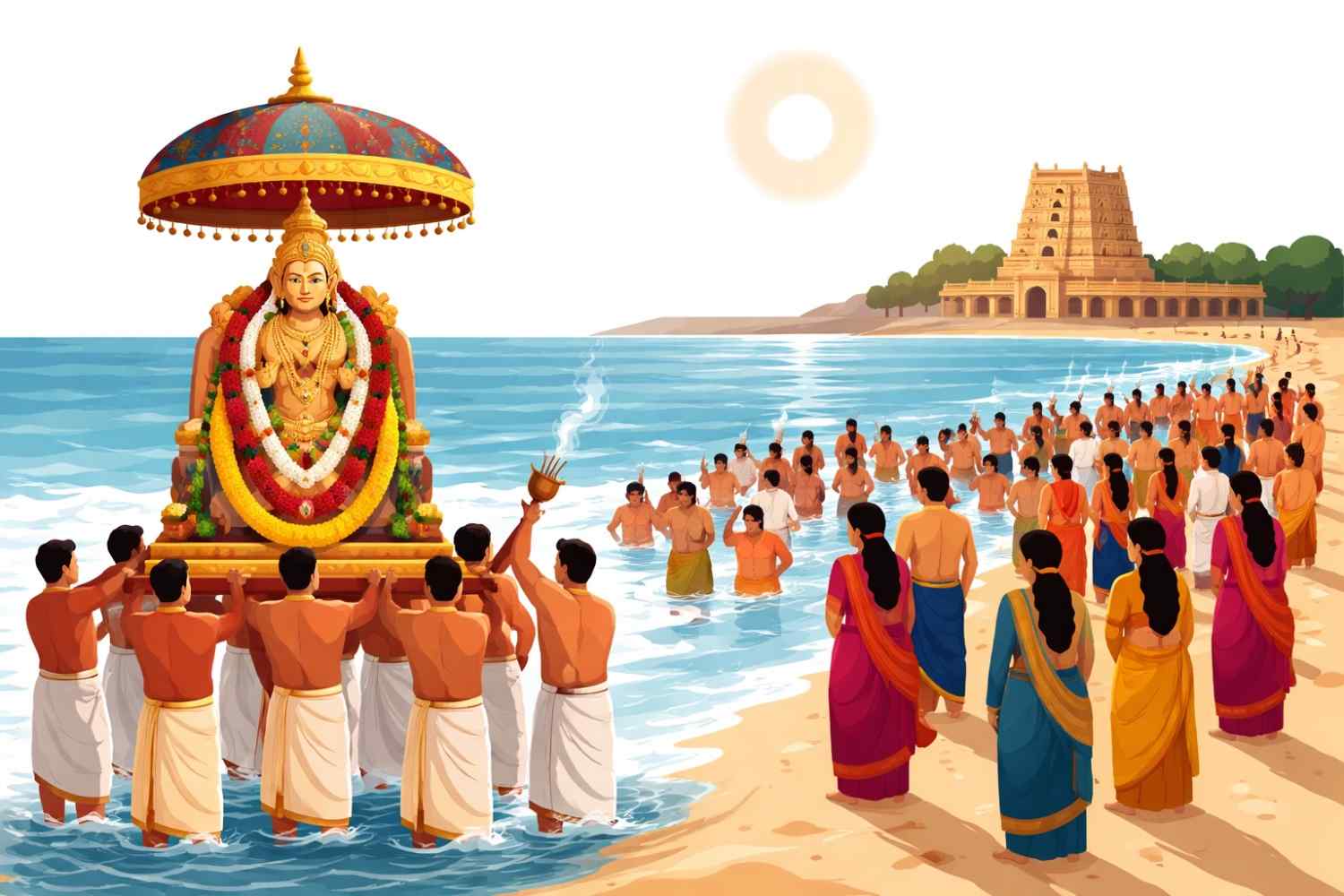
Masi Magam 2026 is being observed today across Tamil Nadu and other parts of South India, with thousands of devotees gathering at temples and seashores for sacred rituals. The festival falls in the Tamil month of Masi when the Magam (Magha) star aligns with the full moon.
In 2026, Masi Magam is observed on March 3 (date may vary slightly based on regional Panchangam calculations). On this day, devotees believe that taking a holy dip in the sea, river, or temple tank washes away past sins and brings spiritual renewal.
From temple processions to special pujas and community gatherings, Masi Magam remains one of the most important spiritual events in Tamil Hindu tradition.
What Is Masi Magam? Understanding the Festival
Masi Magam is a sacred Hindu festival celebrated mainly in Tamil Nadu, and also in parts of Puducherry, Kerala, and coastal regions of South India.
It takes place in the Tamil month of Masi (February–March) when the Magam star coincides with the full moon day.
The day is considered highly auspicious for holy bathing in rivers, seas, and temple tanks, special prayers to deities, and seeking blessings for peace and prosperity. The belief is that celestial energies are at their peak during this alignment, making it an ideal time for spiritual cleansing.
Why Masi Magam 2026 Matters Today
This year, Masi Magam falls on March 3, 2026, bringing large crowds to major temple towns and coastal areas.
In many places, temple authorities and local administrations have made arrangements for crowd control, special darshan timings, and safety measures near water bodies.
For devotees, today is not just a ritual day. It is a moment of renewal, prayer, and community connection.
Religious Significance of Masi Magam
The core belief behind Masi Magam is purification. Devotees believe that bathing in holy waters on this day removes negative karma and grants spiritual strength.
Many temples bring their deities in grand processions to water bodies. The idols are ceremonially taken for a sacred bath, known as Theerthavari. This ritual is a key highlight of the festival.
The festival also reflects the deep connection between temple traditions and natural elements such as rivers and seas.
Major Celebrations Across Tamil Nadu
Kumbakonam is one of the most important centers for Masi Magam. Devotees gather near temple tanks and the Mahamaham tank for ritual baths.
At Rameswaram, pilgrims take a holy dip in the sea before offering prayers at the Ramanathaswamy Temple.
In Chennai and nearby coastal areas, large numbers of people gather along beaches for ceremonial bathing.
Puducherry also witnesses traditional temple processions and public participation in large numbers.
Key Rituals Performed on Masi Magam
The most common practices observed today include the holy bath known as Theerthavari, temple processions where idols are carried to water bodies, special pujas and archana inside temples, and acts of charity such as donating food and clothes.
Many devotees wake up early before sunrise to perform these rituals.
Spiritual Meaning Behind the Holy Dip
The act of bathing during Masi Magam is not just physical cleansing. It symbolizes washing away ego, anger, and negative thoughts.
Devotees believe that water becomes spiritually charged during this alignment of star and full moon. Taking a dip is seen as an act of surrender and renewal.
For many families, it is also a time to pray for health, prosperity, and harmony at home.
How Families Are Observing Masi Magam 2026
Across Tamil Nadu and other southern states, families begin the day early. Many wear traditional attire and visit temples together.
Elders guide younger members about the importance of the day. Some people observe fasting or eat simple vegetarian meals.
In cities, those unable to visit large water bodies may perform symbolic rituals at home and offer prayers to their family deity.
Safety Measures During Masi Magam 2026
With large crowds gathering near water bodies, authorities usually advise devotees to follow safety instructions.
Devotees are advised to avoid deep waters, stay within marked areas, keep children under supervision, and follow instructions from local officials. Maintaining cleanliness near temple tanks and beaches is also encouraged.
Best Masi Magam 2026 Messages to Share
Many people share greetings with friends and family through messages and social media.
“May this Masi Magam bring peace, purity, and happiness to your life.”
“On this sacred day, may your prayers be answered and your home be filled with prosperity.”
“Wishing you and your family a blessed Masi Magam. May divine blessings guide you always.”
“Let this holy day wash away worries and bring new beginnings.”
“May the sacred waters of Masi Magam cleanse your heart and bring spiritual strength.”
Why Masi Magam Remains Relevant in Modern Times
Even in today’s fast-paced life, Masi Magam continues to attract large crowds. The festival blends faith, culture, and community.
It reminds people of respect for natural elements, importance of spiritual discipline, and the power of collective prayer.
For many, the day offers time to reflect and reconnect with faith.
Conclusion
Masi Magam 2026, observed today on March 3, is a significant spiritual occasion for thousands of devotees across South India.
The festival marks the sacred alignment of the Magam star and the full moon in the Tamil month of Masi. From holy dips and temple rituals to heartfelt prayers and family gatherings, the day carries deep religious meaning.
As devotees gather near rivers, seas, and temple tanks, the message remains simple: cleanse the mind, renew faith, and seek divine blessings for the year ahead.
For many, Masi Magam is not just a festival. It is a reminder of tradition, unity, and spiritual strength that continues to shape cultural life in Tamil Nadu and beyond.
Disclaimer: The information presented in this article is intended for general informational purposes only. While every effort is made to ensure accuracy, completeness, and timeliness, data such as prices, market figures, government notifications, weather updates, holiday announcements, and public advisories are subject to change and may vary based on location and official revisions. Readers are strongly encouraged to verify details from relevant official sources before making financial, investment, career, travel, or personal decisions. This publication does not provide financial, investment, legal, or professional advice and shall not be held liable for any losses, damages, or actions taken in reliance on the information provided.
edited by D Rishidhar Reddy
About The Author