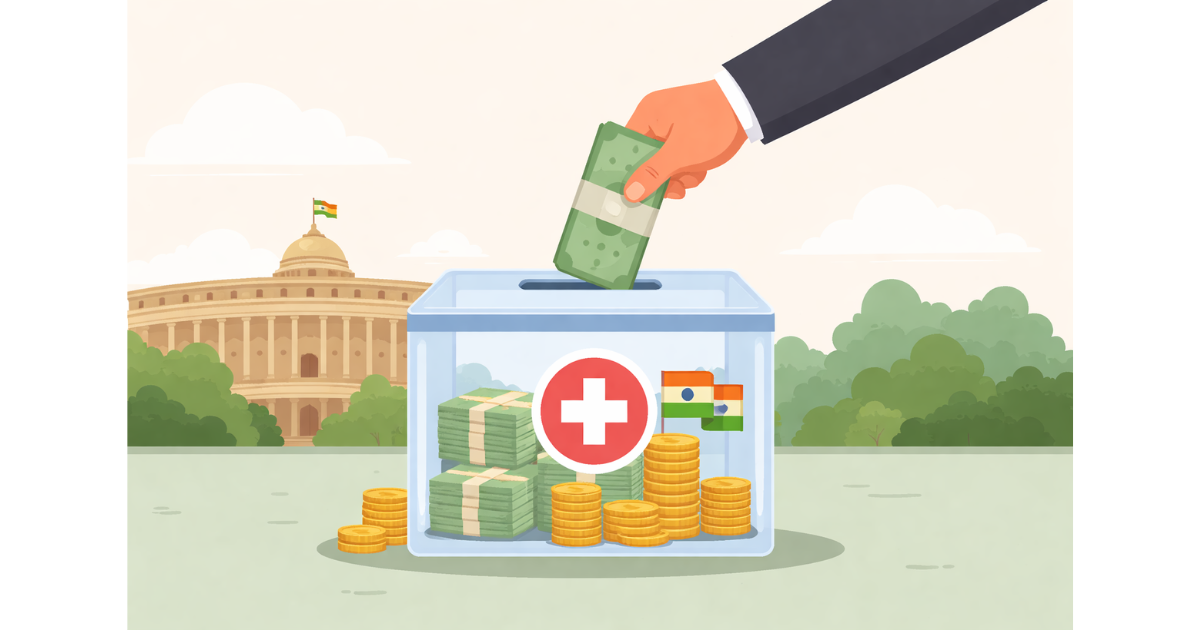
The PM CARES Fund has once again come under public and political scrutiny. During the recent Lok Sabha session, several Members of Parliament attempted to raise questions about the use of PM CARES funds for defence-related purposes. These questions were not admitted for discussion, triggering a wider debate on transparency, accountability, and parliamentary oversight.
The issue has gained importance because Parliament is the highest forum for holding the government accountable. When questions are blocked, citizens are left with fewer official answers about how public contributions are being used, especially in sensitive areas such as defence and national security.
What Is the PM CARES Fund
PM CARES stands for Prime Minister’s Citizen Assistance and Relief in Emergency Situations Fund. It was established in March 2020 at the height of the COVID-19 pandemic. The fund was created to support emergency relief efforts related to health crises, natural disasters, and other national emergencies.
PM CARES receives voluntary contributions from individuals, corporate entities, public sector undertakings, and government employees. The government has consistently maintained that PM CARES is a charitable trust and not part of the Consolidated Fund of India.
Why Defence-Related Questions Were Raised
Opposition Members of Parliament submitted questions seeking details on whether PM CARES funds had been used for defence or security-related needs. These included questions on possible allocations for defence equipment, support to armed forces during emergencies, and oversight mechanisms governing such spending.
These questions were intended to be raised during Question Hour in the Lok Sabha, which allows MPs to seek direct and official responses from the government. However, the questions were marked as not admissible.
Official Reason for Blocking the Questions
The Lok Sabha Secretariat cited procedural and jurisdictional grounds for not allowing the questions. Under parliamentary rules, questions must fall within the direct responsibility of the government. Since PM CARES is described as a trust and not a government fund, it has been argued that it does not fall under routine parliamentary scrutiny.
In addition, defence-related matters are often treated with caution due to national security considerations.
Why Transparency Is Being Questioned
Critics argue that despite being called a charitable trust, PM CARES operates closely with the government. The Prime Minister is the ex-officio chairperson of the trust, while senior cabinet ministers serve as trustees. Government infrastructure and official channels are also used for fund management and communication.
Because of this close link, opposition parties and transparency advocates argue that PM CARES involves public authority and public interest, making parliamentary oversight necessary.
Audit and Accountability Concerns
The government has stated that PM CARES is audited by an independent auditor appointed by the trustees. However, the fund is not audited by the Comptroller and Auditor General of India. Detailed audit reports are not tabled in Parliament and are not fully available for public review.
This has led to concerns that citizens do not have access to complete information about how contributions are spent.
Past Supreme Court Observations
The Supreme Court has previously ruled that PM CARES does not need to be audited by the CAG, accepting the government’s position that it is a charitable trust. However, legal experts note that this ruling does not automatically bar Parliament from asking questions, provided parliamentary rules permit such scrutiny.
This distinction has become central to the current debate.
Opposition Reaction in Parliament
Opposition parties have criticised the blocking of questions, saying that Question Hour is a fundamental feature of parliamentary democracy. They argue that preventing questions weakens accountability and sets a worrying precedent.
Several MPs have pointed out that sensitive subjects, including defence, are regularly discussed in Parliament in a controlled manner without compromising national security.
Government’s Stand on National Security
The government has defended its decision by emphasising national security concerns. Officials have said that detailed disclosures related to defence funding could pose risks. The government also maintains that emergency funds require flexibility to respond quickly to crises.
Supporters of the government argue that not all financial details can be debated openly, especially during sensitive security situations.
Why the Debate Has Gained Public Attention
Public interest in the PM CARES transparency debate has increased due to the large volume of contributions made by citizens and companies, limited public disclosure of detailed spending data, and the rare instance of parliamentary questions being blocked.
The issue has also gained traction on social media and in political statements, keeping it in the public spotlight.
Difference Between PM CARES and Other Public Funds
PM CARES operates differently from budgetary funds and the Prime Minister’s National Relief Fund. Budgetary allocations are debated and approved by Parliament, while PM CARES functions outside the Union Budget framework. This structural difference is at the core of the transparency debate.
Impact on Parliamentary Accountability
Experts warn that blocking questions could narrow the scope of parliamentary oversight. Question Hour is considered one of the most effective tools available to MPs for seeking explanations and ensuring accountability. Limiting its use may affect public trust in democratic institutions.
Rules Governing Question Hour
Lok Sabha rules allow questions unless they involve matters under adjudication, issues affecting national security, or subjects beyond the government’s responsibility. The interpretation of these rules rests with the Speaker’s office, whose decisions are final.
Speaker’s Role and Discretion
The Lok Sabha Speaker has the authority to decide whether a question is admissible. While such decisions are generally not challenged in court, MPs can raise concerns through discussions, debates, and other parliamentary procedures.
Demands from Transparency Advocates
Civil society groups and policy experts are calling for clearer disclosures, voluntary sharing of audit summaries, and defined guidelines on parliamentary oversight of emergency funds. They argue that transparency strengthens public trust and democratic governance.
What Happens Next
The issue is expected to resurface in future parliamentary sessions. Opposition parties may submit revised questions or demand broader discussions on oversight mechanisms. As of now, no changes to the structure or reporting of PM CARES have been announced.
Why This Matters to Citizens
Millions of citizens have contributed to PM CARES voluntarily. Many want clarity on how funds are used, who monitors spending, and why Parliament cannot seek detailed answers. Transparency plays a key role in maintaining public confidence in emergency relief funds.
Conclusion
The PM CARES transparency debate reflects a broader question about accountability in emergency funding. While the government cites legal structure and national security, opposition parties stress the importance of parliamentary oversight.
The blocking of Lok Sabha questions has intensified public discussion rather than ending it. As India continues to face health, climate, and security challenges, the balance between transparency and confidentiality will remain a critical democratic issue.
Disclaimer: The information presented in this article is intended for general informational purposes only. While every effort is made to ensure accuracy, completeness, and timeliness, data such as prices, market figures, government notifications, weather updates, holiday announcements, and public advisories are subject to change and may vary based on location and official revisions. Readers are strongly encouraged to verify details from relevant official sources before making financial, investment, career, travel, or personal decisions. This publication does not provide financial, investment, legal, or professional advice and shall not be held liable for any losses, damages, or actions taken in reliance on the information provided.
About The Author