
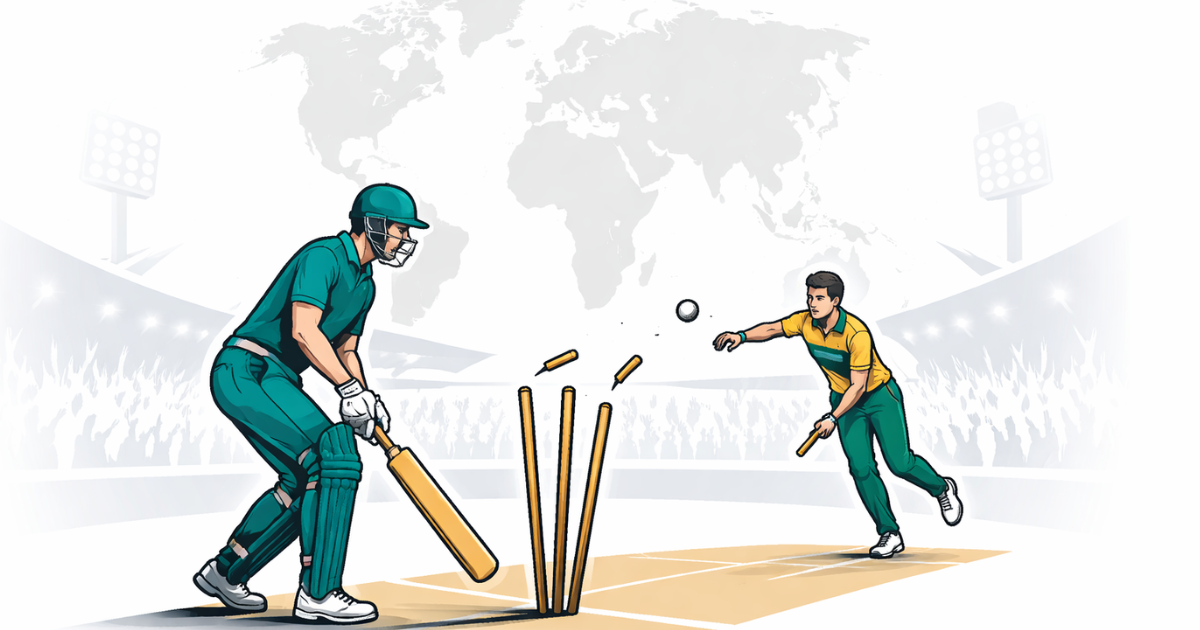
The ICC Men’s T20 World Cup 2026 has already delivered high drama in its group stage, with traditional powerhouses facing serious challenges from emerging teams. In one of the most closely watched fixtures, South Africa were pushed to the brink by the United Arab Emirates before managing to secure a crucial win. The result has added fresh tension to the group standings and sharpened focus on India’s upcoming match.
South Africa entered the contest as clear favourites, backed by their depth in batting and a well-rounded bowling attack. However, UAE showed composure and tactical discipline throughout the game, reflecting the steady rise of associate cricketing nations in global tournaments. The contest remained competitive deep into the innings, with South Africa forced to work hard in both phases of the match. While they ultimately secured victory, the narrow margin ensured that discussions quickly shifted from dominance to resilience.
The match underlined a broader reality of modern T20 cricket. Associate teams are no longer content with participation; they are capable of executing structured game plans and challenging established sides. UAE’s disciplined bowling in the middle overs and measured batting approach demonstrated how preparation and exposure to franchise cricket have narrowed the gap between teams.
From a points table perspective, South Africa’s win secures two valuable points, but the margin of victory could play a role later in the tournament. In T20 World Cup group stages, net run rate often becomes decisive when teams finish level on points. A tight win, while positive for momentum, may not significantly boost net run rate compared to a comprehensive victory. With the group stage expected to remain competitive, every run scored and conceded could shape semifinal qualification scenarios.
South Africa will likely review key areas following the match. The top order will be assessed for consistency under pressure, while the death bowling phase will remain an area of focus. In tournaments of this scale, teams that correct early warning signs often sustain longer campaigns. The immediate priority for South Africa will be maintaining winning rhythm while improving execution.
Attention now turns to India’s next match, which carries significant implications for the group standings. India traditionally enters ICC tournaments as one of the strongest contenders, owing to its batting depth, experienced spin attack and tactical flexibility. A convincing performance in the upcoming fixture would not only add two points to India’s tally but could also provide a net run rate boost that strengthens their position at the top of the table.
India’s strategy will likely revolve around establishing control during the powerplay and consolidating through spin in the middle overs. Death-over precision has often separated winning teams from those left chasing qualification equations. With group positions tightening, India cannot afford lapses against any opponent.
The evolving competitiveness of the tournament reinforces a clear trend: the T20 format rewards adaptability. Matches can shift rapidly, and even minor errors can alter qualification scenarios. South Africa’s narrow escape against UAE stands as a reminder that reputation alone guarantees nothing in modern cricket.
As the group stage progresses, the focus will remain on points accumulation, net run rate management and head-to-head outcomes among leading sides. If South Africa and India are competing within the same group, their eventual encounter could become decisive in determining who finishes at the top.
The T20 World Cup 2026 is shaping into a tightly contested tournament where no team can relax. South Africa’s survival against a determined UAE side has intensified the race, while India’s next match could further redefine the standings. With margins slim and pressure rising, every over now carries weight in the battle for semifinal spots.
Disclaimer: The information presented in this article is intended for general informational purposes only. While every effort is made to ensure accuracy, completeness, and timeliness, data such as prices, market figures, government notifications, weather updates, holiday announcements, and public advisories are subject to change and may vary based on location and official revisions. Readers are strongly encouraged to verify details from relevant official sources before making financial, investment, career, travel, or personal decisions. This publication does not provide financial, investment, legal, or professional advice and shall not be held liable for any losses, damages, or actions taken in reliance on the information provided.
About The Author