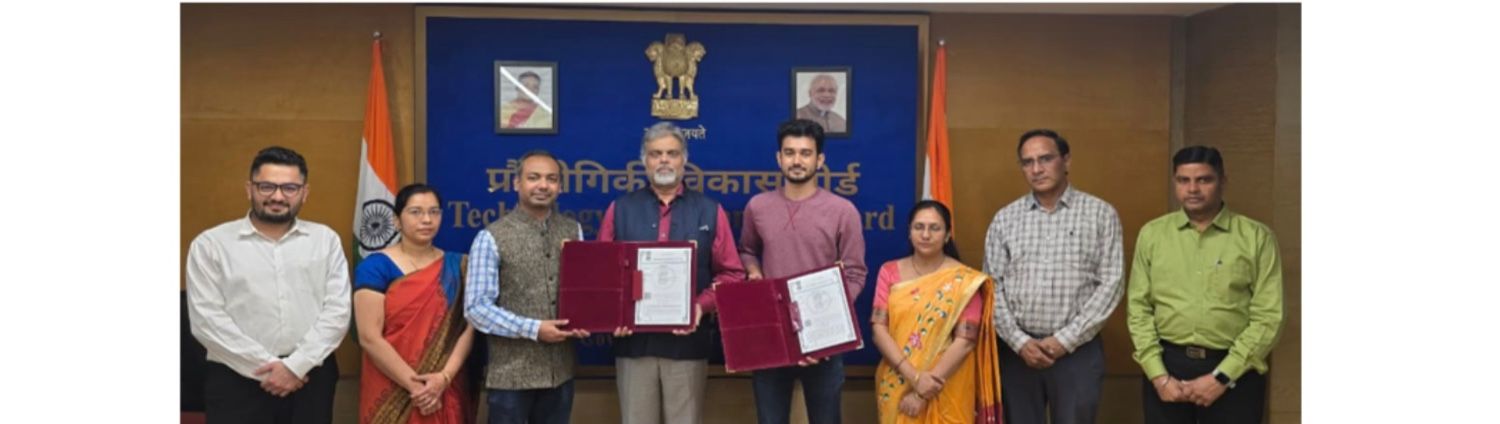
In a significant push to strengthen India’s electric mobility ecosystem, the Technology Development Board (TDB) under the Department of Science and Technology (DST) has extended financial support to Bengaluru-based InfinityX Innovations Private Limited for the development of automated battery swapping infrastructure for electric vehicles.
The initiative, announced through an official government release on March 24, 2026, focuses on scaling up an indigenous, technology-driven battery swapping ecosystem designed to address critical barriers to electric vehicle (EV) adoption, particularly in high-usage commercial segments.
At the core of the project is the deployment of automated, Internet of Things (IoT)-enabled battery swapping stations capable of completing a battery exchange in under 40 seconds. This feature is expected to significantly reduce downtime compared to conventional charging methods, offering a refuelling-like experience for EV users and improving operational efficiency for fleet operators.
The solution developed by InfinityX integrates advanced battery systems with automated infrastructure, ensuring thermal stability and reliable performance across diverse Indian climatic conditions. Its modular architecture allows compatibility across multiple vehicle platforms, enabling interoperability and large-scale deployment. Such flexibility is particularly relevant for sectors like last-mile delivery and gig economy services, where high vehicle utilization demands quick turnaround times.
Officials highlighted that one of the key objectives of the TDB’s support is to facilitate the commercialization and scaling of indigenous technologies. With financial backing from the government, InfinityX plans to establish a dedicated manufacturing facility in Bengaluru to produce next-generation battery packs and automated swapping systems. This move is expected to strengthen domestic manufacturing capabilities and reduce dependence on imported EV infrastructure technologies.
The project also aligns with broader national goals of promoting clean mobility and achieving self-reliance in emerging technology sectors. By supporting a standardized and interoperable battery swapping network, the initiative aims to create a more cohesive EV ecosystem that can be scaled across cities and regions.
According to TDB Secretary Rajesh Kumar Pathak, accelerating the deployment of efficient and scalable charging alternatives is essential for the growth of India’s electric mobility sector. He noted that innovations such as automated battery swapping can play a transformative role in overcoming adoption challenges, particularly in commercial applications where time efficiency directly impacts productivity.
From the industry perspective, InfinityX’s leadership emphasized that reducing battery swap time to under 40 seconds brings EV usability closer to conventional fuel-based vehicles, making electric mobility more practical and accessible. The company indicated that the government’s support would enable faster scale-up and wider deployment of its technology platform.
The development comes amid increasing policy focus on alternative charging solutions in India. Battery swapping, in particular, has emerged as a promising model for two-wheelers, three-wheelers, and commercial fleets, where long charging times and limited infrastructure remain major constraints.
By backing InfinityX Innovations, the TDB-DST initiative reinforces the government’s strategy of fostering homegrown technological solutions to accelerate the transition toward sustainable transportation. As India continues to expand its EV footprint, such interventions are expected to play a crucial role in bridging infrastructure gaps and enabling faster, more widespread adoption of electric mobility.
Source : PIB
edited by D.Rishidhar Reddy
About The Author