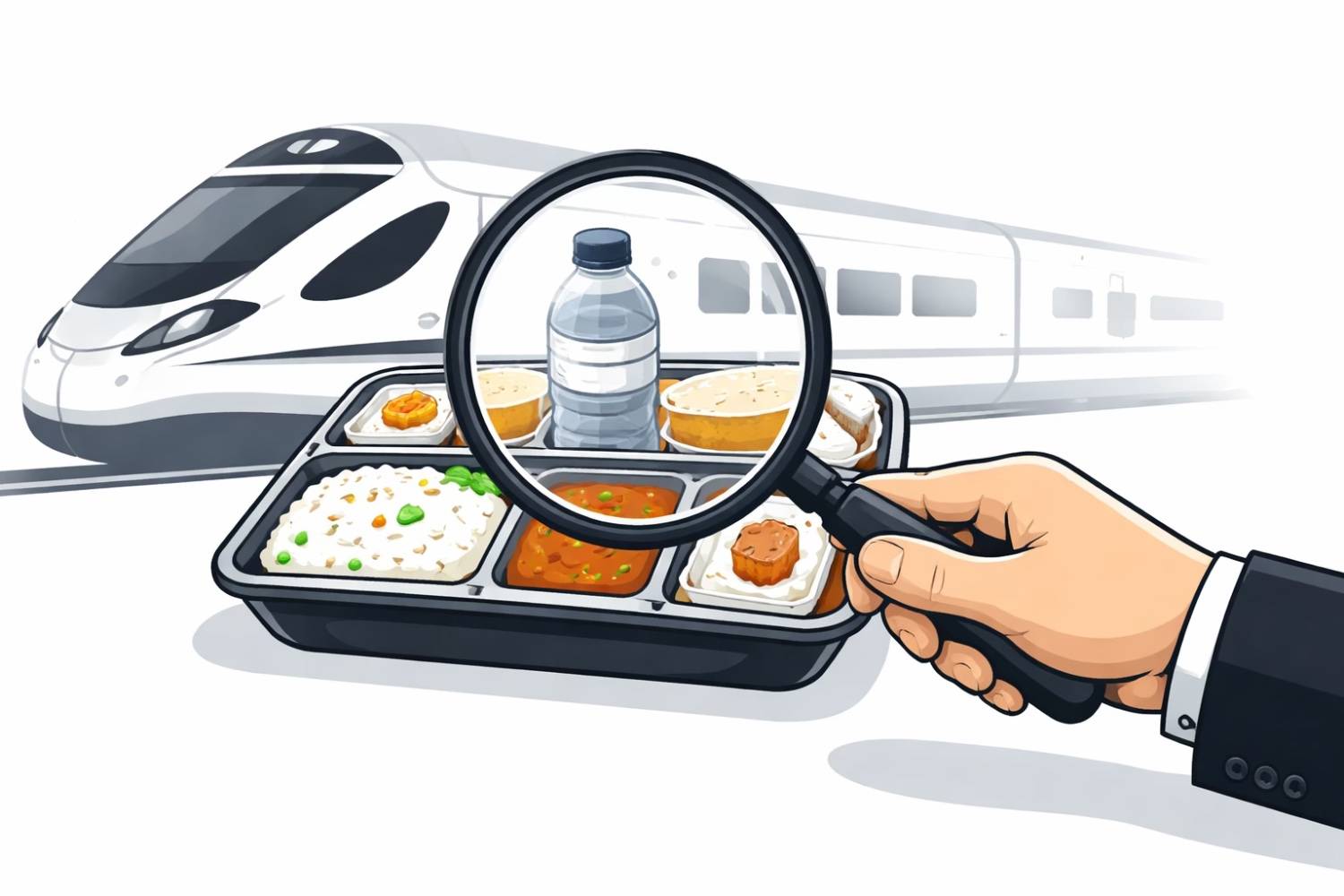
Concerns over food quality on Vande Bharat trains have sparked fresh debate on catering standards in Indian Railways, pushing food safety back into the national spotlight.
The Vande Bharat Express, India’s flagship semi-high-speed train service, is often seen as a symbol of modern rail travel. With improved speed, better seating, and upgraded amenities, it has been positioned as a premium experience. However, recent complaints from passengers about food quality and hygiene have triggered discussion on social media and in public forums.
The issue matters because thousands of passengers travel daily on these trains, many of whom opt for onboard meals. Food safety in public transport is not just a service concern. It is a public health issue. As concerns surface, experts say transparency and strict hygiene checks are critical to maintain public trust.
What Is the Vande Bharat Express?
The Vande Bharat Express, operated by Indian Railways, runs on several major routes across India. The train is known for faster travel times, modern interiors, automatic doors, and pre-booked catering services.
Meals on these trains are typically provided through authorised catering contractors under the supervision of the Indian Railway Catering and Tourism Corporation (IRCTC). Passengers can either opt for included meals at the time of ticket booking or decline the catering service.
Given its premium positioning, expectations around hygiene and food quality are naturally high.
What Triggered the Food Safety Debate?
The current controversy gained attention after passengers shared complaints online about the quality of food served onboard. Some travellers raised concerns about stale items, poor packaging, or hygiene issues.
In several cases reported in the public domain, railway authorities acknowledged complaints and initiated inquiries. Officials have stated that strict action is taken when lapses are found.
While isolated complaints about train catering are not new, the visibility of Vande Bharat as a flagship service has amplified public reaction. Social media posts, videos, and customer feedback have played a key role in bringing the issue into wider discussion.
How Indian Railways Responds to Complaints
Indian Railways and IRCTC have said that food safety is monitored through regular inspections and quality audits. Vendors are required to follow food safety guidelines under the Food Safety and Standards Act, overseen by the Food Safety and Standards Authority of India (FSSAI).
Railway authorities have previously stated that:
• Catering units are inspected periodically.
• Food samples can be tested if complaints arise.
• Penalties, including fines or blacklisting, may be imposed on vendors found violating norms.
Passengers can lodge complaints through official railway helplines, the RailMadad portal, or social media channels. In many reported cases, railway officials have responded publicly and promised corrective action.
However, consumer groups argue that reactive measures are not enough. They say preventive monitoring must be strengthened, especially on premium services like Vande Bharat.
Passenger Expectations from a Premium Train Service
Vande Bharat trains often operate on high-demand routes such as Delhi–Varanasi, Mumbai–Ahmedabad, and other major corridors. Fares are generally higher than regular express trains due to faster travel time and enhanced facilities.
When passengers pay a premium fare, they expect:
• Fresh and hygienically packed meals
• Clear labelling of ingredients and preparation dates
• Proper temperature control for hot and cold items
• Clean serving trays and sealed packaging
Even a few instances of alleged lapses can damage the brand image of a service that represents modern Indian rail travel.
Health Experts on Food Safety in Public Transport
Public health experts say food safety in trains presents unique challenges. Meals are prepared at base kitchens and transported over long distances. Maintaining temperature and hygiene throughout the journey is essential.
According to food safety specialists, the key risk areas in rail catering include:
Temperature control. Hot food must remain hot and cold food must remain cold to prevent bacterial growth.
Handling practices. Improper handling by staff can lead to contamination.
Storage and packaging. Sealed and properly labelled packaging reduces exposure.
Time gap between preparation and serving. The longer the gap, the higher the risk if storage conditions are not ideal.
Experts emphasise that even reputed vendors can face challenges if monitoring systems are weak. They recommend stronger compliance checks, surprise inspections, and digital tracking of food preparation timelines.
Role of FSSAI and Regulatory Oversight
The Food Safety and Standards Authority of India (FSSAI) sets hygiene and safety standards for food businesses across the country. Railway catering units must comply with these standards.
FSSAI guidelines require:
• Clean preparation areas
• Regular health checks for food handlers
• Safe storage practices
• Proper labelling and traceability
If violations are found, authorities can impose fines or suspend licences. In the context of train catering, coordination between IRCTC, private vendors, and food safety authorities is crucial.
Has This Happened Before?
Food safety complaints on Indian trains are not new. Over the years, passengers on various services have raised issues about meal quality. In response, Indian Railways has introduced centralised kitchens, improved packaging, and digital complaint systems.
The launch of Vande Bharat brought renewed focus on service quality. Any complaint linked to this brand receives higher public attention because the train is projected as a symbol of modern India.
However, railway officials have repeatedly stated that complaints represent a small fraction of total meals served daily across the network.
Impact on Public Trust and Brand Image
The Vande Bharat trains are often highlighted in official communication as a milestone in railway modernisation. Therefore, issues related to food safety carry reputational risks.
For many middle-class families, train journeys are a major travel option. Food served onboard is often consumed by children, elderly passengers, and those with health conditions. Even minor hygiene lapses can raise anxiety.
Brand perception is shaped not only by speed and comfort but also by trust. If passengers begin to doubt catering standards, they may opt out of meals or carry their own food, which reduces revenue and customer satisfaction.
What Passengers Are Demanding Now
Following recent discussions, passengers are calling for greater transparency. Some have suggested that:
Catering vendors should be publicly listed for each route.
Food preparation times should be clearly printed on packaging.
Regular inspection reports should be made available.
QR codes could allow passengers to trace the kitchen where meals were prepared.
While these suggestions are not official policy, they reflect growing awareness about food safety among Indian consumers.
Steps Railways Can Consider
Experts believe that proactive steps can restore confidence quickly. These may include stricter vendor audits, third-party quality checks, and stronger monitoring during peak travel seasons.
Technology can also play a role. Temperature-controlled storage units, digital logs of preparation time, and real-time complaint tracking systems can improve accountability.
The broader goal is not just damage control but long-term improvement.
Why This Issue Matters Beyond One Train
The Vande Bharat food safety debate highlights a larger challenge in public catering systems. India’s railway network carries millions of passengers daily. Ensuring safe food across such a vast system requires constant oversight.
Food safety incidents, even if limited, can quickly spread online. In the age of smartphones and instant sharing, one complaint can reach thousands within hours.
For Indian Railways, maintaining high standards is essential not just for public health but also for sustaining confidence in modernisation efforts.
The Road Ahead
As of now, railway authorities continue to monitor complaints and take corrective action where required. Health experts stress that consistent compliance with FSSAI norms is key.
For passengers, awareness and prompt reporting remain important. Official complaint channels exist for a reason, and timely feedback helps authorities identify gaps.
The Vande Bharat Express remains one of India’s most high-profile train services. Addressing food safety concerns effectively will determine whether it continues to be seen as a symbol of progress or faces reputational challenges.
In a country where railways connect cities, families, and businesses, food served onboard is more than a convenience. It is part of the travel experience. Ensuring that experience is safe and reliable is not optional. It is essential.
As discussions continue, one thing is clear. In 2026, Indian travellers expect not just speed and comfort, but also accountability and safety in every meal served on the move.
Disclaimer: The information presented in this article is intended for general informational purposes only. While every effort is made to ensure accuracy, completeness, and timeliness, data such as prices, market figures, government notifications, weather updates, holiday announcements, and public advisories are subject to change and may vary based on location and official revisions. Readers are strongly encouraged to verify details from relevant official sources before making financial, investment, career, travel, or personal decisions. This publication does not provide financial, investment, legal, or professional advice and shall not be held liable for any losses, damages, or actions taken in reliance on the information provided.
Edited by D Rishidhar Reddy
About The Author