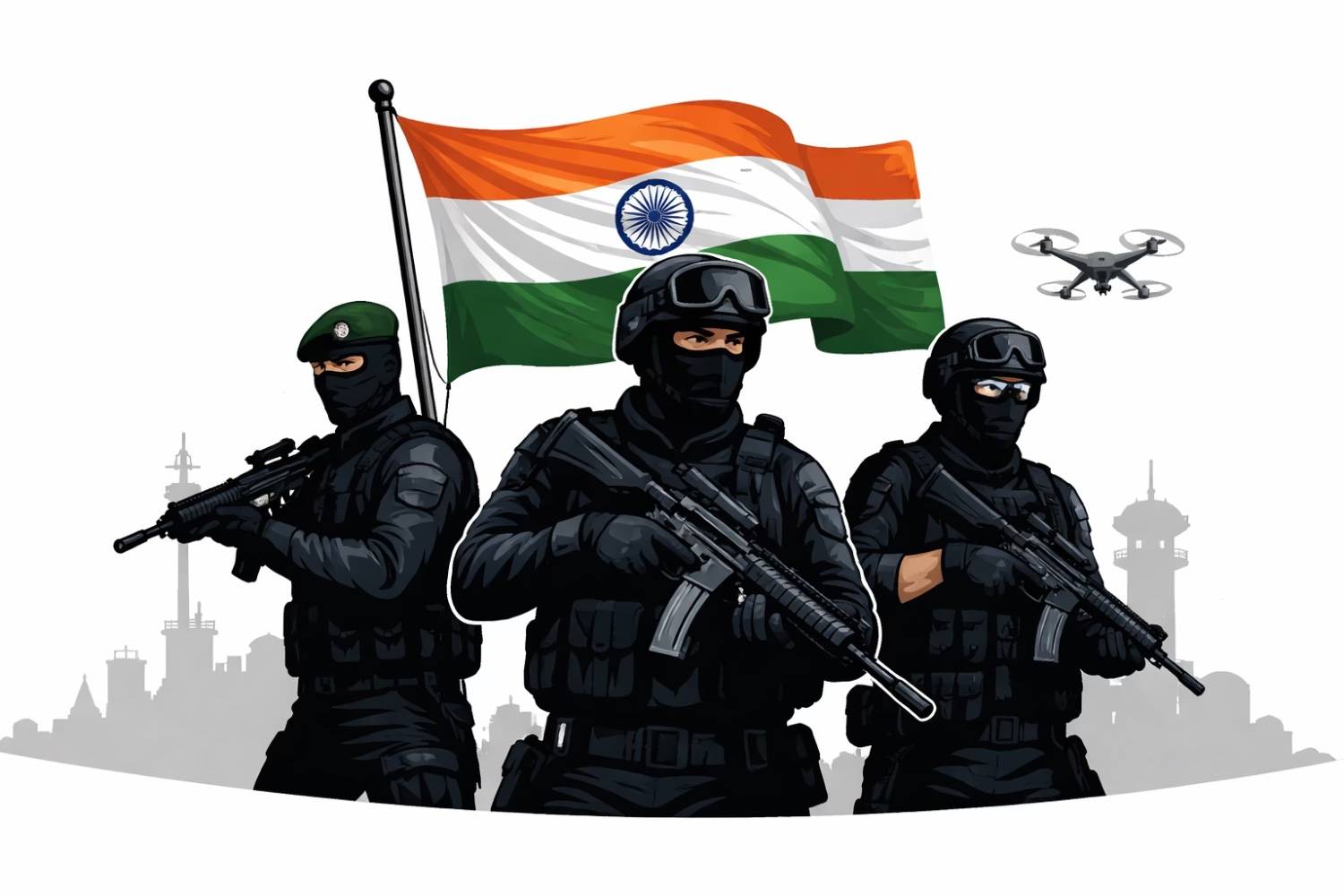
India has unveiled its first structured and comprehensive counter-terrorism policy framework, named Prahaar, aimed at strengthening the country’s response to evolving internal security threats.
The move comes at a time when India faces complex challenges ranging from cross-border terrorism and radicalisation to cyber-enabled terror networks and lone-wolf attacks. Officials describe Prahaar as a coordinated strategy that seeks to unify intelligence, policing, and national security efforts under a common operational vision.
The policy marks a significant step in India’s long-standing fight against terrorism and internal destabilisation efforts.
Why Prahaar Matters Now
India has faced decades of terror threats in different forms. From cross-border infiltration to sleeper cells and digital propaganda, the threat landscape has changed rapidly in recent years.
Security agencies have increasingly flagged concerns about:
- Encrypted communication tools
- Online radicalisation
- Drone-based weapons supply
- Terror financing through digital channels
- Hybrid warfare tactics
Prahaar is designed to address these emerging risks through a centralised and technology-driven framework.
Officials say the policy aims to improve coordination between central and state agencies and ensure faster response during crisis situations.
What is Prahaar? Understanding India’s Counter-Terror Framework
Prahaar is positioned as India’s first formal national counter-terrorism policy blueprint. While India has had strong anti-terror laws and specialised agencies, there was no single policy document that brought all efforts under one structured framework.
The initiative is expected to align existing institutions such as:
- National Investigation Agency
- Intelligence Bureau
- Research and Analysis Wing
- National Security Guard
These agencies already play a critical role in counter-terror operations. Prahaar seeks to integrate their work more effectively, reduce overlaps, and improve intelligence sharing.
Security experts say the key difference lies in structured coordination and real-time operational readiness.
Focus on Emerging Threats and Technology
One of Prahaar’s central pillars is its emphasis on modern threats.
Cyber Terrorism and Digital Surveillance
With terror groups increasingly using digital platforms, the policy highlights the need for stronger cyber intelligence capabilities. It focuses on tracking encrypted communications, monitoring extremist content, and preventing online recruitment.
Drone and Border Surveillance
Recent security incidents have highlighted the use of drones to transport weapons and explosives across borders. Prahaar aims to strengthen border monitoring using advanced radar systems, artificial intelligence, and surveillance technology.
Financial Disruption
The policy also seeks to block terror financing networks. This includes closer monitoring of suspicious transactions and improved coordination between enforcement and intelligence bodies.
India has already taken steps through laws such as the Unlawful Activities (Prevention) Act. Prahaar is expected to complement such laws with operational clarity.
Stronger Centre–State Coordination
Internal security in India is a shared responsibility between the Centre and the states. In the past, differences in intelligence flow and coordination have sometimes delayed action.
Prahaar is designed to improve:
- Real-time intelligence sharing
- Standardised response protocols
- Joint training exercises
- Crisis management coordination
Officials say that state police forces will play a central role in implementation.
This is significant because many terror investigations begin at the local level before being transferred to national agencies.
Learning from Past Security Challenges
India’s counter-terror architecture evolved after major attacks, including the 2008 Mumbai terror strikes. Following those events, the government strengthened institutions such as the National Investigation Agency and expanded coastal security mechanisms.
Prahaar appears to build on those reforms and address gaps identified over the past decade.
Security analysts note that terror threats today are less predictable and more decentralised. This makes preventive intelligence more important than reactive action.
Legal and Policy Backing
India already has a legal framework to deal with terrorism, including provisions under the Unlawful Activities (Prevention) Act and other security laws.
Prahaar does not replace existing laws. Instead, it provides a policy roadmap for operational coordination.
Officials have emphasised that the policy framework remains within constitutional limits and respects due process.
Balancing strong security action with civil liberties remains a key consideration.
How Prahaar Could Impact Internal Security
The introduction of a structured counter-terrorism doctrine may bring several changes:
- Faster intelligence-based operations
- Reduced duplication between agencies
- Stronger monitoring of online threats
- Better crisis response systems
Experts believe that improved data integration and technology use will be crucial.
India’s security agencies have already been upgrading digital monitoring tools, but Prahaar aims to systematise those efforts.
Regional and Global Context
India is not alone in adopting comprehensive counter-terror strategies. Many countries have formal national security doctrines that outline roles and responsibilities of agencies.
Given India’s geopolitical environment and long land borders, internal security is closely linked to external threats.
Cross-border terror networks remain a concern, particularly in sensitive regions. The integration of intelligence agencies under a coordinated framework could improve preventive capabilities.
Political and Strategic Significance
The announcement of Prahaar also carries political and strategic weight.
Internal security has consistently been a top priority for successive governments. A formal counter-terror policy signals an effort to institutionalise security reforms beyond immediate crises.
For policymakers, the move may help:
- Strengthen national preparedness
- Improve inter-agency trust
- Enhance accountability
- Streamline long-term security planning
The focus on emerging threats indicates that the policy is forward-looking rather than reactive.
Challenges Ahead
While Prahaar sets a broad direction, its success will depend on implementation.
Key challenges may include:
- Ensuring seamless coordination across agencies
- Training personnel in advanced technologies
- Avoiding bureaucratic delays
- Maintaining transparency and legal safeguards
Experts say that clear operational guidelines and accountability systems will be critical.
Security reforms often require sustained political and administrative commitment over several years.
What Citizens Should Know
For ordinary citizens, Prahaar does not change daily life immediately. However, it may strengthen preventive measures and surveillance systems.
Authorities have clarified that the framework focuses on national security and does not expand unchecked powers.
Public cooperation, especially in reporting suspicious activities, remains important.
The Road Ahead
India’s internal security environment continues to evolve. Terror networks now use digital tools, encrypted communication, and decentralised tactics.
Prahaar represents an attempt to bring structure, clarity, and coordination to the country’s counter-terror efforts.
As India moves forward, the effectiveness of the policy will depend on execution, technological upgrades, and coordination between central and state authorities.
For a country of over 1.4 billion people, maintaining internal security is both a complex and ongoing task.
Prahaar signals that India is preparing not just for traditional threats, but also for the next generation of security challenges.
If implemented effectively, it could redefine how the country responds to terrorism in the years ahead.
Disclaimer: The information presented in this article is intended for general informational purposes only. While every effort is made to ensure accuracy, completeness, and timeliness, data such as prices, market figures, government notifications, weather updates, holiday announcements, and public advisories are subject to change and may vary based on location and official revisions. Readers are strongly encouraged to verify details from relevant official sources before making financial, investment, career, travel, or personal decisions. This publication does not provide financial, investment, legal, or professional advice and shall not be held liable for any losses, damages, or actions taken in reliance on the information provided.
About The Author