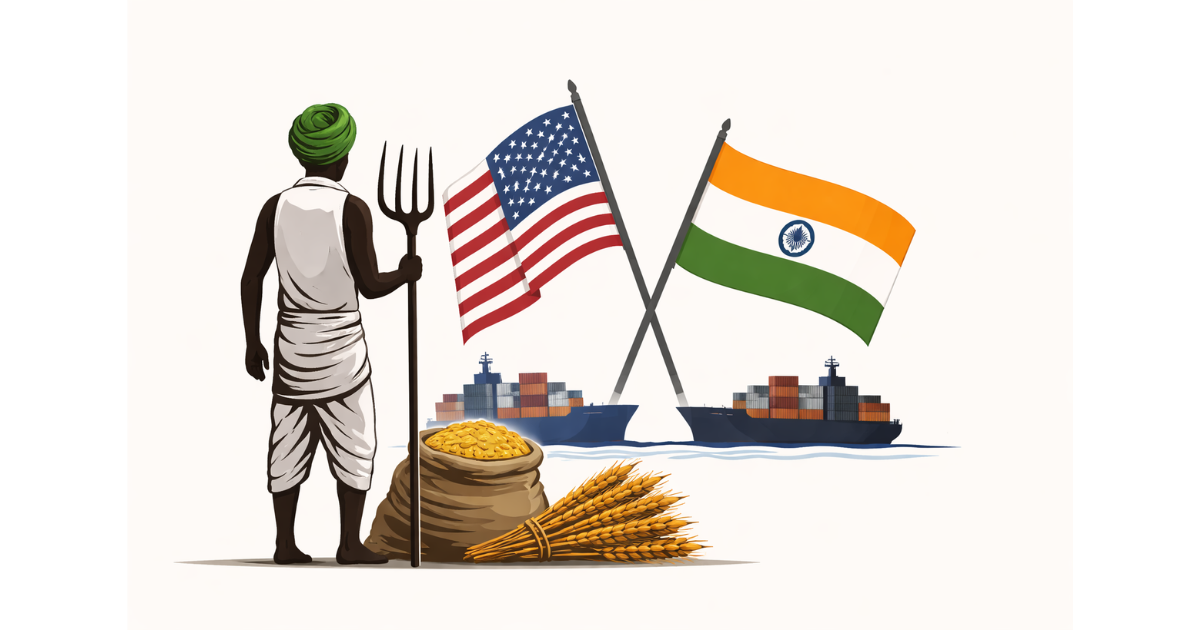
India is once again witnessing large-scale farmer protests, with several unions calling for a nationwide Bharat Bandh on February 12. The agitation is linked to concerns over the proposed India-US trade deal, which many farmers fear could impact crop prices, government support systems, and rural incomes.
The protest has drawn attention across states like Punjab, Haryana, Uttar Pradesh, and parts of Rajasthan, where farming communities say the agreement may open Indian markets to cheaper imports from the United States. With agriculture supporting millions of families across India, the issue carries major political and economic weight.
Here is a detailed explanation of why farmers are protesting, what they are demanding, and what the Bharat Bandh could mean for the country.
What Is the India-US Trade Deal and Why Is It Controversial?
India and the United States have been in discussions to expand bilateral trade. The aim is to increase market access for goods, reduce tariffs, and strengthen economic ties.
However, farmer unions say the deal could lead to increased imports of American agricultural products, pressure on India’s domestic crop prices, and weakening of government procurement systems.
Farmers are especially worried about products such as maize, soybeans, dairy items, and pulses, where the US is a major exporter.
They argue that American farmers receive heavy subsidies, making their products cheaper in global markets. If such goods enter India at lower prices, local farmers may struggle to compete.
Why February 12 Bharat Bandh Was Called
Several farmer groups have announced a Bharat Bandh on February 12 to press their demands. A Bharat Bandh typically involves closure of markets and mandis, road blockades in some areas, suspension of agricultural supply to cities, and peaceful rallies and sit-ins.
Union leaders say the protest is aimed at sending a strong message to the central government before final trade decisions are taken.
They claim the deal was discussed without proper consultation with farmer bodies.
Main Concerns of Farmers Over the Trade Deal
Fear of Falling Crop Prices
The biggest concern is the possible fall in domestic crop prices.
If cheaper agricultural imports enter India, mandi prices may drop. Farmers say this would directly affect income, especially for small and marginal farmers who depend on seasonal earnings.
India has more than 80% small and marginal farmers, who own less than two hectares of land. Even a small price drop can hurt household finances.
Threat to Minimum Support Price (MSP) System
Farmers have long demanded a legal guarantee for Minimum Support Price (MSP).
They fear that increased imports could weaken the MSP system by reducing government procurement.
If imported crops are available at lower rates, there may be less incentive for agencies to buy domestic produce at MSP.
Impact on Dairy Sector
India is the world’s largest milk producer. Farmer unions have raised concerns that allowing large-scale dairy imports from the US could affect small dairy farmers.
The dairy sector supports millions of rural households, especially women. Farmer groups say opening the sector to foreign competition could damage rural livelihoods.
Key Demands of Farmers
Farmer unions have placed several demands before the government.
No Agricultural Concessions in Trade Deal
Farmers want agriculture to be kept out of any trade concessions.
They are asking the government to protect sensitive sectors like dairy, pulses, oilseeds, and grains.
Legal Guarantee for MSP
The demand for a legal MSP guarantee has resurfaced.
Unions say MSP should be made a legal right to ensure farmers are protected against market fluctuations and trade impacts.
Full Consultation Before Signing Agreement
Farmer leaders have demanded transparent discussions before any agreement is signed.
They say stakeholders must be involved in negotiations that affect rural India.
Protection Against Cheap Imports
Farmers are calling for safeguards such as import limits and higher tariffs if necessary to prevent market disruption.
Government’s Position So Far
The central government has not announced the final terms of the trade deal.
Officials have stated in the past that India will safeguard domestic interests while expanding global trade partnerships.
The government argues that trade agreements can boost exports, create new opportunities, and improve economic growth.
However, farmer groups say they want clear assurances in writing.
How Big Is the Impact of India-US Agricultural Trade?
India and the United States already trade agricultural goods worth billions of dollars annually.
The US exports products such as almonds, apples, pulses, and ethanol.
India exports rice, spices, seafood, and other farm products.
Any major change in tariff rules or import quotas could impact pricing in domestic markets.
This is why farmer unions are treating the proposed agreement as a serious issue.
Will the February 12 Bharat Bandh Affect Daily Life?
The impact of the Bharat Bandh may vary by state.
In previous farmer protests, disruptions were seen in highway traffic, railway services in some areas, and supply of vegetables and milk to cities.
Authorities are likely to deploy security forces to prevent major disruptions.
Essential services such as hospitals and emergency services usually remain operational during such bandh calls.
Political Reactions to the Protest
Opposition parties have expressed support for farmers’ concerns and have called for clarity on the trade deal.
Some political leaders have said that agriculture is a sensitive sector and should not be compromised for trade benefits.
The ruling party has maintained that India’s economic interests will remain protected.
With elections approaching in some regions, the issue may gain further political traction.
Why This Protest Matters for India’s Economy
Agriculture contributes around 15–18% of India’s GDP, but supports nearly half of the population directly or indirectly.
Even small policy changes can have a ripple effect on rural consumption, food inflation, employment, and political stability.
If farmer incomes decline, it could slow rural spending, which plays a key role in India’s overall economic growth.
What Happens Next?
The outcome of the February 12 Bharat Bandh may depend on government response, possible talks between farmer leaders and officials, and clarifications on trade terms.
If discussions are initiated, tensions may ease. If not, protests could continue or expand.
Farmer unions have indicated they are ready for sustained agitation if their concerns are not addressed.
Explained: Why Farmers See Trade Deals as a Risk
Many farmers recall past experiences where cheaper imports affected domestic markets.
They argue that Indian agriculture operates under different cost structures compared to developed countries.
US farmers often receive large-scale subsidies and operate on bigger land holdings. In contrast, Indian farmers mostly depend on small plots and face higher input costs.
This imbalance is central to the current protest.
Conclusion: A Crucial Moment for India’s Farm Policy
The February 12 Bharat Bandh is more than a protest against a trade deal. It reflects deeper concerns about farm income, price security, and rural protection.
As India aims to strengthen global trade ties, balancing economic growth with farmer welfare remains a complex task.
The coming days will be crucial. Whether through negotiation or confrontation, the issue is likely to shape discussions on agriculture policy.
For millions of farmers across India, the stakes are high. The outcome of this debate could influence rural livelihoods for years to come.
Disclaimer: The information presented in this article is intended for general informational purposes only. While every effort is made to ensure accuracy, completeness, and timeliness, data such as prices, market figures, government notifications, weather updates, holiday announcements, and public advisories are subject to change and may vary based on location and official revisions. Readers are strongly encouraged to verify details from relevant official sources before making financial, investment, career, travel, or personal decisions. This publication does not provide financial, investment, legal, or professional advice and shall not be held liable for any losses, damages, or actions taken in reliance on the information provided.
About The Author