
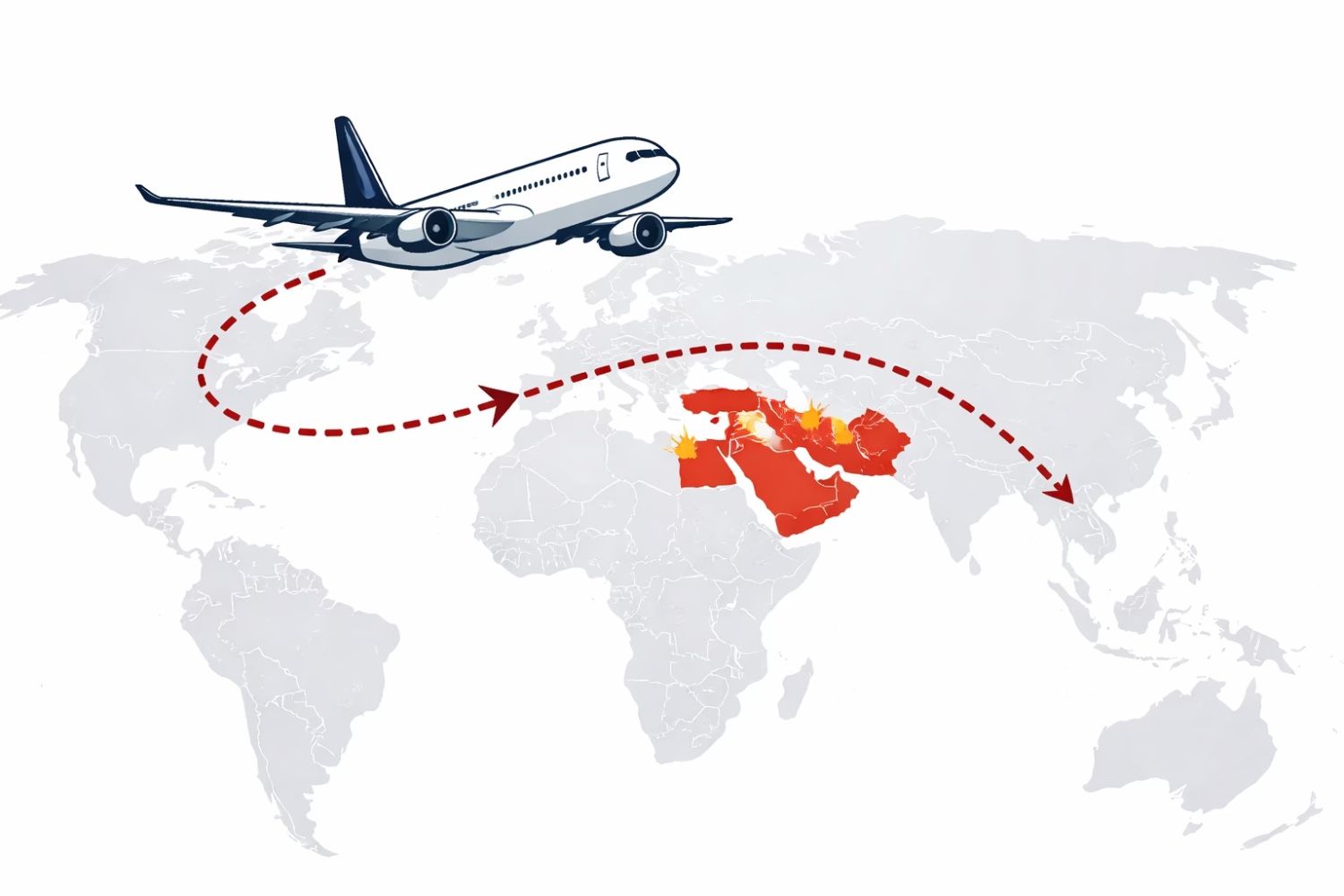
The escalating tensions between Israel and Iran are beginning to impact global travel, with airlines across several continents cancelling or rerouting flights to avoid the increasingly unstable Middle East airspace.
Airlines, aviation regulators, and security agencies have issued warnings as the conflict heightens concerns about passenger safety and aircraft security. The disruption has already affected thousands of flights worldwide, forcing carriers to suspend routes, change flight paths, and delay schedules.
For passengers, the situation means longer travel times, rising ticket prices, and uncertainty about international flight schedules in the coming weeks.
Escalating Israel–Iran Tensions Trigger Global Aviation Alert
The latest disruption follows a period of rising military and political tension between Israel and Iran, which has increased security risks across parts of the Middle East.
Several countries have warned airlines to avoid flying over sensitive airspace, particularly areas close to conflict zones and military activity.
Global aviation authorities are monitoring the situation closely, including the International Civil Aviation Organizationand the European Union Aviation Safety Agency, which regularly issue risk alerts for international airlines.
These warnings have prompted airlines to suspend or reroute flights across multiple air corridors that normally connect Asia, Europe, and the Middle East.
Thousands of Flights Cancelled or Rerouted
Airlines across Europe, Asia, and North America have been forced to cancel flights or divert aircraft away from high-risk areas.
Major global carriers, including Lufthansa, Emirates, Qatar Airways, and Air France, have either suspended certain routes or adjusted flight paths.
Many flights that normally cross Middle Eastern airspace are now being redirected through longer routes over the Mediterranean Sea, Central Asia, or the Arabian Sea.
These diversions are adding one to three hours of additional flight time for several long-haul routes.
Airlines say these changes are necessary to ensure passenger safety and comply with international aviation advisories.
Indian Travelers Also Facing Disruptions
The impact is also being felt by passengers flying from India to Europe and North America.
Flights operated by Indian and international carriers often use Middle Eastern airspace as a key transit corridor. When those routes are restricted, airlines must take longer detours.
Airlines such as Air India and IndiGo have closely monitored the situation and may adjust routes if security conditions worsen.
Travel experts say passengers flying on routes such as Delhi–London, Mumbai–Frankfurt, and Bengaluru–New Yorkcould experience longer flight durations, possible rescheduling, and higher ticket prices due to increased fuel costs.
Airport authorities in India are advising passengers to check flight status before departure.
Why Conflict Zones Affect Global Air Travel
Commercial aircraft normally follow carefully planned international air corridors.
However, when a conflict escalates, these routes can quickly become unsafe due to several risks including military missile activity, drone operations, air defense systems, and electronic interference.
Civil aviation authorities typically close or restrict airspace in conflict zones to prevent accidents.
The aviation industry remains highly cautious because of past tragedies, including the Malaysia Airlines Flight 17 Shootdown in 2014 over eastern Ukraine.
That incident significantly changed how airlines evaluate geopolitical risks.
Airlines Facing Higher Costs and Operational Challenges
Rerouting flights is not a simple decision for airlines. Avoiding conflict zones often means longer travel distances and greater operational costs.
Industry analysts say airlines could face higher expenses due to increased fuel consumption, additional crew duty hours, longer aircraft turnaround times, and schedule disruptions across global networks.
For airlines already dealing with rising fuel prices and strong travel demand, these disruptions create new logistical challenges.
Some carriers may also reduce flight frequencies if conditions worsen.
Middle East Airports Monitoring Security Situation
Major aviation hubs across the Middle East are also closely watching developments.
Airports in Dubai, Doha, and Abu Dhabi serve as key transit points for millions of international passengers each month.
Although airport operations remain normal for now, aviation authorities are working with airlines to adjust routes where necessary.
Security agencies have also strengthened monitoring of regional airspace.
Airlines say they will continue to follow official safety advisories issued by governments and aviation regulators.
Global Travel Demand Faces New Uncertainty
The disruptions come at a time when international travel demand is recovering strongly after several years of pandemic-related restrictions.
Industry data shows that global passenger traffic has returned close to pre-pandemic levels, with strong demand for long-haul travel between Asia, Europe, and North America.
However, geopolitical tensions can quickly affect airline operations.
Travel experts warn that prolonged instability in the Middle East could impact global aviation networks if airlines are forced to avoid major air corridors for extended periods.
Advice for International Passengers
With flight schedules changing rapidly, travel experts recommend that passengers stay updated on airline announcements.
Passengers should check flight status before leaving for the airport, monitor airline notifications for schedule changes, allow extra time for connections on long-haul flights, and consider flexible tickets when possible.
Airlines usually offer rebooking options if flights are cancelled due to security reasons.
Travel insurance policies may also cover certain disruptions depending on the terms of coverage.
How Long Could Flight Disruptions Continue?
Aviation experts say the duration of these disruptions will depend on how the geopolitical situation develops.
If tensions between Israel and Iran ease, airlines could quickly restore normal routes.
However, if the conflict escalates further, airlines may continue avoiding the region’s airspace for safety reasons.
Airspace restrictions during geopolitical conflicts have historically lasted from several days to several weeks, depending on the security situation.
Global Aviation Industry Watching Closely
For now, the global aviation industry remains on high alert.
Airlines, governments, and aviation safety agencies are coordinating closely to ensure passenger safety while maintaining international travel operations.
The Israel–Iran tensions highlight how geopolitical conflicts can quickly affect global transport networks, even thousands of kilometres away from the actual conflict zone.
For travelers across India and the world, the coming weeks may bring continued changes to international flight schedules as airlines adapt to the evolving situation.
As global air traffic remains deeply interconnected, developments in the Middle East will continue to shape the movement of passengers and aircraft across international skies.
Disclaimer: The information presented in this article is intended for general informational purposes only. While every effort is made to ensure accuracy, completeness, and timeliness, data such as prices, market figures, government notifications, weather updates, holiday announcements, and public advisories are subject to change and may vary based on location and official revisions. Readers are strongly encouraged to verify details from relevant official sources before making financial, investment, career, travel, or personal decisions. This publication does not provide financial, investment, legal, or professional advice and shall not be held liable for any losses, damages, or actions taken in reliance on the information provided.
Edited by D Rishidhar
About The Author