Tensions in the Middle East have once again pushed global energy markets into uncertainty. As conflict intensifies across parts of the region, oil traders, governments, and financial markets are closely watching the impact on supply routes and production.
For India, which imports most of its crude oil, the rise in prices is more than a market story. It affects fuel prices, inflation, government spending, and economic growth.
The latest developments in the Middle East have triggered fresh concerns about global oil supply stability. Even when oil production is not immediately disrupted, the possibility of escalation can influence prices in international markets.
Why Oil Prices Rise During War
Oil markets react quickly when geopolitical tensions emerge near major energy-producing regions. The Middle East produces a large share of the world’s oil, so any instability creates uncertainty about supply.
There are several reasons why prices tend to move higher during conflicts.
Risk to Oil Production
Many of the world’s largest oil producers are located in the Middle East, including Saudi Arabia, Iran, Iraq, the United Arab Emirates, and Kuwait.
If oil fields, refineries, or pipelines in these countries face damage or disruption due to conflict, global supply could fall sharply. Even the fear of such disruption can move prices higher.
Energy markets are sensitive because global demand for oil remains high, and supply disruptions can quickly tighten the market.
Threat to Key Shipping Routes
Another major concern during regional conflict is the safety of global oil transport routes.
One of the most important routes is the Strait of Hormuz, a narrow waterway that connects the Persian Gulf to the open ocean. Around 20 percent of the world’s oil supply passes through this route every day.
If tensions threaten shipping in this area, tanker movements could slow or become more expensive due to higher insurance costs. Such risks often push global oil prices upward.
Market Risk Premium
Financial markets also respond to uncertainty by adding what analysts call a “risk premium.”
This means traders increase oil prices in anticipation of possible supply disruptions. Even if production remains stable for now, markets adjust prices to reflect the increased geopolitical risk.
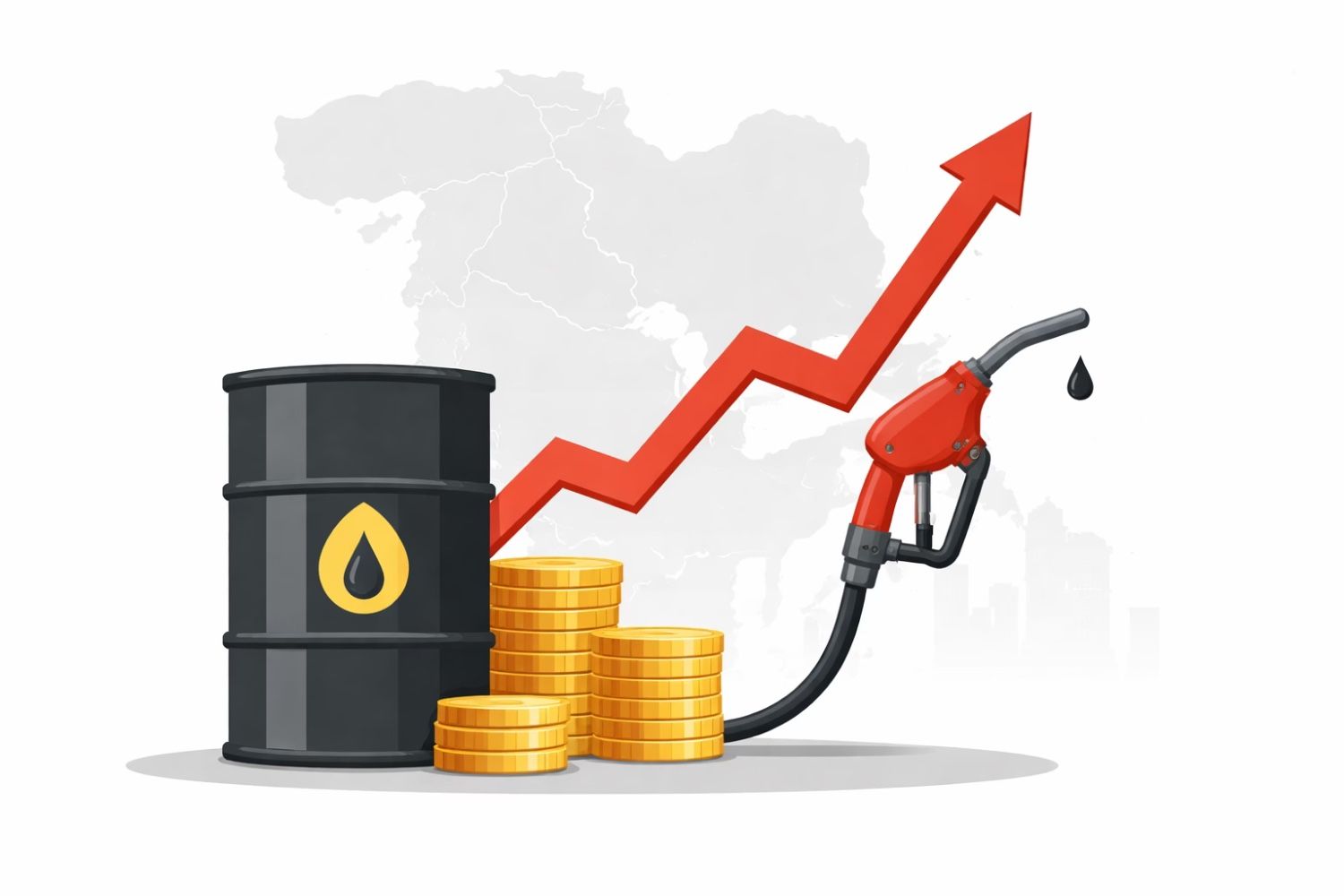
This reaction is currently visible in benchmark crude oil prices.
Why the Middle East Is Critical for Global Oil
The Middle East holds some of the largest proven oil reserves in the world. Countries in the region play a central role in supplying energy to global markets.
Many of these producers are members of the Organization of the Petroleum Exporting Countries (OPEC), which helps coordinate oil output levels among member nations.
Because of this influence, developments in the region can quickly affect global oil supply expectations and market sentiment.
Even speculation about conflict or instability can move oil prices significantly.
Impact of Rising Oil Prices on India
India is among the world’s largest oil consumers and importers. The country imports more than 85 percent of its crude oil needs, which makes it highly vulnerable to global price fluctuations.
When international oil prices rise, several parts of the Indian economy feel the impact.
Fuel Prices May Increase
Global crude prices directly influence petrol and diesel prices in India.
When crude becomes more expensive, the cost of refining and distributing fuel also rises. This often leads to higher retail prices unless governments intervene through tax adjustments.
Higher fuel prices can affect transportation costs, delivery services, and everyday household expenses.
Inflation Pressure
Fuel is a major cost component across many industries.
When oil prices increase, transportation and logistics costs rise. This can lead to higher prices for food, manufactured goods, and services.
Such increases contribute to overall inflation in the economy. The Reserve Bank of India (RBI) closely monitors oil price movements because they can affect inflation targets and monetary policy decisions.
Impact on India’s Trade Balance
Higher oil prices can widen India’s trade deficit.
India spends billions of dollars annually on crude oil imports. When international prices increase, the country’s import bill grows significantly.
A higher oil import bill can weaken the current account balance and sometimes put pressure on the Indian rupee.
Government Fiscal Pressure
If fuel prices rise sharply, governments may choose to reduce taxes or provide relief measures to protect consumers.
While such steps can help limit the burden on households, they may also reduce government revenue.
In some cases, subsidies on cooking gas or fuel support programs may increase, creating additional fiscal pressure.
India’s Strategy to Manage Oil Price Volatility
India has taken several steps over the years to reduce the risks associated with global oil price fluctuations.
One major strategy is diversifying crude oil imports. India buys oil from multiple countries, including Russia, the United States, Saudi Arabia, Iraq, and the United Arab Emirates.
By sourcing oil from different regions, India reduces its dependence on any single supplier.
Another key step is the development of strategic petroleum reserves. These underground storage facilities allow the country to maintain emergency oil stocks that can be used during supply disruptions.
These reserves provide a buffer during periods of extreme market volatility.
Global Markets Closely Monitoring Developments
Investors, governments, and energy companies are closely tracking developments in the Middle East.
Financial markets often respond quickly to geopolitical risks. Oil prices can rise or fall sharply depending on how conflicts evolve.
If tensions expand to include more countries or threaten oil infrastructure, prices could rise further.
However, if diplomatic efforts reduce tensions and supply remains stable, markets may calm down and prices could ease.
What Analysts Are Watching Next
Energy analysts say several factors will determine how oil prices move in the coming weeks.
The most important factors include whether the conflict spreads to additional countries, whether key oil infrastructure remains secure, and whether major shipping routes continue to operate normally.
Decisions made by major oil-producing nations and global energy alliances could also influence supply levels.
If production continues without disruption, the current price spike may prove temporary. But if the situation worsens, markets could see prolonged volatility.
Why This Matters for India
For India, developments in the Middle East are closely tied to economic stability.
Higher crude prices affect not only fuel costs but also food prices, transportation expenses, and overall inflation.
Because of India’s heavy dependence on imported energy, geopolitical tensions in oil-producing regions have a direct impact on the country’s economy.
That is why policymakers, energy companies, and financial markets in India are watching the situation carefully.
The coming weeks will determine whether the recent rise in oil prices remains a short-term reaction or develops into a longer period of global energy market uncertainty.
Disclaimer: The information presented in this article is intended for general informational purposes only. While every effort is made to ensure accuracy, completeness, and timeliness, data such as prices, market figures, government notifications, weather updates, holiday announcements, and public advisories are subject to change and may vary based on location and official revisions. Readers are strongly encouraged to verify details from relevant official sources before making financial, investment, career, travel, or personal decisions. This publication does not provide financial, investment, legal, or professional advice and shall not be held liable for any losses, damages, or actions taken in reliance on the information provided.
edited by D Rishidhar Reddy
About The Author