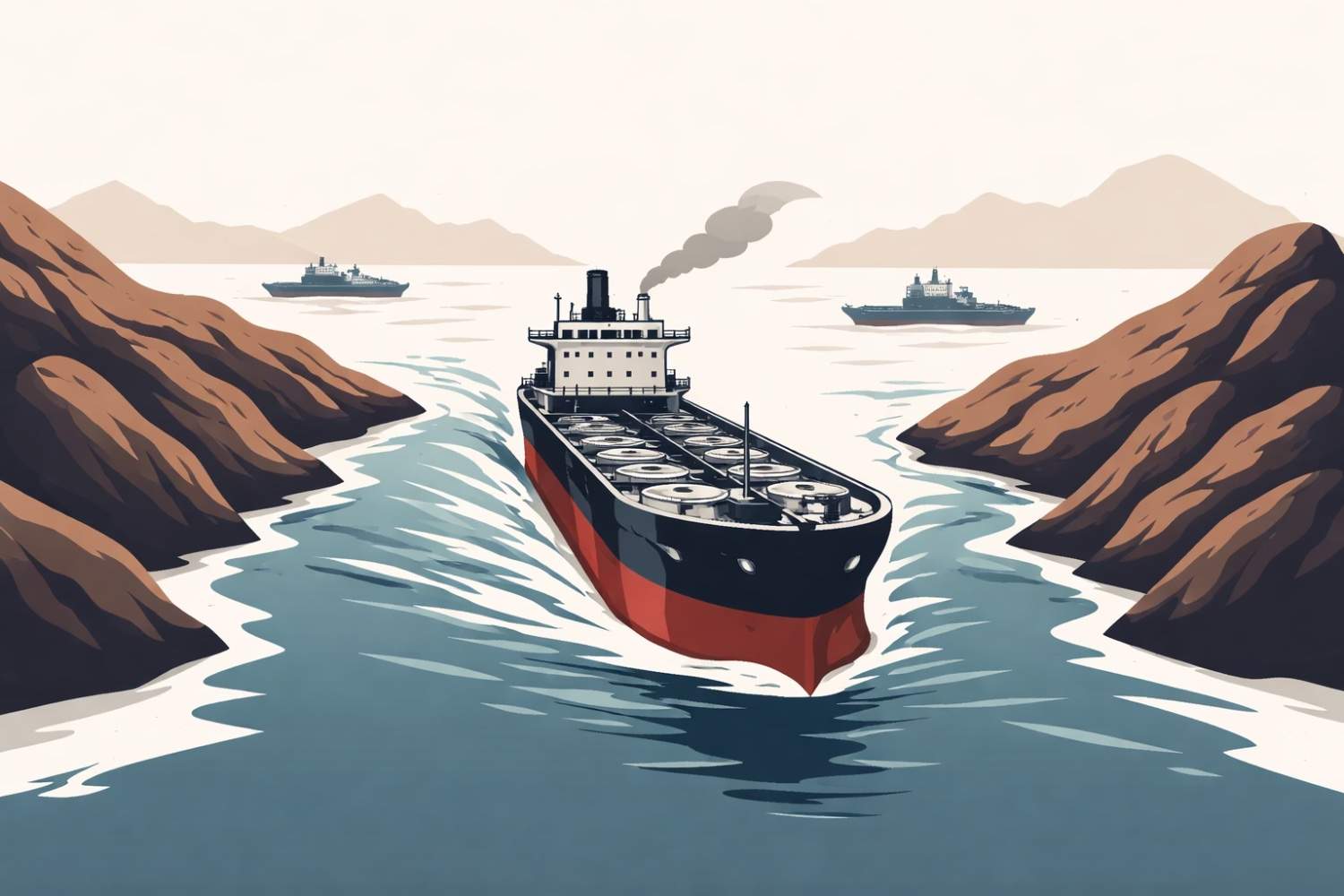
India is increasing diplomatic and security efforts to protect shipping routes near the Strait of Hormuz, one of the world’s most important energy corridors. The move comes as tensions rise in West Asia, raising concerns about possible disruptions to global trade and oil supplies.
The narrow waterway between Iran and Oman carries a large share of the world’s oil shipments. Any instability in this region can quickly affect fuel prices, shipping costs, and global markets. For India, which imports most of its crude oil, the safety of these routes is critical.
Officials in New Delhi have been closely monitoring developments in the region. The government is also engaging with international partners to ensure that shipping lanes remain open and secure.
This issue has become more urgent as geopolitical tensions increase in several parts of West Asia, prompting fears of possible disruptions to maritime traffic.
Why the Strait of Hormuz Matters to India
The Strait of Hormuz is a strategic maritime corridor linking the Persian Gulf with the Gulf of Oman and the Arabian Sea. It is considered one of the most important chokepoints in global energy trade.
Around 20% of the world’s oil supply passes through this narrow passage every day.
For India, the stakes are especially high.
The country imports over 80% of its crude oil needs, and a large portion of these imports comes from West Asian countries such as Saudi Arabia, Iraq, the United Arab Emirates, and Kuwait. Most of these shipments travel through the Strait of Hormuz before reaching Indian ports.
Any disruption in this route could lead to delays in shipments, higher shipping insurance costs, and rising oil prices. These effects can quickly spread across the economy, influencing fuel prices, inflation, and industrial costs.
Growing Concerns Over Maritime Security
Security risks in the region have increased in recent months due to escalating tensions between regional powers and ongoing conflicts in parts of West Asia.
Shipping companies and global energy markets closely watch the Strait of Hormuz because even a small disruption can create global ripple effects.
Past incidents in the region, including attacks on oil tankers and temporary vessel seizures, have shown how quickly maritime tensions can escalate.
For countries that depend heavily on imported energy, such risks create serious economic concerns.
Indian authorities have therefore placed stronger emphasis on maritime monitoring and diplomatic engagement to maintain the safety of sea routes.
India’s Diplomatic Outreach in the Region
India has been actively engaging with countries in the Gulf region and other global partners to ensure stability around the Strait of Hormuz.
Diplomatic discussions focus on keeping shipping lanes open and maintaining international maritime security standards.
New Delhi has strong strategic and economic partnerships with several Gulf countries. These relationships play a key role in ensuring the smooth movement of energy supplies.
India also participates in international maritime security initiatives that aim to protect commercial shipping from threats such as piracy, armed attacks, and geopolitical tensions.
Such cooperation helps improve coordination between navies and maritime authorities operating in the region.
Role of the Indian Navy in Protecting Shipping
The Indian Navy has maintained a consistent presence in the Arabian Sea and nearby waters to safeguard maritime trade routes.
Indian naval deployments in the region focus on monitoring shipping lanes, escorting merchant vessels when necessary, and responding to maritime emergencies.
In recent years, the navy has also conducted anti-piracy patrols and security operations in key sea lanes used by international shipping.
These operations aim to ensure that Indian-flagged vessels and cargo ships carrying critical supplies can travel safely.
The navy’s presence also allows India to respond quickly if commercial shipping faces security threats.
Impact on Global Oil Prices and Indian Economy
Events near the Strait of Hormuz often have a direct impact on global oil prices.
Even the possibility of disruptions can push crude prices higher as markets react to supply risks.
Higher oil prices can affect India’s economy in several ways. Rising crude costs increase the country’s import bill and may add pressure on domestic fuel prices.
This can also influence inflation, transportation costs, and manufacturing expenses.
Because of these risks, India closely monitors developments in West Asia and works to ensure the stability of shipping routes.
Shipping and Insurance Costs Under Pressure
Another important concern is the rising cost of maritime insurance.
When geopolitical tensions increase in sensitive regions, insurance premiums for oil tankers and cargo ships often rise. This increases the cost of transporting energy and goods across global markets.
Shipping companies may also change routes or increase security measures to reduce risks. These adjustments can lead to longer travel times and higher logistical expenses.
For energy-importing countries like India, such changes can directly affect fuel prices and supply chains.
India’s Energy Security Strategy
India has taken several steps over the past decade to strengthen its energy security.
One important strategy is diversifying crude oil suppliers. While West Asia remains a major source of oil, India has increased imports from countries such as the United States, Russia, and Africa.
Another key measure is expanding strategic petroleum reserves. These reserves allow India to store crude oil that can be used during supply disruptions.
The government has also focused on expanding renewable energy and increasing domestic energy production to reduce long-term dependence on imports.
Despite these efforts, the Strait of Hormuz will remain a critical route for India’s energy supply for the foreseeable future.
Global Cooperation to Keep Sea Lanes Open
Ensuring safe navigation in the Strait of Hormuz is not just a regional concern. It is a global priority.
Major economies, including those in Asia, Europe, and North America, depend on energy shipments that pass through this narrow passage.
International cooperation among naval forces and maritime authorities plays an important role in maintaining security.
Joint patrols, information sharing, and coordinated responses to threats help reduce risks for commercial shipping.
India’s engagement with global partners reflects the shared interest in keeping these sea lanes open and stable.
What Lies Ahead
The situation in West Asia remains fluid, and geopolitical developments can quickly change the security environment around the Strait of Hormuz.
India is expected to continue strengthening diplomatic engagement and maritime monitoring to safeguard its economic interests.
The government’s approach combines diplomacy, naval readiness, and energy diversification to reduce risks.
For India and many other countries, ensuring the safety of shipping routes in the region is essential for global energy stability and economic security.
As tensions in West Asia evolve, the focus will remain on maintaining safe passage through one of the world’s most critical maritime corridors.
Disclaimer: The information presented in this article is intended for general informational purposes only. While every effort is made to ensure accuracy, completeness, and timeliness, data such as prices, market figures, government notifications, weather updates, holiday announcements, and public advisories are subject to change and may vary based on location and official revisions. Readers are strongly encouraged to verify details from relevant official sources before making financial, investment, career, travel, or personal decisions. This publication does not provide financial, investment, legal, or professional advice and shall not be held liable for any losses, damages, or actions taken in reliance on the information provided.
edited by D Rishidhar Reddy
About The Author